Saturday, December 26, 2009

The beginning of a long way

Well, looks like Sci-Fi Month is going to last a little longer than the minimum 3 days. (Sci-fi month is, by the way, entirely unofficial and unrelated to any organization or group.) The direction this month may take me is starting to become a little clearer as I see what books are available to me (90%+ through my ever handy Sony Reader, all books free of charge).

The month started, as I mentioned, with seemingly safe, simple territory: "The Children of Men" by P. D. James. I had seen the movie several months before (I was unaware that it was based on a book until the end of the movie) but knew that the book and movie were very different. The book surprised me, in that it was at once very similar to the movie and at once completely different. It's hard to explain without spoiling both, but I enjoyed the book thoroughly, and not just as a gentle dystopian way to ease into Sci-Fi Month. It's a contemplative adventure story, mixed with politics and a dash of social commentary. Unsurprisingly, the book is really good.

I chose to head in a completely different direction with the next book and finally got around to reading "Good Omens". I'd heard both good and bad, but I honestly expected to like it more. I thought some of the characters were brilliant and eagerly followed one plot thread, but found myself slightly bored by the rest. It also didn't really agree with my mood. It was too... giddily fantastic. Not exactly science fiction. Pleasant stuff (not amazing), but this wasn't the time to read it.

Book 3 came courtesy of the nice folks at Random House, who were kind enough to upload a bucketload of free eBooks just when I bought my handy-dandy Reader: "Perdido Street Station" by China Mieville. I'll be honest, I was flying blind when I decided to read this. Only afterward did I learn that this book has received quite a few honors (none particularly breathtaking, but it hasn't been ignored). The book itself is interesting (a little long, but good overall), if only because it's bizarrely difficult to define. Is it science fiction (what with almost everything being described by science) or fantasy (what with random bizarre inexplicable things happening)? A great segue for some of next week's definition discussions.
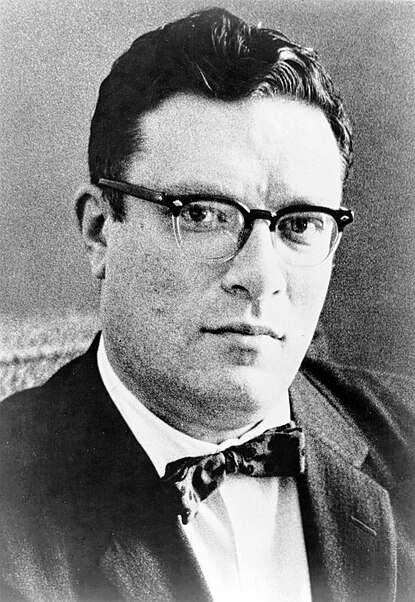
These three books reside in very different realms of science fiction (or fantasy, or whatever the requirement is...). One book is humorously fantastic (from fantasy), another is bleakly human, and a third is weirdly scientific. None of these come close to the types of books I hope to read in the coming weeks. I hope to pay my respects to Asimov (on the left) and Clarke over the next few days, as well as Ursula Le Guin and H. G. Wells. Oh, this is going to be fun...

Monday, December 21, 2009

Out of this world

Yesterday officially marked the start of Sci-Fi Month*. After finishing the quiet, way-too-grounded-in-reality book I was currently reading, I remembered how a few weeks ago I posted about silly TV to book comparisons. While painstakingly researching my words (yes, I actually spent time writing that post), I found myself reading quite a few Wikipedia articles on sci-fi writers. It started with Isaac Asimov, moved onto Arthur C. Clarke, and then somehow (thanks, Wikipedia) ended up with me reading all about steampunk, the definition of a dystopian novel and all sorts of other random articles that I've since forgotten.

I did, however, feel a slight twinge of guilt and shame when, scrolling down the list of sci-fi books (yes, Wikipedia actually has one of those...), I'd read a tiny tiny portion. I've only read a few Asimov stories, no Clarke, no H. G. Wells, and hardly any of the major, famous hits. I suddenly felt uneducated, much in the same way that three-four years ago I felt the need to educate myself in the "upper literature" realm (the "classics" - Tolstoy, Steinbeck, Hemingway, Austen, Eliot [George], the Brontës, this list goes on and on...), I felt the need to educate myself in science-fiction - and fast.

The problem is, I'm not very good at defining things. So science fiction grew to include fantasy and dystopian literature, which is definitely 100% not the same thing, but somehow I couldn't bring myself to care. The month started comfortably with "The Children of Men" by P.D. James and is now continuing onwards to Neil Gaiman and Terry Pratchett's "Good Omens", which is a long time coming (and probably on the opposite end of the "not real life" spectrum). I'll probably head off towards "Foundation" next or maybe something by Clarke (I have a book of his somewhere, but I can't remember which...). I've also snagged a couple of random sci-fi, fantasy and dystopian eBooks (free[dom!]) and can't wait to see just how amazing "A Honeymoon in Space" is (if it lives up to its title: yes!).

I've got a lot to get through. I unfortunately have a small list of titles I've picked out, though, and could use all the recommendations. While I'm always open to the more modern titles, I am trying to focus more on the holes (uh... giant pits...) in my "outta-this-world" knowledge. Even so, I've got an interesting month ahead of me. I better get cracking.

*The definitions of "sci-fi" and "month" are entirely subject to change. "Sci-fi" may mean anything that isn't true to the world as it currently is and "month" can mean anything between 3 days to a whole lunar cycle of 28 days.

I'd also like to wish all readers a happy solstice and happy [winter/summer-for-our-southern-hemisphere-friends holiday of choice].

Sunday, December 20, 2009

Apples and oranges

Okay, this will probably be the last eReader related post for 2009 (at least, I hope...) so I have to think extra hard about how to go at it. Things to keep in mind are that I've got a Sony Reader Touch Edition (and I like it), am not a fan of closed formats, DRM and all that fun stuff, and that I'm one heck of a nervous consumer who bought a Sony for a reason - it's called "I didn't want a Kindle" syndrome and this concept exists. All right, let's go.

We'll start with the Nook. A few weeks ago I casually noted the growing obsession with Barnes & Noble's new eReader device. It's gotten a bit out of hand. There have been very few early reviews and even those have not actually said much. Or have said not much to flatter B&N. It's a new device and consumers need to understand this. Sure, it's appealing on paper but with so little information, how can people seriously think that this is a game-changer?

As for the few reviews, the NYTimes was not impressed, calling it a Kindle ripoff and noting that almost every charming pro that made consumers drool came with a downside. The color touchscreen is random and unrelated, the page-flip time is long, the touchscreen is unresponsive, and a whole list of hardware issues that seemed to the reviewer to make the Nook "a mess". Which is unsurprising, given that this is a new product. There's still this assumption that any new product will be the game changer. I've seen articles referring to almost any non-Kindle device as precisely that, whether or not it even makes sense. Everyone wants the Nook to change the eReader realms because current non-Amazon guys (Sony?) aren't doing much, and a lot of folks don't want Amazon to monopolize the market so quickly and, shall we say, evilly? Actually, that's wrong. Sony has some great products, the problem is that they don't care enough to enter the battle seriously and loudly. Irony, right?

And then there's Apple. The mythical Tablet has been talked about for so long that it's turned into the publishing world's obsession. People have honestly said, "I'm not buying an eReader until I don't see what Apple comes out with." So this needs to be said once, clearly and loudly:

Apple's Tablet will not be an eReader!


Apple will, as usual, provide consumers with a cheerfully convenient device. They'll have some spiffy "Amazon-killer" eBook store (with their own personal DRM, I'm sure...), a huge marketing campaign, and hundreds of automatic customers just because it's got Apple stamped on it. Except it's not going to be a proper eReader like what we've come to imagine. It won't have eInk screen technology, it won't focus on books, and it won't be tailor made for readers (like the Reader, Kindle, Nook, iLiad, etc.). What it will be is a giant iPod Touch, which is really not the same thing.

All right. I recognize that for some consumers this is exactly what they want. They want an all-purpose shiny, glossy device that connects to the internet, surfs the web, lets them read, write and type, and do just about anything with Apple's trademark style. Fine, legit. But to hear publishers and serious readers try to compare a Tablet to a Kindle (or any competitor, etc.) is stupid. It's like saying an iPod Nano is comparable to a computer because they can both play music and show color things on their screens.

Yes, I am certain the Tablet will be shiny and awesome and will look amazing. I'm sure when (...if) it ever comes out, many tech lovers will drool over it in delight. I'm sure that some readers will find this a suitable device for reading and will forgo purchasing actual eInk eReaders (which was kind of the whole point, but all right...). Those considering buying eReaders for their crisp, comfortable screen quality should understand this, though. A giant iPod Touch sounds like fun but it's not the same thing. It's not what I'm looking for in an eReader, at least.

Wednesday, December 16, 2009

Like a childhood "Read-a-ton", slippers included

Even though I'm not sure I can actually participate, I really like when people do things like this. It reminds me of better times.

Tuesday, December 15, 2009

A sports story

A couple of days ago, I went to a soccer game. At the entrance to the stadium, several security guards stood, checking attendees and their bags. My security guard took my bag and checked it inside out. After a moment, my bag was handed back to me and the guard asked, "Is it good?" Confused, I looked at my bag again and noticed the book sticking out. "My mom got that one but she hasn't read it yet," the guard continued. "How are you liking it?"

I smiled suddenly, understanding the question. "It's fun so far," I said. As I walked away, I added, "I hope she enjoys it."

(I definitely enjoyed the book more than the disappointing game. My team lost. Again.)

Friday, December 11, 2009

Score one for NPR

Amid all the "Best of" lists, you'd be hard pressed to find books not originally written in English. Here's where NPR wins big with Jessa Crispin's "World of Novels" list, where 5 foreign fiction books are crowned best of the year. Crispin writes:
[T]he inescapable truth is, sampling world culture is an essential and powerfully enriching experience. [...] [These books] just happen to be set in slightly unfamiliar locales.
Indeed. The list is fairly varied, with books translated from Spanish, Russian, Hebrew and Dutch (two books are originally from Spanish). Obviously, it might have been nicer having a wider variety (and a longer list!), but given how few books get translated per year, I'm willing to forgive Crispin. The topics are also all over the board, with horror stories, war tales, nerdiness, feminism and family drama all covered. For readers sick of constantly seeing the same titles again and again in "Best of" lists, this one is most recommended.

Wednesday, December 9, 2009

Looking back

Okay, this is amazing. The Guardian, in its typical fashion, has decided to set aside the typical "Best of the Decade" for a "Worst of" list. The result is quite spectacular. Over 450 comments where readers pour out their frustrations with what they feel are the worst books of the decade (typically, these books are ones they felt were overhyped or wrongly popular). Massively profane, incredibly upbeat about their insults, and 100% entertaining, these comments reveal 10 years worth of pent-up book hate (and on the rare occasion, love).

The grand winners are, for the most part, Dave Eggers, Zadie Smith, and Ian McEwan. It's amusing, though, to see the others nominated. "Twilight", Dan Brown and Harry Potter are repeatedly mentioned as "How do people like this [expletive]?!". Many (I think almost all; "Wolf Hall" may be the only exception) of the last decade's Booker winners have been mentioned as "pure drivel" and several other popular novelists' names keep getting tossed around back and forth: "He's great! No, he's [crap]. What are you talking about, ----- was a masterpiece of modern literature! You're an idiot if you think that! Yeah, well you think--"

And people say literary discussion is dead.

Sunday, December 6, 2009

What's it all about?

A few days ago, looking at my stack of unintentional book purchases (I tried not to, but gift cards and 4 for the price of 1 [expensive book!] sales made it a little difficult...), I noted two interesting things. The first is that that when I buy books at a bookstore with my own two hands, I'm a little more careful about which specific copy I get to make sure the one I take home won't be bent or dusty. The second is slightly more interesting. Once home, I realized that I hadn't read a single one of the summarizing blurbs for these six books. I purchased based entirely on previous knowledge: sometimes complete, sometimes not.

Two books I purchased because they're part of a publisher series I quite like. One of these came heavily recommended while the other I looked up beforehand online. It looked interesting and was on sale. Alright, legit. The third book was also recommended by a couple of trustworthy sources. Actually, the author had been mentioned; I had no idea which book of his to read. I ended up picking the fattest one. The fourth book I took because I'd heard about the author. That's all. Name recognition and nothing else. The fifth and sixth books I chose because I've already read a book by their respective authors. In both cases, I wasn't blown away but felt I should give the authors another chance.

So the question: Do I actually need to know what a book is about before reading it? I'm leaning towards the "no" end of the spectrum. Several times in the last few months I've read books when I've known next to nothing about them and I've enjoyed them. The good ones, at least. Books with blurbs lead to expectations. You expect the book to follow the story summary and fit those perfectly chosen publisher phrases to the T. If it doesn't, it's a disappointment. If you're apathetic about the book, you end up feeling whatever the publisher wanted you to feel. And manipulated. If you liked it, no harm no foul. But reading a book ignorant is like eating with a blindfold on. Sure, you know the general genre (and if you spend as much time researching books as I do, tend to know a little bit about the author and writing style - thank you internet), but surprise and excitement lie within the story, in the "meat". It unfolds with no expectations and progresses as simply as any book can. If it's bad, it's bad. If it's mediocre, it's mediocre. And if it's amazing, it's your new best friend.

There's a second part to this question. What does it mean that a book sounds good? Essentially, books sound like they've been marketed. If a publisher tells me a book is a great work of international literature, something that will change how I view the world... yeah, I'll probably bite. But for all I know, it's a love story that just happens to take place in the non-Anglocentric world. Do I need a book to sound like it might be interesting in order to enjoy it? The books I hated most the last year have had "intriguing" stories. That's not enough. So once I have a vague notion what type of book it is (based even on a bookseller saying it's vaguely like this other book I liked, or the publisher selling it alongside a superb book, for instance), why should I bother?

I have no idea. I'm curious to know what others think, though. The floor is open.

Wednesday, December 2, 2009

Sketches

A few months ago, browsing in a used bookstore, I happened across a nice hardback copy of Emile Zola's "Germinal". Force of habit (I often look at favorite books in as many editions as possible) urged me to pull the book off the shelf and I let it fall open in my hands.


Sketches. Surprised, I flipped through the book slowly, pausing every few pages. Lovely drawings by Berthold Mahn, scattered throughout this 1942 edition of one of my favorite books. Some drawings are more detailed and complex (above and lower left), while others take on a cruder, simpler style (lower right). The pictures match the story just right without revealing much for the unsuspecting browser. In fact, lined up and placed side-by-side, these different drawings tell a story of their own. The depth and beauty these pictures add to an already excellent book is surprising, making me wonder why I haven't seen more artwork of this kind.


Saturday, November 28, 2009

Solveig's song

A couple of weeks ago, after almost three years of it sitting on my shelf, I finally read Henrik Ibsen's "Peer Gynt". A grand achievement indeed, reading this... hmm... 223 page long play, by one of my favorite playwrights, one who has disappointed me so rarely (though Ibsen has disappointed me, here and there...). How... complex.

The thing about "Peer Gynt" is that I kept putting it off. Here's a play best known for Edvard Grieg's musical interpretation of it, not for its literary merit. That's where I know it from and I suspect the vast majority of readers associate Ibsen's work with the quite beautiful suite (my personal favorite from the bunch is "Solveig's Song"; absolutely incredible). It's a rare example where listening to the music doesn't remind the reader of the book, but rather the music paints the story and the book reminds the reader of the music. It's strange, too, because the music is meant to accompany the play. The English translation and the ultimate suite make this difficult to imagine these days, when the play is typically thought of only in reference to Grieg.

Here's what I discovered: it makes a difference. I had long intended to read the play along with the music, except I suddenly found myself wanting to dig into Ibsen and Grieg was nowhere to be found. So I just read the play. It was strange, partly because the order within the suite is different than the progression of the book (completely different, in fact), but also because I had a feel for the story before it even began. I knew key points simply because the songs were titled as such and the music to "Solveig's Song" made one scene clear just based on the musical interpretation. It actually meant that even though the play was far from the best of Ibsen's I've read, it was a moving, intense read. Scenes where I liked the music, I smiled at the words. Scenes where the music was unimpressive, I shrugged my shoulders and felt the urge to skim.Grieg and Ibsen (allegedly, according to Wikipedia and my translation) often had different ideas about how the music should sound. I have to wonder how this schism is reflected today, when Ibsen is largely ignored for his verse work and Grieg is played in concert halls round the world. And what it'll be like to reread "Peer Gynt" along with the actual incidental music (not the infamous suites...)? I'm intrigued to find out. Of course, it may take something akin to three years just to get there...

Wednesday, November 25, 2009

The Kindle is dead. Long live the Kindle!

Now this is a new take on the Kindle's future from Joe Wikert's blog:
I'm not convinced Amazon has a long-term commitment to the Kindle hardware business. In fact, I'll go so out on a limb and predict that Amazon will completely exit the Kindle hardware space within the next 3 years.

[...] I had high hopes back in November of 2007 but Amazon is clearly hedging their hardware bet by offering the Kindle iPhone app as well as the Kindle for PC (beta) and Kindle for Mac (forthcoming) apps. That's a smart move by Amazon. If my prediction comes true and they abandon the hardware space in the next three years they'll still be a major e-content player.
Huh. While I'm certain similar thoughts have been expressed before, this is the first time I've come across anyone who thinks that Amazon will entirely exit the eReader arena (and gives a timetable too! Hmm...). The post is quite interesting, raising a number of quite relevant issues and offering places where competitors seem to win, mentioning the not-yet-available B&N Nook as a primary example and Apple's mythical "Tablet" (does this thing even have substantial rumors to suggest it will exist?) as another possibility.

I'm not sure there's a way to summarize Wikert's point so I recommend reading the whole post. What I find curious is that Wikert seems to focus so much on the Kindle's hardware issues rather than problems relating to its convenience (or lack thereof). The closed format is mentioned, but in reference to external applications (all suggestions here seem to mimic the iPhone... huh), not so much reader ease. And there's the assumption that Amazon's "e-content" is attractive. I'm not even going to approach that topic...

Also important is Wikert's claim that certain competitors are surpassing Amazon. Here the Nook seriously comes into play, except that on this count I have to shake my head and disagree. Sure, maybe the Kindle should have tried to be more like the Nook (or is it the other way around?), except we don't know anything about the Nook. Yes, aspects to it sound attractive, but it's a new product that hasn't been field tested yet and seems to be lacking here and there (like all current eReaders on the market...). I fail to understand Wikert's desire to have the Nook truly be "what the Kindle should have been", nor his belief in that statement. Still, it's an interesting look at the matter. Wikert is right in several places, including the mildly hinted idea that we should expect to see some strange and seemingly bizarre things in the future of eReaders and the currently mind-blowing concept that perhaps the Kindle isn't quite the king we assume it to be.

Sunday, November 22, 2009

Good and bad

Once again, the Guardian lets me in on a brilliant award, one where Philip Roth, Amos Oz, and John Banville can be counted among the shortlisted. With so many yearly awards massively publicized (Booker, National Book Award, Pulitzer, Nobel, ...this list can go on eternally...), there are a few that perhaps deserve a bit more attention. Or much, much less attention, depending on how you look at it (and the Guardian's response posts to this award...).

I think all this one needs is the link.

Friday, November 20, 2009

National Book Award winners

The National Book Award finalists have been narrowed down even more precisely - to the winners. The full list can be found here. And an observation: what long titles all the winners have. It makes it difficult to quote the whole list...

But in all seriousness, finally an award I can comment on. I've read the winning "Let the Great World Spin" and while I thought it was interesting and good (certainly very well written), I wasn't blown away. The book is like a collection of short stories except that the stories eventually connect to form a larger tale. A great tactic, sure, but there were too many stories. The book felt overly long and at times the connections were kind of pointless. That was my opinion, at least.

Should this have been the winning pick? I haven't read the other finalists (making it a little difficult to judge...), but I can't shake off the feeling that "Let the Great World Spin" doesn't deserve such honor. It's a good book; it isn't great. It seems like the award-givers wanted their audience to be pleased with the choice, rather than giving the audience a new and wonderful book choice. Perhaps it's just that it's been a very long time since I've read a book that later won an award. Perhaps it's my personal bias or an issue with my own taste. Either way, the judges have picked a well-written, interesting, and recommendable book for the fiction category (and most likely, equally [or better...] picks in the other categories as well).

Congratulations to all winners: McCann, Stiles, Waldrop, and Hoose.

Sunday, November 15, 2009

A story of young and old

Not much in recent weeks has made me as happy as discovering that I can check out the continuing "Magic Tree House" books through the Overdrive library. In the eight years since I last purchased a book in the series, I've missed out on the more expensive hardcover books (a different "series", according to Wikipedia) and have always felt like I abandoned some good friends

For me, the series ended abruptly but aptly. I started reading it in a strange order, first with the twelfth book "Polar Bears Past Bedtime" (the Lars books led to a lifelong obsession with polar bears), then backtracking to "Dolphins at Daybreak" (to understand the story arc), and then finally starting the series properly from the beginning and reading it through. "Polar Bears Past Bedtime" was perfectly suited for a "end-of-first-grade" kid, but years passed. It was difficult to let go and even though it took me about 22 minutes to breeze through "High Tide in Hawaii", I was sad to see the series off. It's a pleasure to find out that I can revisit some childhood favorites through older eyes.

*A small note - The name of the author of this blog has been slightly altered (to a perhaps more familiar title), as the old one is no longer relevant.

Friday, November 13, 2009

Quote of the week

Among many negative reviews for the book "Then We Came to the End" (which I actually quite enjoyed), I couldn't help but notice this one:
the office tv show is better
This quote, the title of an unremarkable review expressing disappointment with the story and its ending, does not cease to amuse me. It's like saying "Battlestar Galactica" is better than Isaac Asimov's books (robots!). It's like saying "Desperate Housewives" is like "A Doll's House" (...drama?). It's like saying "Futurama" is like "Snow Crash" (this one's a cheat - I haven't read "Snow Crash" but Wikipedia claims they share a pizza delivery theme).

Okay, your turn.

Sunday, November 8, 2009

PW and sexism

Publishers Weekly released their "Best Books of 2009" list. Unremarkable, typically. This time, however, the list has caused certain groups to raise the alarm because all ten titles were written by men. PW says, "It disturbed us when we were done" and goes on to mention who/what else didn't make the list. Meanwhile, via the Guardian:
"They know they're being blatantly sexist, but it looks like they feel good about that," said [WILLA's (the new US literary organisation Women in Letters and Literary Arts) other co-founder and director of the creative writing programme at Florida State University, Erin Belieu]. "I, on the other hand, have heard from a whole lot of people - writers and readers - who don't feel good about it at all."
The question: is it sexist? If in going through the thousands of books published this year, the top ten happened to be written by men, is it sexism? Answer: not really "blatant sexism", but it's kind of wrong. Literary sexism is often spoken of but is difficult to prove. It's known that men and women statistically like different styles and often view the literary differently (this is not to say that one is more right than the other). What remains is an argument over whether or not award-boards and juries prefer "manly" books over their female counterparts, and it's one complex, difficult argument that I still haven't figured out.

So what about this is wrong? If I don't think there's something inherently and outwardly sexist to this list (meaning, I don't think that PW intentionally left off women), what is it about it that bothers? Well, it's that you can't help but feel that there has to have been at least one (and probably many more) top-notch, incredible, mind-blowing book written this year by a woman. I'm not saying it has to be one of the big guns mentioned in the Guardian article (Atwood, Munro, Byatt, etc.), but it seems slightly sloppy of PW to judge like this. I wouldn't criticize them for purposely ignoring women writers, but I feel like publishing a list like this displays a slightly unbalanced view of this year's literature. So props for trying (points for non-fiction and graphic memoirs alike), but don't get too hurt by those calling foul. And for those on the other side, I'm not sure this is sexism out to get you - I honestly think it's just stupidity.

I'm curious to know how others interpret this. I suspect there's much to learn and understand from all sides of the story.

Monday, November 2, 2009

Picture books

The very best books are touted for all sorts of things. People like the writing, the characters, the stories, the emotions, the atmosphere... etc. But ultimately, good books rule with their ability to draw the reader into their new, fascinating worlds. It isn't a gift the author is giving the reader. You've got to give something too, like your attention and imagination. The reader has to build the images based on the words the author gives.

"The Arrival" gives the exact opposite. Now the book gives the images and the reader has to build the words around it. It's a curious case (not unique, I'm sure, but special), best described as similar to a silent movie. Indeed, reading "The Arrival" often feels like watching a movie except that there's still something particularly "bookish" about it. Perhaps the still shots help. Reading it, I needed to fill in the blanks in a way that a movie would ask less of me. It's a difficult book to classify.


What amazes me most about "The Arrival" is how it can work anywhere for anyone. It's a book that can be enjoyed by the illiterate and educated alike. It can be read by anybody who can see, no matter what language they speak. It is something so purely human, requiring little background knowledge (it helps to recognize certain shots as based on Ellis Island but is not necessary) and has no language barrier. There's hardly even a culture gap, given that this is precisely what the book displays - a man comes to a new world and is surprised by all that he sees there. I should like to see more books with this type of story-telling. If they're as good as "The Arrival", we'll have a lot of excellent new picture books on our hands.

Saturday, October 31, 2009

Bye-bye, novel

Once again, someone decides to spread stories of gloom and doom about the future of the written word. This time, it's Philip Roth, who despite thinking that 25 years down the line there won't be any more novels, insists on writing them. Roth suggests that screens will replace reading, no matter how hard eReaders try to spice it up.
The author believes that the concentration and focus required to read a novel is becoming less and less prevalent, as potential readers turn instead to computers or to television. "I was being optimistic about 25 years really. I think it's going to be cultic. I think always people will be reading them but it will be a small group of people. Maybe more people than now read Latin poetry, but somewhere in that range,"
Okay, Mr Roth. Let's go through these sentiments and shoot them down one by one.

1. Film as a form of entertainment has existed for almost 100 years. In these 100 years, literacy rates have risen. Yes, obviously part of the reason they've risen is because education standards have gone up along with technological advancements, but with this rise has come the concept of the mass-market book. People didn't stop reading because they could go to the movies; why should that happen today? What's changed?

2. The computer as a popular form of entertainment has been around for about fifteen years. Now, this may seem like hardly any time but in today's culture, things change quickly and decisively. Look how long it took eReaders to become normal. If the computer was going to eliminate the novel, wouldn't it be showing significantly by now? If anything, the computer has helped many people learn about literature, access certain books, and has made book-buying a much simpler thing.

3. Behold. This is an online journal that talks about books (and only books). Including novels. This "cult" of readers is massive - there are hundreds (thousands?) of books bloggers currently active, tens of thousands of Facebook users join book/reading related groups, hundreds of thousands of people write reviews on sites like Amazon, Goodreads, and LibraryThing, and many more elsewhere. Are these large numbers just part of a "small group"? The number of people that read Latin poetry is... er... I have no idea. Maybe the reason people don't read Latin poetry is because nobody speaks Latin fluently. It's a dead language, remember? And how to define "a small group of people"? But let's assume for a moment that reading really is in decline. How in decline will it get? Do I, child of the internet, substitute reading literature with time spent on the computer? Absolutely not. Do I watch television for the same reasons I read? Even less so.

Mr Roth is basically saying (as others have before him) that the written word is dying and will be something so minute that it'll turn cult-like. I vehemently disagree. Literary phenomena like "Harry Potter", "Twilight", Dan Brown and others may incite his (and others) wrath (quality drop, blah blah) but there they are. Millions of people around the world continue to buy books. Millions of these will still be alive in 25 years. Still be reading novels. Still be teaching their children to love and appreciate the written word. There may be many things to be frightened of with the future of books, but that they won't exist globally in the coming years is not one of them. Is Roth simply concerned about his own name in history? Don't worry, sir, your novel legacy is good so far.

Tuesday, October 27, 2009

Quote of the week

Also known as translation failure of the week...
The salon they entered was large. It had three windows.

-p. 40, "The Family Moskat" - Isaac Bashevis Singer, translation by A.H. Gross
It's very nice that people translate books. Really. It makes life simpler for most of us. But it's pretty disappointing to find lines like these in the midst of a book that deserves better. I suspect the blame lies with the translator, as the quote sits awkwardly compared to the rest of the page. I may obviously be mistaken and it's Isaac Bashevis Singer's fault but the impression was that the translation flubbed. Thankfully, most of "The Family Moskat" is better written (and translated) than these two sentences. It would make for pretty uncomfortable reading if not...

Saturday, October 24, 2009

Flight stories

The following were seen on a flight going between the U.K. and the U.S.:
  • Two people (a man and a woman) in the same row (on opposite sides of the plane) were spotted reading "The Lost Symbol" by Dan Brown. The woman read through it most of the flight and made significant headway; the man read a few chapters and then set aside the book in favor of his newspaper and a good nap.
  • A different man in the same row showed off his Kindle 2 to his travel companions seated on either side of him as the plane boarded. He displayed the way the Kindle flips pages, the weight, and presumably some of the higher brow books he had on it. He then put the Kindle away for the entire flight and read from a print newspaper. Go figure.
  • Near the end of the flight, a woman one row ahead pulled out her iPhone and began to read from it. After a few moments, it became obvious (via her method of flipping pages and her level of concentration) that she was reading an eBook. Amazon wins again?
  • And meanwhile, this correspondent was reading from a silver Sony Reader.
Once I may have been surprised to see two people reading the same book. Or a strangely titled book (also spotted a few of those). Instead, now I was surprised by the prevalence of eReaders in these three back rows: one Kindle, one Reader, and one iPhone. Apparently, eReaders are becoming more and more common by the day... well then.