When we hear about the death of the book, it might be a good idea to ask what “the book” is. Are we talking about people ceasing to read books, or about what they read the books on — paper or a screen?
Reading on a screen is certainly different from reading a page. I don’t think we yet understand what the differences are. They may be considerable, but I doubt that they’re so great as to justify giving the two kinds of reading different names, or saying that an ebook isn’t a book at all.

Friday, March 30, 2012
Ursula K. Le Guin on eBooks
While I don't necessarily agree with everything she says about eBooks, this is still a very interesting post by the ever-brilliant Ursula K. Le Guin about the "death" of the book:


Sunday, March 25, 2012
Jumbled thoughts on eBook annotations
This at-first unremarkable-seeming Guardian article about the rise of eBook annotations and note-taking immediately reminded me of a conversation I had a couple weeks ago. While speaking with two prolific margin-scribblers, I admitted my own inability to write within the margins of a book. The topic wound its way to the point at which I remarked that I found writing in the margins of an eBook entirely problem-free (perhaps because of how easy it is to hide the notes...?) and the realization that in this regard, for myself, eBooks surpassed print books.
Reading the Guardian's short blurb on the matter, however, I'm struck more by the last paragraph than any of their comments on the nature of eBook annotations:
In response, several publishers have sought to restrict the way their books can be annotated. The Kindle, for example, allows the publisher to limit how much of a book can be shared online, to allay fears of piracy. While it's just about possible to imagine texts being reassembled this way, the more likely result is to frustrate assiduous ebook annotators. Whether the coming years will see a new efflorescence of marginalia – or a readers' revolt over fair use – remains to be seen.I'm not sure what to make of that. As I do not own a Kindle, I'm not always up-to-speed on the latest shenanigans, however I find it hard to believe that publishers are honestly concerned about how much a reader can annotate a book they paid for. The chutzpah would be astounding. While the background concern is semi-legitimate, if publishers have indeed taken these steps (and I'm not entirely sure that this is a "thing", as no source is mentioned in the article and I don't recall coming across this tidbit anywhere else...) then our situation is worse than I thought... and I've been pretty pessimistic until now.
Monday, March 19, 2012
References and comparisons
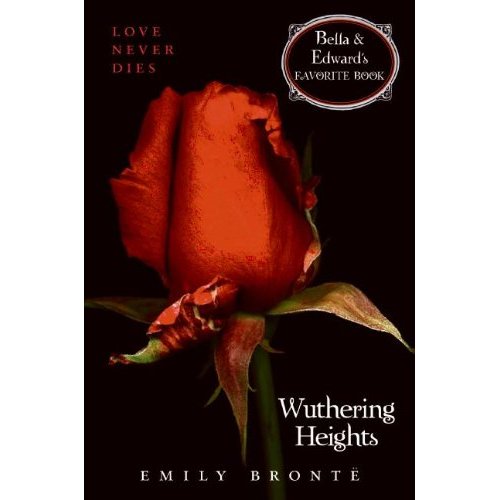
I read an interesting post over at The Speculative Scotsman about the marketing technique applied to the new editions of Scott Westerfeld's Uglies series. The covers themselves aren't all that impressive, to be honest, but Niall Alexander is more interested by the tagline that appears at the top of the covers: "Before The Hunger Games, there was". He asks the following questions:
In general, referential marketing is cheap. It sells your book short, it's unfair to the author, and it's unfair to readers. Publishers need to be working to publish new and original books, and any move on their part to link new books to a more popular previous release (or as we see in this bizarre case, a reissue linked to a newer hit) is detracting from the individuality of the less-popular book. It's furthermore bad business planning - when backlash hits your popular book (and eventually, backlash will strike), readers may want to avoid books they otherwise would have gone for simply because of the association (I have often fallen for this kind of guilt-by-association...). And when the fad fades, you'll be left with a whole bunch of potential readers ignoring your individually worthwhile book because they assume it's just more of the same.
As for comparative reviews, I think the problem goes much deeper. Again we have the issue of having to rest the book up on a more popular crutch and not allowing it to grow individually, but this time there's also a clear benefit to the comparisons. In a critical review, a reader can gain a better understanding of the comparison. I'm not just casually tying The Hunger Games and Uglies without explaining why, I'm going into depth about the way in which both live in the dystopian subgenre. I'm explaining why I think these two books deserve to be compared. I'm using the comparison to highlight aspects of the book I want to discuss on a critical level. It's maybe not the best review style, but I can still find logical justification for it and often use it myself.
Then again, a review that doesn't actually go in-depth about the similarities and differences is probably no better than the referential marketing. It's never all black and white. On the whole, though, I feel we should tread these waters carefully. Just look where referential marketing can lead us.
Still, the idea of selling one work on the merits of another troubles me somewhat, and I want to know: what do you guys think about this sort of... referential marketing? Good, bad, or butt-ugly? And another thing. If we extend the question out a bit, how do reviews which make such comparisons sit with you?Here's the thing: I don't think referential marketing and review comparisons belong to the same camp at all. I mean, yes, they're vaguely similar in that they both require some kind of more popular book to support their claims. But referential marketing is marketing, and I would hope that comparisons slipped into a review stem from a critical source.
In general, referential marketing is cheap. It sells your book short, it's unfair to the author, and it's unfair to readers. Publishers need to be working to publish new and original books, and any move on their part to link new books to a more popular previous release (or as we see in this bizarre case, a reissue linked to a newer hit) is detracting from the individuality of the less-popular book. It's furthermore bad business planning - when backlash hits your popular book (and eventually, backlash will strike), readers may want to avoid books they otherwise would have gone for simply because of the association (I have often fallen for this kind of guilt-by-association...). And when the fad fades, you'll be left with a whole bunch of potential readers ignoring your individually worthwhile book because they assume it's just more of the same.
As for comparative reviews, I think the problem goes much deeper. Again we have the issue of having to rest the book up on a more popular crutch and not allowing it to grow individually, but this time there's also a clear benefit to the comparisons. In a critical review, a reader can gain a better understanding of the comparison. I'm not just casually tying The Hunger Games and Uglies without explaining why, I'm going into depth about the way in which both live in the dystopian subgenre. I'm explaining why I think these two books deserve to be compared. I'm using the comparison to highlight aspects of the book I want to discuss on a critical level. It's maybe not the best review style, but I can still find logical justification for it and often use it myself.
Then again, a review that doesn't actually go in-depth about the similarities and differences is probably no better than the referential marketing. It's never all black and white. On the whole, though, I feel we should tread these waters carefully. Just look where referential marketing can lead us.
Sunday, March 18, 2012
Britannica's new look
Most of you have probably heard by now about Encyclopaedia Britannica ending its 244-year print run. Many sites and blogs have wondered about the implications of Encyclopaedia Britannica closing its presses, but I find myself surprisingly okay with the new model. To be perfectly honest, I think they're doing the right thing.
The fact is that print encyclopedias are mostly obsolete. Today, when I turn to my personal set of Encyclopaedia Britannic (a 1966 set I inherited from my aunt), I find myself more often than not failing to find what I was originally looking for. The same goes for when I browse through my family's 1986 set. When I need to know something, it's easier to search for it online. Yes, there's the added struggle of ensuring that I'm accessing a reliable source, but it doesn't take long to adjust.
But what I truly admire about this story is how the Encyclopaedia Britannica has come to terms with the modern age. Instead of simply fading away into obscurity, they have turned their focus to the online Britannica.com. Instead of simply forgetting their original mission statement, the Encyclopaedia Britannica has seen the face of the future and has decided to embrace it.
Is this an indicator that all print publishing will one day go digital? I've said it before and I'll say it again: no. Twenty-six volumes of a print encyclopedia (of which the vast majority will never be read) is a notable waste of paper. It provides users with a clumsy interface and is outdated the moment it's published. Literature (fiction, non-fiction, regardless) is of an inherently different nature. Yes, publishers should embrace the digital age similar to the Encyclopaedia Britannica, but that does not mean that all print publishing is on its way out. It just means that it's time for a change.
In the meantime, I will keep my handsome 1966 set. With entries on countries that no longer exist, mysteries humanity has long since solved, and contemporary observations on what I've studied in history class, the volumes provide me with more information than I could ever find online about how the world was in 1966. This, at least, Britannica.com will never be able to emulate.
The fact is that print encyclopedias are mostly obsolete. Today, when I turn to my personal set of Encyclopaedia Britannic (a 1966 set I inherited from my aunt), I find myself more often than not failing to find what I was originally looking for. The same goes for when I browse through my family's 1986 set. When I need to know something, it's easier to search for it online. Yes, there's the added struggle of ensuring that I'm accessing a reliable source, but it doesn't take long to adjust.
But what I truly admire about this story is how the Encyclopaedia Britannica has come to terms with the modern age. Instead of simply fading away into obscurity, they have turned their focus to the online Britannica.com. Instead of simply forgetting their original mission statement, the Encyclopaedia Britannica has seen the face of the future and has decided to embrace it.
Is this an indicator that all print publishing will one day go digital? I've said it before and I'll say it again: no. Twenty-six volumes of a print encyclopedia (of which the vast majority will never be read) is a notable waste of paper. It provides users with a clumsy interface and is outdated the moment it's published. Literature (fiction, non-fiction, regardless) is of an inherently different nature. Yes, publishers should embrace the digital age similar to the Encyclopaedia Britannica, but that does not mean that all print publishing is on its way out. It just means that it's time for a change.
In the meantime, I will keep my handsome 1966 set. With entries on countries that no longer exist, mysteries humanity has long since solved, and contemporary observations on what I've studied in history class, the volumes provide me with more information than I could ever find online about how the world was in 1966. This, at least, Britannica.com will never be able to emulate.
Wednesday, March 14, 2012
Reviews are not walls
Years ago, I wrote about my hesitation in rating or reviewing books too quickly. This is a mistake I frequently make, often jumping to conclusions or saying stupid things like "This book will stay with me for a long time to come", and then forgetting all the details one week later. The past few years have seen me trying to rein back this instinct to immediately review, but I haven't conquered it quite yet.
Here's the thing. As much as I want to bite my tongue, sometimes the immediate reaction is the more powerful one. Sometimes that immediacy is what brings the book to life - with all the details still fresh in my mind, I'm not simply attempting to rebuild the book from a dim memory. It's all still real to me. And as a reader who notoriously forgets the names of characters and the finer details of certain stories, maybe these immediate responses are better in certain ways.
What I'm learning is that this doesn't necessarily clash with my previous statement. Opinions change. Reviews can be amended or rewritten. Does this necessarily cancel out the previous review? I don't think so. Those opinions, as well as those thoughts, feelings and impressions, still stand in their relative position. That time has waved its magic wand and has made me see the book differently doesn't negate the fact that at a certain point I held other opinions.
All of this got me thinking about reviewing in general, and makes me wonder about my reviewing style. I've mostly avoided reviews on this site, based on an early impression that simply posting reviews would be a messy way to blog. I was worried that any reviews posted here would get lost and wouldn't reach the appropriate audience. I've stuck to websites like Amazon (and more recently, Goodreads) since then. But those sites compel me to write reviews a certain way. Each has its own style, its own approach to how a review should be. Neither style quite fits the sporadic reviews I write in my personal notebooks. And none of these outlets enable me to write the reviews I truly want to be writing - flexible reviews.
Reviews are not walls. They aren't fixed structures to force me to adhere to a specific model. Every blogger, reviewer and simple book lover will write about books in different ways. Some will discuss their emotional reaction to the book. Some will detail the finer plot points. Others will prefer to quote passages, and others still with dissect the book with familiarity and ease. Some will rate the book according to a personal scale, others forgo ratings and stick to the written word. No two people review exactly the same. And when someone does review, there aren't rules that say opinions can't change. If a few months later you find yourself wanting to amend what you said, there is absolutely no reason not to.
Here's the thing. As much as I want to bite my tongue, sometimes the immediate reaction is the more powerful one. Sometimes that immediacy is what brings the book to life - with all the details still fresh in my mind, I'm not simply attempting to rebuild the book from a dim memory. It's all still real to me. And as a reader who notoriously forgets the names of characters and the finer details of certain stories, maybe these immediate responses are better in certain ways.
What I'm learning is that this doesn't necessarily clash with my previous statement. Opinions change. Reviews can be amended or rewritten. Does this necessarily cancel out the previous review? I don't think so. Those opinions, as well as those thoughts, feelings and impressions, still stand in their relative position. That time has waved its magic wand and has made me see the book differently doesn't negate the fact that at a certain point I held other opinions.
All of this got me thinking about reviewing in general, and makes me wonder about my reviewing style. I've mostly avoided reviews on this site, based on an early impression that simply posting reviews would be a messy way to blog. I was worried that any reviews posted here would get lost and wouldn't reach the appropriate audience. I've stuck to websites like Amazon (and more recently, Goodreads) since then. But those sites compel me to write reviews a certain way. Each has its own style, its own approach to how a review should be. Neither style quite fits the sporadic reviews I write in my personal notebooks. And none of these outlets enable me to write the reviews I truly want to be writing - flexible reviews.
Reviews are not walls. They aren't fixed structures to force me to adhere to a specific model. Every blogger, reviewer and simple book lover will write about books in different ways. Some will discuss their emotional reaction to the book. Some will detail the finer plot points. Others will prefer to quote passages, and others still with dissect the book with familiarity and ease. Some will rate the book according to a personal scale, others forgo ratings and stick to the written word. No two people review exactly the same. And when someone does review, there aren't rules that say opinions can't change. If a few months later you find yourself wanting to amend what you said, there is absolutely no reason not to.
Friday, March 9, 2012
A few places around the web
- From a comment on this Guardian article on foreign fiction translations: "There's one great plus about being brought up in a minority language and that is it forces you to explore literature from other countries." The truth is that it will take us many more years to begin to approach the diversity in world fiction many other countries have. The comments give rise to many different approaches to translations (from those who avoid them to those who embrace them), and make for very interesting reading.
- The last remaining hope for eBook library lending has decided that it's going to go the jerk route. Great to see Random House understands the importance of libraries and has decided that instead of making its book freely and cheaply available to the same institutions that greatly encourage reading and book-buying, they're going to up the price...
- ...which leads us to a nicely concise post from a while back about the recent publishing trends and the eMess*. Almost everything I've ever wanted to say (and have been unable to phrase) about publishing can be found in that post.
- To end on a slightly cheerier note, I am quite impressed with this concept of a picture book library for small children. What better way to get these kids to love reading, if not give them a wonderful place to fall in love?
* I realize this is not an official term to describe the publishing industry's problems with ePublishing, but it fits nicely in this case...
Friday, March 2, 2012
Sci-fi vs. fantasy
I recently heard this excellent distinction between the two genres.
Fantasy: Because it's magic, dammit!
Sci-fi: Because it's the future, dammit!
Tuesday, February 28, 2012
Worlds within worlds within words | The Golden Age
To say that I loved reading The Golden Age by Michal Ajvaz would be an understatement. This is the book I've been waiting for: that fantastic experience that caught me off guard and absolutely enchanted me. When I talk about wanting books that challenge and surprise me, I'm talking about this. I'm talking about a book as beautiful, as confusing, and as magical as The Golden Age.
I know this isn't a book for everyone. I know it's a book that has frustrated some readers with its digression, its stories within stories within stories, with its disconnect, and even with its distinct storytelling style. But it's a novel that appealed to the fantasy-lover within me (and in one particular story, even to my personal sci-fi lover), a novel with a lyrical and light writing style, and wondrous ideas. The novel's structure reminded me of everything I love about stories - the way they digress, the way they fit around each other, and the way they tie back together (or don't).
The back of the book would describe the novel as a "travelogue". I found myself thinking of it more as a very descriptive story. The narrator relates to us what he saw and encountered on the unnamed island in a style that one Goodreads reviewer criticized for being all "tell" and no "show". But given the focus of the book on storytelling and language and words, I was not surprised by this telling. Ajvaz creates a lovely miniature world before the reader and hands it off gently. I felt like Ajvaz was sharing something with me, sitting next to me, smirking as I tried to find my bearings in his multi-layered world.
I can easily divide the book into two parts. The first focuses more on straight-up descriptions of the island - a few anecdotes and references, but it's mostly Ajvaz building the island and its world. The second (which does have a small overlap with the world-building) is more storytelling itself. Ajvaz's focus on language melts away into stories that twist around and rise up from the depths of each other. To a certain degree, this writing style reminded me of the wonderful World's End (Volume 8 of Neil Gaiman's The Sandman), in that it houses many levels of stories within stories and is told in a similarly magical tone.
If I had to level any complaints against this beautiful book, I would have to admit that the ending is abrupt. It's bad enough that I didn't want the book to end at all, but like any book of this kind, there can be no true cut-off. Ajvaz himself, in referencing the internal stories, admits that stories can go on forever and ever. You can always go deeper. You can always find another story that relates. You can always keep the magic going.
.jpg) |
| Layers and layers of stories |
The back of the book would describe the novel as a "travelogue". I found myself thinking of it more as a very descriptive story. The narrator relates to us what he saw and encountered on the unnamed island in a style that one Goodreads reviewer criticized for being all "tell" and no "show". But given the focus of the book on storytelling and language and words, I was not surprised by this telling. Ajvaz creates a lovely miniature world before the reader and hands it off gently. I felt like Ajvaz was sharing something with me, sitting next to me, smirking as I tried to find my bearings in his multi-layered world.
I can easily divide the book into two parts. The first focuses more on straight-up descriptions of the island - a few anecdotes and references, but it's mostly Ajvaz building the island and its world. The second (which does have a small overlap with the world-building) is more storytelling itself. Ajvaz's focus on language melts away into stories that twist around and rise up from the depths of each other. To a certain degree, this writing style reminded me of the wonderful World's End (Volume 8 of Neil Gaiman's The Sandman), in that it houses many levels of stories within stories and is told in a similarly magical tone.
If I had to level any complaints against this beautiful book, I would have to admit that the ending is abrupt. It's bad enough that I didn't want the book to end at all, but like any book of this kind, there can be no true cut-off. Ajvaz himself, in referencing the internal stories, admits that stories can go on forever and ever. You can always go deeper. You can always find another story that relates. You can always keep the magic going.
Sunday, February 26, 2012
SAFL #11: The Golden Age
 I'll be posting more about this one in a couple of days, but even after several days of thinking about it and writing about it, I'm still amazed by how incredible this novel is. Heavily focused on the magic of words and stories, The Golden Age by Michal Ajvaz has that fantastic quality that makes it the very definition of SAFL.
The Golden Age seems to begin in a somewhat standard fashion - the narrator tells us of a wonderful and exotic island. Soon, though, fantasy elements make their way into the story and internal tales begin to twist and turn around each other, eventually overtaking the original narrative. This makes for fairy-tale like stories that contain within them enough fantasy (and even science fiction, in one substory) to transform the novel into something utterly magical and beautiful.
There are many lovely and quote-worthy sentences in the book (see here), but this one has to be my favorite:
I have noticed that a lot of literary critics are bothered by the mixing of genres; indeed, some of them are so easily offended in this regard that they experience distress when faced with trifles like the use in a passage of fiction of concepts of theory (as if there were some fundamental difference between stories of people, animals, plants and objects on the one hand and stories of concepts of the other). -p. 187
Thursday, February 23, 2012
Literature as a social critique
Over at Words and Peace, a short prompt about a "Dickens or a Zola for our time" from a couple weeks ago, coinciding with the first Zola novel I've read in over two years, has gotten the wheels in my head turning over that question and trying to figure out what it is about Zola (and to a certain extent, Dickens) that I cannot seem to find in modern novels. In my response to that post, I recommended a few recent novels that seemed to capture a fairly good picture of modern society. But each novel aims its gaze at an entirely different section of the US and its incredibly diverse and varied population. Furthermore, I could not immediately think of a good non-US-centric novel that does the same. I suggested (in my obscenely long comment - my sincerest apologies for that) that perhaps literature today focuses less on the larger society as a whole, but more on the individual character. "Literary" novels of our era tend to be more character-based and don't set their sites as high as portraying the current social dynamic.
While I haven't read enough Dickens to be a reliable authority, I'm currently reading my sixth Zola novel and have spent many years reading about the man and his writing. In my mind, Zola is a writer unlike any other - he is a project-writer, an idealist, a sharp-eyed observer who sometimes can't hold his tongue. When he writes about alcoholism in L'Assommoir, there's a hint of his judgmental side filtering through. When he writes about strikes and poor worker conditions in Germinal, there is a persistent sense of humanity and truth emanating from the pages. His writing feels as relevant today as it must have in the 19th century, quick little dashes of truth that resonate to this very day.
In the Rougon-Macquart cycle, Zola sought to capture an entire society - a whole era - by chronicling the lives of these families. In "Les Quatre Evangiles" (his final works), Zola hoped to display French values and morals: Fruitfulness, Labor, Truth, and Justice. Zola died before he could see Truth published (and it was thus unedited upon posthumous publication) and before the completion of Justice, leaving the series incomplete. Les Quatre Evangiles echoes the Rougon-Macquart cycle in that each book is a stand-alone novel, but all center around a single family - the Froment family. Taken together, these two series (and, I presume, Zola's Les Trois Villes, which I have yet to read) paint a fascinating portrait of Zola's France. From all angles. Zola gives us wealth and poverty, struggle and ease, love and hate. I have yet to read all of Zola's novels (it's one of the only literary goals I've ever set myself), but Zola's ambition and scope are hard to refute.
So back to the original question: where are authors like this today? Where are the books that seek to tell this story in our modern age? Can one single author even attempt a project of this magnitude? I struggled to come up with even three individual examples of social critique (and one of them is "ironic"), but the fact is that if I look at the hundreds of books I've read in the past few years, very few novels would qualify, and fewer still that are good. I've read plenty of books that try to describe other, "exotic" cultures (often resulting in gross generalizations and poor writing). I've read many books that present a character in a painful and emotional state and then allow us to follow him/her. I've read fantasy and sci-fi novels that have used their alternate realities to deeply explore their mirror societies.
But no contemporary social critique like Zola. I'm starting to think it's impossible. An author would have to be devoted to writing a multitude of very different books and producing an output akin to James Patterson's. Publishers would have to be willing to support individual novels that would have varying levels of success. And the author would have to work very hard to uncover the many cores of modern society. Even in a smaller country than the U.S., this is no simple task. I'm not sure many modern writers would want to take that on. And I'm not sure many modern readers would necessarily appreciate such an important and perhaps challenging project either.
As for myself, I'll be making a point to search for a few more novels of this kind. The three that I could come up with were books that I greatly enjoyed for their social critique (American Rust, The Barbarian Nurseries, and to a lesser degree Fathermucker). With a bit more Zola in my system, I'm eager to find further titles that qualify. While perhaps no single writer can take up Zola's mantle, many individual novels (from across the globe) could ultimately serve the same purpose. I intend to find them.
While I haven't read enough Dickens to be a reliable authority, I'm currently reading my sixth Zola novel and have spent many years reading about the man and his writing. In my mind, Zola is a writer unlike any other - he is a project-writer, an idealist, a sharp-eyed observer who sometimes can't hold his tongue. When he writes about alcoholism in L'Assommoir, there's a hint of his judgmental side filtering through. When he writes about strikes and poor worker conditions in Germinal, there is a persistent sense of humanity and truth emanating from the pages. His writing feels as relevant today as it must have in the 19th century, quick little dashes of truth that resonate to this very day.
In the Rougon-Macquart cycle, Zola sought to capture an entire society - a whole era - by chronicling the lives of these families. In "Les Quatre Evangiles" (his final works), Zola hoped to display French values and morals: Fruitfulness, Labor, Truth, and Justice. Zola died before he could see Truth published (and it was thus unedited upon posthumous publication) and before the completion of Justice, leaving the series incomplete. Les Quatre Evangiles echoes the Rougon-Macquart cycle in that each book is a stand-alone novel, but all center around a single family - the Froment family. Taken together, these two series (and, I presume, Zola's Les Trois Villes, which I have yet to read) paint a fascinating portrait of Zola's France. From all angles. Zola gives us wealth and poverty, struggle and ease, love and hate. I have yet to read all of Zola's novels (it's one of the only literary goals I've ever set myself), but Zola's ambition and scope are hard to refute.
So back to the original question: where are authors like this today? Where are the books that seek to tell this story in our modern age? Can one single author even attempt a project of this magnitude? I struggled to come up with even three individual examples of social critique (and one of them is "ironic"), but the fact is that if I look at the hundreds of books I've read in the past few years, very few novels would qualify, and fewer still that are good. I've read plenty of books that try to describe other, "exotic" cultures (often resulting in gross generalizations and poor writing). I've read many books that present a character in a painful and emotional state and then allow us to follow him/her. I've read fantasy and sci-fi novels that have used their alternate realities to deeply explore their mirror societies.
But no contemporary social critique like Zola. I'm starting to think it's impossible. An author would have to be devoted to writing a multitude of very different books and producing an output akin to James Patterson's. Publishers would have to be willing to support individual novels that would have varying levels of success. And the author would have to work very hard to uncover the many cores of modern society. Even in a smaller country than the U.S., this is no simple task. I'm not sure many modern writers would want to take that on. And I'm not sure many modern readers would necessarily appreciate such an important and perhaps challenging project either.
As for myself, I'll be making a point to search for a few more novels of this kind. The three that I could come up with were books that I greatly enjoyed for their social critique (American Rust, The Barbarian Nurseries, and to a lesser degree Fathermucker). With a bit more Zola in my system, I'm eager to find further titles that qualify. While perhaps no single writer can take up Zola's mantle, many individual novels (from across the globe) could ultimately serve the same purpose. I intend to find them.
Monday, February 20, 2012
Quote of the day
You probably won't miss anything important if you skip the next couple of chapters, but you could miss the encounter that holds the key to the entire text. -p.275Michal Ajvaz's The Golden Age (tr. Andrew Oakland) is one of the most bizarre and wondrous books I've read in several months. I'll discuss it more once I finish reading it, but this quote exemplifies so much of what I'm enjoying in this novel. Ajvaz takes the reader on so many strange tangents that at some point you just get lost and enjoy the ride, but the search for the "key" is still there. The bigger story is still there... somewhere. And I personally cannot wait to find it.
Sunday, February 19, 2012
SAFL #8-10: A few classics
When I think of potential Science and Fantasy Literature candidates, there are a few that are so clearly classics - cornerstones - of the genre. These are books I'm nervous to go into too much depth about in part because they've been done by people much more qualified than myself, but also because it's been so long since I've read them that sometimes the finer details escape me.
But the fact that each of these classics managed to completely blow me away is not something I've forgotten.
 SAFL #8: On the sci-fi end, we've got Ursula K. Le Guin's stupendous The Left Hand of Darkness. This is a book that challenged my typical understanding of sci-fi. A book so wonderfully written, so fully complete and so diverse, The Left Hand of Darkness cannot fail to surprise and enchant readers. Le Guin is an excellent storyteller, creating realistic and interesting characters, raising fascinating social questions and preferring a more subtle, quiet form of writing to the bombastic style that characterizes many pulp sci-fi books. A classic in its genre, and a wonderful work of literature overall.
 SAFL #9: On the fantasy end, I find myself returning to some of those old-school kids classics. In this case, the book is Michael Ende's wondrous The Neverending Story. The first book I ever properly summarized and reviewed in my then-new review notebook, it was also one of few books that managed to keep its status in my memory years later. A rich, fantastic book, The Neverending Story is as much about the magic of literature and stories as it is about its main characters. This is one I'll often return to in bits and pieces (by opening a random page and reading short passages) and one that will likely never leave my memory for long. A beautiful, magical story.
 SAFL #10: Finally, we have a book that can certainly be counted as one of the high-water marks of science fiction... but one that I sometimes think blurs the lines between sci-fi and fantasy. Frank Herbert's Dune is intelligent, fascinating and shines in its focus on world-building. While it comes from an earlier age of sci-fi, it never feels trite, instead remaining as interesting and entertaining to readers today as it must have been years ago. Dune is a book partially marred by disappointing sequels and by its occasionally dry style, but it creates one of the finest worlds in science fiction, strong central characters, and an incredibly well-written, good story.
But the fact that each of these classics managed to completely blow me away is not something I've forgotten.
 SAFL #8: On the sci-fi end, we've got Ursula K. Le Guin's stupendous The Left Hand of Darkness. This is a book that challenged my typical understanding of sci-fi. A book so wonderfully written, so fully complete and so diverse, The Left Hand of Darkness cannot fail to surprise and enchant readers. Le Guin is an excellent storyteller, creating realistic and interesting characters, raising fascinating social questions and preferring a more subtle, quiet form of writing to the bombastic style that characterizes many pulp sci-fi books. A classic in its genre, and a wonderful work of literature overall.
 SAFL #9: On the fantasy end, I find myself returning to some of those old-school kids classics. In this case, the book is Michael Ende's wondrous The Neverending Story. The first book I ever properly summarized and reviewed in my then-new review notebook, it was also one of few books that managed to keep its status in my memory years later. A rich, fantastic book, The Neverending Story is as much about the magic of literature and stories as it is about its main characters. This is one I'll often return to in bits and pieces (by opening a random page and reading short passages) and one that will likely never leave my memory for long. A beautiful, magical story.
 SAFL #10: Finally, we have a book that can certainly be counted as one of the high-water marks of science fiction... but one that I sometimes think blurs the lines between sci-fi and fantasy. Frank Herbert's Dune is intelligent, fascinating and shines in its focus on world-building. While it comes from an earlier age of sci-fi, it never feels trite, instead remaining as interesting and entertaining to readers today as it must have been years ago. Dune is a book partially marred by disappointing sequels and by its occasionally dry style, but it creates one of the finest worlds in science fiction, strong central characters, and an incredibly well-written, good story.
Sunday, February 12, 2012
Disappointment months later | The Princess, the King and the Anarchist
A few months ago, Michelle of Pieces fame posted about Robert Pagani's The Princess, the King and the Anarchist and the differences of opinions she and her book club members faced. Having enjoyed the book, Michelle was surprised at how much her fellow members hated the book. In the comments, I joined Michelle in suggesting that the book was playful - having read the first fifteen or so pages in a bookstore several months earlier (I decided not to buy it due to an unreasonably high price for such a slim book), I had been struck by the charm of Pagani's writing. I promised Michelle I would let her know of my final assessment of the book, once I got around to reading the whole thing.
 Well. Now I've gotten around to finishing it, and I feel I owe Michelle my opinion (unlike my thoughts on Brodeck, which I promised years ago and never repaid - and it was incredible). The thing is, though, I'm now falling on the side of the other book club members - something about my experience with The Princess, the King and the Anarchist this time just did not sit well. At all.
It's a short book, a book that dips in and out of a single day lightly and easily. This is perhaps Pagani's greatest strength - he wastes no time building anything. It's as though he's handed me some kind of short, black-and-white film that flickers and jumps scenes abruptly. The story is three-pronged, told from the third-person points-of-view of the princess, the king and the anarchist. Their voices, however, remain fairly similar and can easily blend into one another (particularly between the two men). And here's the kicker - this time, the charm was missing.
Sitting on the floor of the bookstore several months ago, I found myself enchanted by the writing. It was clean, it was simple and it immediately drew me in. The characters seemed like they were living in a fairy tale, seemed to occupy a strange world between the realms of historical fiction and fable. Which is, I suppose, what Pagani was going for. But upon picking it up several months later, having forgotten the difference of opinion surrounding the book, I felt cheated and empty. The writing had lost its sparkle, the characters were merely insufferable, and the ending all-around confusing and even somewhat upsetting.
To put it simply, I was disappointed. Truly and sincerely disappointed. Characterization felt thin, the writing felt like it was trying too hard, and the storytelling was confusing, vague and incoherent (which are all kind of aspects of the same problem, I realize, but this is the best description I can come up with). It's not worthless by any means - the writing at times is fairly magical - but it just seemed to fade away somewhere in the middle. Only the short length kept me going at the same pace. While I know this happens to many readers (frequently), I have to wonder if things would have turned out differently had I remained on that bookstore floor for just an hour more, or had taken the book home with me. Would the magic have remained? Would I too have found the book to be playful and gently mocking, or would I feel as frustrated as I do now? Alas, life does not proceed in parallel. I was disappointed, end of story.
 Well. Now I've gotten around to finishing it, and I feel I owe Michelle my opinion (unlike my thoughts on Brodeck, which I promised years ago and never repaid - and it was incredible). The thing is, though, I'm now falling on the side of the other book club members - something about my experience with The Princess, the King and the Anarchist this time just did not sit well. At all.
It's a short book, a book that dips in and out of a single day lightly and easily. This is perhaps Pagani's greatest strength - he wastes no time building anything. It's as though he's handed me some kind of short, black-and-white film that flickers and jumps scenes abruptly. The story is three-pronged, told from the third-person points-of-view of the princess, the king and the anarchist. Their voices, however, remain fairly similar and can easily blend into one another (particularly between the two men). And here's the kicker - this time, the charm was missing.
Sitting on the floor of the bookstore several months ago, I found myself enchanted by the writing. It was clean, it was simple and it immediately drew me in. The characters seemed like they were living in a fairy tale, seemed to occupy a strange world between the realms of historical fiction and fable. Which is, I suppose, what Pagani was going for. But upon picking it up several months later, having forgotten the difference of opinion surrounding the book, I felt cheated and empty. The writing had lost its sparkle, the characters were merely insufferable, and the ending all-around confusing and even somewhat upsetting.
To put it simply, I was disappointed. Truly and sincerely disappointed. Characterization felt thin, the writing felt like it was trying too hard, and the storytelling was confusing, vague and incoherent (which are all kind of aspects of the same problem, I realize, but this is the best description I can come up with). It's not worthless by any means - the writing at times is fairly magical - but it just seemed to fade away somewhere in the middle. Only the short length kept me going at the same pace. While I know this happens to many readers (frequently), I have to wonder if things would have turned out differently had I remained on that bookstore floor for just an hour more, or had taken the book home with me. Would the magic have remained? Would I too have found the book to be playful and gently mocking, or would I feel as frustrated as I do now? Alas, life does not proceed in parallel. I was disappointed, end of story.
Down and up in a single day
If I ever needed proof that books - literature - was capable of inherently influencing the moods of readers, I need look no further than my experiences today. I began the day with the final parts of The Last of the Just by André Schwarz-Bart, a book that had by no means been cheerful thus far. But somehow in its final pages, the book managed to turn even more grim, and ended on a particularly painful note. The effect was powerful, and when I set the book aside I found myself quite deeply depressed.
This happens, of course, and I shouldn't have been too surprised. After a while, as I went about my day, the pure ache of the book refused to leave me. I went to my bookshelves, hoping to find another book that would take care of the funk. But every book on hand seemed too depressing, too serious, too heavy to take my mind off Schwarz-Bart's surprisingly disturbing story. They all seemed as though they would merely enhance the mood. It wasn't until several hours later that I remembered that I had just checked Fathermucker out of the library the other day and that the book was still somewhere in my bag, promising silly jokes and light-hearted jabs at our modern world.
I've been wanting to read Fathermucker since reading the hook of a first chapter Harper posted to their Scribd account a couple months ago. The book proved to be slightly less light than it gives the impression of being (actually telling an interesting story and raising some very interesting points about society), but was exactly the kind of amusing and entertaining fare I needed to clear my head (also, the second book I've read in recent months that's referenced Sufjan Stevens... which I find somewhat strange). As I finished reading it, I felt relieved of the heaviness The Last of the Just had set on me, but pondering other issues like parenthood and Asberger's. Proof that sometimes we all need a bit of a break from the "serious" stuff... even if what we end up reading isn't actually less meaningful.
This happens, of course, and I shouldn't have been too surprised. After a while, as I went about my day, the pure ache of the book refused to leave me. I went to my bookshelves, hoping to find another book that would take care of the funk. But every book on hand seemed too depressing, too serious, too heavy to take my mind off Schwarz-Bart's surprisingly disturbing story. They all seemed as though they would merely enhance the mood. It wasn't until several hours later that I remembered that I had just checked Fathermucker out of the library the other day and that the book was still somewhere in my bag, promising silly jokes and light-hearted jabs at our modern world.
I've been wanting to read Fathermucker since reading the hook of a first chapter Harper posted to their Scribd account a couple months ago. The book proved to be slightly less light than it gives the impression of being (actually telling an interesting story and raising some very interesting points about society), but was exactly the kind of amusing and entertaining fare I needed to clear my head (also, the second book I've read in recent months that's referenced Sufjan Stevens... which I find somewhat strange). As I finished reading it, I felt relieved of the heaviness The Last of the Just had set on me, but pondering other issues like parenthood and Asberger's. Proof that sometimes we all need a bit of a break from the "serious" stuff... even if what we end up reading isn't actually less meaningful.
Tuesday, February 7, 2012
Fantastic Flying Books
For those who have yet to see it, The Fantastic Flying Books of Mr. Morris Lessmore is quite honestly one of the loveliest short films I've ever had the pleasure of viewing.
Saturday, February 4, 2012
Controversy on a fantasy frontier
I consider Patricia C. Wrede's The Enchanted Forest Chronicles to be one of the funniest kids fantasy series I've ever had the pleasure of reading, so when I came across her recent young adult fantasy book Thirteenth Child at the library, I checked it out. The book itself is pleasant and rather unique in its approach - Wrede's sets her story in the American frontier and builds magic systems that play on older fantasy tropes as well as creating newer ones. A major theme in the book is the importance of different magic styles and traditions - while the majority of magic is European, main character Eff finds herself applying different magics and thus saving the day.
But when I went online to read a bit more about the book (a habit I really ought to be breaking), I learned that there was significant controversy surrounding this simple book when it was published. Apparently, many readers took fault with the fact that at no point in the story does Wrede mention American Indians; in fact, it seems as though she has consciously removed them from her fictionalized world. It was only after reading about the drama that it even occurred to me that Thirteenth Child had lacked mention of American Indians - the omission seems to fit (in my mind) with many other not-so-subtle changes Wrede makes in her world.
It does beg the question: is it okay? Many, many readers have expressed outrage at this "racism", have dubbed Wrede's choice as inexcusable, and have attempted to minimize the book's exposure. But is it justified? Coming straight out of the book, I'm not sure the criticism fair. Wrede has written an alternate history fantasy, meaning it's all made-up. Yes, there are a few references to American Founding Fathers and Lewis and Clarke and others, but the names of the regions, the timing of major historical events (like wars, for example), animals, the presence of magic and many other cultural differences make it very obvious that Thirteenth Child is fantasy fiction. It is not meant to reflect our real world to the letter. And with the nice way Wrede touches on racism and the exclusion of non-European traditions in "modern" society, I find myself less and less inclined to charging Wrede with inappropriate world-building. I'm curious as to what others think of this matter.
But when I went online to read a bit more about the book (a habit I really ought to be breaking), I learned that there was significant controversy surrounding this simple book when it was published. Apparently, many readers took fault with the fact that at no point in the story does Wrede mention American Indians; in fact, it seems as though she has consciously removed them from her fictionalized world. It was only after reading about the drama that it even occurred to me that Thirteenth Child had lacked mention of American Indians - the omission seems to fit (in my mind) with many other not-so-subtle changes Wrede makes in her world.
It does beg the question: is it okay? Many, many readers have expressed outrage at this "racism", have dubbed Wrede's choice as inexcusable, and have attempted to minimize the book's exposure. But is it justified? Coming straight out of the book, I'm not sure the criticism fair. Wrede has written an alternate history fantasy, meaning it's all made-up. Yes, there are a few references to American Founding Fathers and Lewis and Clarke and others, but the names of the regions, the timing of major historical events (like wars, for example), animals, the presence of magic and many other cultural differences make it very obvious that Thirteenth Child is fantasy fiction. It is not meant to reflect our real world to the letter. And with the nice way Wrede touches on racism and the exclusion of non-European traditions in "modern" society, I find myself less and less inclined to charging Wrede with inappropriate world-building. I'm curious as to what others think of this matter.
Saturday, January 28, 2012
Links for the weekend
From an excellent guest post by Sharon T Rose over at Drying Ink about the relevance of science fiction:
Science fiction in all it incarnations steps outside of the usual and presents us with a fresh look at some things that are actually quite familiar to most of us. Star Trek is a classic example: all the issues and conflicts in the far-flung future make-believe were actually very relevant to the modern human audience. Class battles, racism, government, love and/or lust, culture clash, inequality ... those are all issues that you and I deal with in our everyday lives.On another end of the genre scale, a case for the classics by the ever-thoughtful Amanda of Dead White Guys (hat tip Entomology of a Bookworm):
[Classic] authors spent a great deal of time addressing the evils they saw in society. Charles Dickens and Victor Hugo attacked society’s treatment of the poor. Tolstoy’s meditations on serfdom speak to economic inequality in modern society. Dostoevsky addresses political oppression. Jane Austen and the Brontes all critique society’s treatment of women.Finally, Biblioklept has a wonderful write-up about one of my all-time favorite books (A Wrinkle in Time, discussed here and here) in honor of the fiftieth anniversary edition:
Wrinkle endures also because of its handling of complex themes of conformity, idealism, faith, and science. It’s a book that challenges a youngish audience to read in new ways.
Thursday, January 26, 2012
Quote of the week
Her laughter was never more to peal in the United Principalities or anywhere on this earth. Her sufferings had dissolved in a place of greenness and tranquility. Her face was no longer rosy, but thereafter, at least in the month of May, the color of the peonies would recall her cheeks. Now the human language, as many as she had learned, crumbled to dust in Paradise, where the children learn a single language, that of the Heavens.
-p. 173-174, The Days of the King - Filip Florian
Monday, January 23, 2012
SAFL Roundup: How to justify
Much like the very concept of SAFL, I'm stealing this idea directly from Space Station Mir. For those who may have forgotten (due to my disappointingly sporadic updates regarding this "project"), SAFL (Science and Fantasy Literature) seeks to name 20 powerhouse sci-fi and fantasy books that deserve to be ranked as straight-up Literature. I was naive at first, convinced that I'd be able to name twenty such books easily, without too much effort.
I was wrong. What I took on as a slight, light challenge, turned into an almost vicious determination to find books that qualify. My goals shifted as the project grew - I decided to minimize the number of young adult or kids books to be included in the list, I decided to try to find as many original proposals as possible, and to pick books that could be universally viewed as worthy recipients of the "Literature" stamp.
When I started seeking out SAFL, I was more open to including young adult or kids books in my list. Seeing as A Wrinkle in Time and The Giver are the first books that come to mind when I think of quality science fiction that has stood the test of time, these both made the early cut. The fact that both books are geared towards children and helped shape my perception of literature and science fiction in particular is only an asset, in my mind. The two books are intelligent, entertaining, well-written and truly timeless.
Among the adult books, though, there's a slight divide regarding my own definition of SAFL. On the one hand I have straight-up science fiction - books that undoubtedly belong to that genre but transcend it due to higher quality or classic status. These are books like Arthur C. Clarke's Childhood's End or Stanislaw Lem's excellent Solaris. On the other end there are books that incorporate fantasy or sci-fi within their more standard stories, books that perhaps have an easier time appealing to audiences unused to sci-fi and fantasy. Here I recommended One Hundred Years of Solitude (literature by anyone's measure, fantasy by mine) and the sadly underrated The Day Lasts More than a Thousand Years. And then Flatland just lives in a world of its own.
In the space of a year, I have managed to name and justify only seven books that I feel belong to the Literature camp. But there are a lot more, I'm just not posting about them. Some, it's true, don't fully deserve to be called literature, but are worth discussing for their shuffles between the two worlds. Others are classics I greatly enjoyed, but read so long ago I feel uncomfortable writing about them now that most of the details have faded from memory (Dune and The Lord of the Rings come to mind...). Furthermore, it's easy to notice my personal skew towards science fiction as opposed to fantasy, something both unintentional and misleading.
I'd like to fix these problems. I'm still searching for twenty SAFL titles, still searching for books that maybe don't get the readership they deserve because of their genre, still looking for books that incorporate science fiction or fantasy into an otherwise "literary" story, still looking for sci-fi and fantasy that makes my mind bend in a way only quality literature can. I just need to make a point to discuss my findings a bit more periodically.
I was wrong. What I took on as a slight, light challenge, turned into an almost vicious determination to find books that qualify. My goals shifted as the project grew - I decided to minimize the number of young adult or kids books to be included in the list, I decided to try to find as many original proposals as possible, and to pick books that could be universally viewed as worthy recipients of the "Literature" stamp.
When I started seeking out SAFL, I was more open to including young adult or kids books in my list. Seeing as A Wrinkle in Time and The Giver are the first books that come to mind when I think of quality science fiction that has stood the test of time, these both made the early cut. The fact that both books are geared towards children and helped shape my perception of literature and science fiction in particular is only an asset, in my mind. The two books are intelligent, entertaining, well-written and truly timeless.
Among the adult books, though, there's a slight divide regarding my own definition of SAFL. On the one hand I have straight-up science fiction - books that undoubtedly belong to that genre but transcend it due to higher quality or classic status. These are books like Arthur C. Clarke's Childhood's End or Stanislaw Lem's excellent Solaris. On the other end there are books that incorporate fantasy or sci-fi within their more standard stories, books that perhaps have an easier time appealing to audiences unused to sci-fi and fantasy. Here I recommended One Hundred Years of Solitude (literature by anyone's measure, fantasy by mine) and the sadly underrated The Day Lasts More than a Thousand Years. And then Flatland just lives in a world of its own.
In the space of a year, I have managed to name and justify only seven books that I feel belong to the Literature camp. But there are a lot more, I'm just not posting about them. Some, it's true, don't fully deserve to be called literature, but are worth discussing for their shuffles between the two worlds. Others are classics I greatly enjoyed, but read so long ago I feel uncomfortable writing about them now that most of the details have faded from memory (Dune and The Lord of the Rings come to mind...). Furthermore, it's easy to notice my personal skew towards science fiction as opposed to fantasy, something both unintentional and misleading.
I'd like to fix these problems. I'm still searching for twenty SAFL titles, still searching for books that maybe don't get the readership they deserve because of their genre, still looking for books that incorporate science fiction or fantasy into an otherwise "literary" story, still looking for sci-fi and fantasy that makes my mind bend in a way only quality literature can. I just need to make a point to discuss my findings a bit more periodically.
Saturday, January 21, 2012
Putting John Green into context | The Fault in Our Stars
I've waited a few days to write about The Fault in Our Stars by John Green. It hasn't been very easy to collect my thoughts. For starters, it's the most recent book by an immensely popular author, a book that many, many people have been eagerly anticipating (anticipating far more than I have, to be honest). But more to the point is the fact that Green's latest novel is a bit perplexing in a way I've grown to associate with his works.
The reason I've stuck with John Green over the years is because I like his style as an author. Back when I first read Looking for Alaska (and was thoroughly underwhelmed), I was struck by how easy-to-read his writing was. Green writes like he talks - a bit pretentiously, a bit unrealistically, but intelligently and with a lot of wit. Though I didn't really like the plot or characters in Green's debut, I stayed up until two in the morning to finish reading it, concluding that it just wasn't my style. And so the following year, I read Green's second novel, An Abundance of Katherines, which I quite enjoyed. In my growing, adolescent mind, the differing approaches of the two books made John Green an author worth reading, even if aspects of his writing were bothersome.
I only read Paper Towns, Green's third novel for young adults, after becoming well acquainted with Green's prolific online persona, as I reached the end of adolescence. The fact is that he truly writes like he talks - within the context of his personality, the way his male protagonists behave and the way things happen make it easier to forgive him for common young-adult novel transgressions (like the fact that all of his characters are unreasonably clever and witty and often sound very similar to each other).
Which leads me back to The Fault in Our Stars, which is both very similar to every other John Green book I've read until now, and markedly different from all others. Like everything Green writes, the characters in The Fault in Our Stars are pretentious and clever and witty and thoroughly self-aware. It should be annoying, but unlike Paper Towns (where I did ultimately feel annoyed but managed to ignore it...), I wasn't even bothered. Maybe it's because The Fault in Our Stars is narrated by a girl (a first for Green), maybe it's the fact that it's such an emotionally charged book, and maybe it's just that it's better written. On a technical level, I knew I could be bothered... but I wasn't.
The Fault in Our Stars does a very good job of breaking free of its expected realm. It may be a love story, but it works as well for young men as it might for women. It may be about teenagers, but adults will find as much to relate to as their younger counterparts. It may be a bit too clever, but anyone can feel the powerful emotional punches this book throws. It may seem like a simple story, but the simplicity is deceptive - The Fault in Our Stars runs a lot deeper than would appear.
The Fault in Our Stars is the first book by John Green I've purchased, having checked out all others from the library. I'm glad this is the one I bought. This is his best book so far and though my thoughts are still formulating, I suspect that I'll be coming back to reread it sometime soon.
The reason I've stuck with John Green over the years is because I like his style as an author. Back when I first read Looking for Alaska (and was thoroughly underwhelmed), I was struck by how easy-to-read his writing was. Green writes like he talks - a bit pretentiously, a bit unrealistically, but intelligently and with a lot of wit. Though I didn't really like the plot or characters in Green's debut, I stayed up until two in the morning to finish reading it, concluding that it just wasn't my style. And so the following year, I read Green's second novel, An Abundance of Katherines, which I quite enjoyed. In my growing, adolescent mind, the differing approaches of the two books made John Green an author worth reading, even if aspects of his writing were bothersome.
I only read Paper Towns, Green's third novel for young adults, after becoming well acquainted with Green's prolific online persona, as I reached the end of adolescence. The fact is that he truly writes like he talks - within the context of his personality, the way his male protagonists behave and the way things happen make it easier to forgive him for common young-adult novel transgressions (like the fact that all of his characters are unreasonably clever and witty and often sound very similar to each other).
 |
| Green Green signature |
The Fault in Our Stars does a very good job of breaking free of its expected realm. It may be a love story, but it works as well for young men as it might for women. It may be about teenagers, but adults will find as much to relate to as their younger counterparts. It may be a bit too clever, but anyone can feel the powerful emotional punches this book throws. It may seem like a simple story, but the simplicity is deceptive - The Fault in Our Stars runs a lot deeper than would appear.
The Fault in Our Stars is the first book by John Green I've purchased, having checked out all others from the library. I'm glad this is the one I bought. This is his best book so far and though my thoughts are still formulating, I suspect that I'll be coming back to reread it sometime soon.
Subscribe to:
Comments (Atom)