I don't remember where I first read about The Monstrumologist, but I clearly remember the major critique the reviewer had against the book: its complete and total lack of female characters. The general details of the book faded from my memory, but that one notion that a book could have absolutely no relevant female characters intrigued me somewhat. And so I kept that idea in mind as I finally delved down to read the book as a sort of mind-wiping distraction.
It's a relatively good assessment of the book, and an accurate indicator of its target audience. The Monstrumologist is a boy's book through and through, whether because of its clear tendency towards all things gory, or because of its masculine approach to hunting monsters, or even simply because of that one factoid someone mentioned years ago: there is not a single female character throughout The Monstrumologist. No romantic interest, no token female... nothing. And it's not even that the cast of characters is necessarily so small. It's just that every single character happens to be male, and happens to behave in what we traditionally label as a masculine behavior.
Then I got to wondering: how much should this actually influence the book itself? Is the book necessarily weaker for the fact that it has no female characters? I think it isn't. The characters are all of a certain cut. There's the insane monster hunter, the out-of-touch doctor, the revenge-thirsty teenager, the skeptic policeman... The characters themselves are fairly routine, and truthfully, adjusting the gender of one of them would have been significantly worse than the fact that there were no women overall. True, this indicates some kind of weakness in Yancey's ability to write well-rounded characters as a whole, but there's nothing inherently sexist about it. I didn't get the vibe that Yancey didn't want to write about girls for some defined reason, rather that he had a specific "boy's tale" in mind. Is that so terribly wrong?
I'm split. On the one hand, I know that young men read significantly less than young women, and that books are very rarely marketed exclusively for guys. On the other hand... how can a book so completely lack characters of the opposite gender? But now I'm realizing that this isn't just in "boys books". Often, the only male characters in books for young women is the romantic interest. How is that better? When you start looking at it, young adult books are often split along gender lines. It's... strange. And extremely problematic.
I've had months to think about this, and really... I've reached no conclusions. It bothers me that a book could be so utterly limited in its characterizations, but if those are the characterizations that make the book better, I really can't fault the author. The Monstrumologist overall isn't much more than mediocre (for reasons well beyond gender imbalances), but its clear boy-focus is inherently tied to its story. Something else probably would have rang false. So... thoughts?

Monday, February 25, 2013
Saturday, February 16, 2013
And in conclusion... Three Strong Women
 So I finally finished Three Strong Women by Marie Ndiaye and I've even had some time to absorb it and think about it a bit. It's an interesting book, but I find myself struggling to actually recommend it to readers. As seen through the rear-view mirror, Three Strong Women works much better than it did while I was actually reading it. Fit together, the three stories that make up this book suddenly seem clearer and more sharply tuned. But this does not detract from the book's flaws.
I mentioned in my last post that I was developing a theory about the title: Three Strong Women. Now, after having read all three stories I want to discuss it a bit more in depth because I think this is the strongest argument both in favor of reading the book, and possibly against it as well. This post will contain spoilers.
Okay. We have three women: Norah, Fanta and Khady. Norah and Khady give us their stories firsthand; Fanta's story is seen through the eyes of her husband. The three women face various struggles throughout their stories, mostly revolving around men in their lives. These are not romantic issues, though the dynamics of romantic love do come into play in each of the stories. These three women are supposed to be our "strong women". But truthfully, not one of the three is a strong woman by my definition, and this is in fact what makes the novel an interesting one.
Norah is technically the closest - she is independent, supports her daughter, her boyfriend, and her boyfriend's daughter, and is a successful lawyer despite whatever issues she may have had as a child. Yet she lives under her father's shadow, jumps when he says jump and in essence succumbs to his strength throughout her story.
Fanta is similarly submissive, but what are her character traits? We know she has had an affair (which her husband Rudy discovered), but stayed with her husband, despite all observations indicating her unhappiness with him and their general living situation. Is her strength found in the fact that she stays with a troubled husband, or is it found in the fact that she even followed him to France in the first place? Fanta is supposed to be a strong woman, but no textual evidence supports it. Seen through her husband's eyes, she is almost deliberately flattened.
And then Khady. Khady starts her story out completely submissive - indeed, admitting to having closed herself off. She then makes one pivotal decision, which she proudly views as her first shot at independence. But this strength and her independence lead her into a complex mess of issues that culminate in a rather heartbreaking ending. So what's the lesson here?
I've seen a lot of readers and reviewers call Three Strong Women conservative, and there's something about that word. When our "strong women" are not truly strong at all, it can seem as though Three Strong Women is actually conservative, restrained and old-fashioned. But I don't think that's the case. Ndiaye treats her characters with care, but there's a sense of irony behind everything she writes. Once I finished the book, the suspicion I'd had that Ndiaye was ironically referring to these women as "strong" intensified. I'm not one-hundred percent convinced, but... that's what it feels like.
Here's the thing: I will recommend Three Strong Women to certain readers. It's an interesting, thought-provoking book and even though Ndiaye's writing will probably not appeal to all readers, it didn't bother me too much. The very fact that I am still uncertain as to Ndiaye's true intentions leave me intrigued; I suspect these certain readers will be equally curious.


Saturday, February 2, 2013
Three Strong Women, part two
It only seems fair that after posting about Three Strong Women's opening story, I should also post about the following novella. Attentive readers of this blog will notice the wide time-lapse between my last post mentioning the book and this one - indeed, it took me significantly longer to read the second story in the collection than the first.
The obvious reason - that the second story is fifty pages longer - is really not the main factor in why this took quite so long to read (and no, a busy life is not an excuse). The truth is that this second story is simply not as good. At least, it didn't get good until past the halfway mark, when suddenly my reading pace shot up from ten pages a week to fifty pages in one afternoon.
I saw a reader mention in some review (I unfortunately can't remember where) that the second story is not even about a "strong woman", but rather about a weak man. This is a pretty apt description. If Marie Ndiaye's collection was intended to showcase strong women, the central novella does a pretty bad job of it. The strong woman in question would be Fanta, but unlike the previous story's Norah, Fanta is nowhere near being the protagonist of the story. That honor goes, instead, to her husband, Rudy, who is perhaps one of the most miserable and down-in-the-dumps characters I've ever encountered. Fanta is instead viewed through Rudy's eyes, giving us what should be a one-sided impression (though, to credit Ndiaye's writing, Fanta feels surprisingly real).
Rudy is the heart of the second story, and truthfully, he is also what drags it down. His passive anger and general meh-ness throughout the first half of the story is powerful and relevant to the impressive culmination, but it goes on for too long. Here, Ndiaye's tendency towards questioning, one-sentence paragraphs grows a bit tedious. Rudy's thoughts repeat and loop in what is a very sharp description of a troubled mind, but this is not exactly enjoyable or smooth reading. The story doesn't really hit its stride until Rudy's outlook begins to change (and the tone of the story changes accordingly).
I've only just started the third story, but already its flow is significantly better than Rudy's story ever was. It'll be interesting to see how it fits into the collection thematically. I have some thoughts on this idea of the "strong women" so far, but I think I'll wait until after the final novella to see how it all plays out.
The obvious reason - that the second story is fifty pages longer - is really not the main factor in why this took quite so long to read (and no, a busy life is not an excuse). The truth is that this second story is simply not as good. At least, it didn't get good until past the halfway mark, when suddenly my reading pace shot up from ten pages a week to fifty pages in one afternoon.
I saw a reader mention in some review (I unfortunately can't remember where) that the second story is not even about a "strong woman", but rather about a weak man. This is a pretty apt description. If Marie Ndiaye's collection was intended to showcase strong women, the central novella does a pretty bad job of it. The strong woman in question would be Fanta, but unlike the previous story's Norah, Fanta is nowhere near being the protagonist of the story. That honor goes, instead, to her husband, Rudy, who is perhaps one of the most miserable and down-in-the-dumps characters I've ever encountered. Fanta is instead viewed through Rudy's eyes, giving us what should be a one-sided impression (though, to credit Ndiaye's writing, Fanta feels surprisingly real).
Rudy is the heart of the second story, and truthfully, he is also what drags it down. His passive anger and general meh-ness throughout the first half of the story is powerful and relevant to the impressive culmination, but it goes on for too long. Here, Ndiaye's tendency towards questioning, one-sentence paragraphs grows a bit tedious. Rudy's thoughts repeat and loop in what is a very sharp description of a troubled mind, but this is not exactly enjoyable or smooth reading. The story doesn't really hit its stride until Rudy's outlook begins to change (and the tone of the story changes accordingly).
I've only just started the third story, but already its flow is significantly better than Rudy's story ever was. It'll be interesting to see how it fits into the collection thematically. I have some thoughts on this idea of the "strong women" so far, but I think I'll wait until after the final novella to see how it all plays out.
Friday, January 25, 2013
Read your age
Three links: reading books too early, an agreement, and thoughts on rereading those classics later in life. Three links on essentially the same big-picture topic - reading at certain ages, what's preferred, what's "right", what do you gain from reading certain books at certain ages, with Claire's original question making the strongest point, stronger than anything I can possibly say:
This is a common feeling we readers get - we feel like we're missing something when a book that's universally acclaimed or a classic or just gives off that "I'm-high-quality-deal-with-it" vibe turns out to be woefully disappointing. This is what happened when I read The Book of Words a few weeks ago, and when I read Fahrenheit 451 seven years ago, or Death in Venice or countless other books I've read over the years. The (bad) instinct is to assume that something is wrong with me [the reader], that I'm the one who isn't grasping something. That's something is missing. This is usually wrong among adult readers.
But among children... okay, I'll admit it. I may have loved War and Peace when I read it just before my fifteenth birthday, but I probably didn't understand all of it. And I have no doubt in my mind that while I read Middlemarch attentively - just a couple months ago - I will gain a great deal more from it when I read it in a few years, with less of that young passion and flighty impatience that comes with being a young reader. Rereading some my childhood favorites over the past year - Harry Potter, The Golden Compass, A Wrinkle in Time, The Giver and many more - made me realize how much I missed even just a few years ago. Now I've started rereading Pride and Prejudice and it's just a completely different book from what I remember. I'm sure if I go back to all those old classics, I'll see this change again and again.
I started reading a lot of classics around age thirteen. I wanted to read the "right" books, wanted to read the proper books. By age sixteen, I had mostly burned out - these were long, dense books that I read at face value. I didn't realize that then, though I don't feel like it's necessarily ruined things for me. I'm not, as Jo Walton discusses in her Tor post, a person who does not reread. My opinion of a book can change over time and with every reading experience. For me at least, this is a wonderful thing.
Here's the thing, though: even if I will miss the point of all these classics, I'm not going to wait another five or ten years before I read them. An understanding of reading and literature stems not from literature classes or how long you've lived, rather from the hands-on experience of reading and your own unique life experience (which obviously cannot be predicted). I may not have picked up on the underlying messages in The Stranger because I read it myself at age thirteen (and not in a classroom environment), but I managed to grasp the strength of the writing and something about the story nonetheless managed to thoroughly disturb me. I'm certain if I read it today I would see things that were previously hidden, but how could I know to recognize them if I hadn't gone through the experience of figuring things out for myself? If I hadn't spent my formative younger years reading the classics and gaining an appreciation for fine literature, reading Thackeray at forty would mean even less to me than it actually did at seventeen.
This isn't true for everyone, I know. This is just how I see it now, still through my relatively young, experience-deficient glasses. Thoughts?
The age at which we read a book is of vital importance to the way we experience it but that does not mean that each book comes with a correct age at which to read it. You are not only going to appreciate Vanity Fair if you wait to read it until you are forty-five but you will perhaps appreciate it differently than you did at fifteen and twenty-five and thirty-five. You will understand more and miss fewer allusions but that does not mean you will enjoy it more.I read this post at about the same time I read the NPR piece about rereading the classics and it resonated pretty strongly with my recent realization that many of the classics I was so quick to read just a few years ago maybe didn't go all the way through. That I had missed some things while reading.
This is a common feeling we readers get - we feel like we're missing something when a book that's universally acclaimed or a classic or just gives off that "I'm-high-quality-deal-with-it" vibe turns out to be woefully disappointing. This is what happened when I read The Book of Words a few weeks ago, and when I read Fahrenheit 451 seven years ago, or Death in Venice or countless other books I've read over the years. The (bad) instinct is to assume that something is wrong with me [the reader], that I'm the one who isn't grasping something. That's something is missing. This is usually wrong among adult readers.
But among children... okay, I'll admit it. I may have loved War and Peace when I read it just before my fifteenth birthday, but I probably didn't understand all of it. And I have no doubt in my mind that while I read Middlemarch attentively - just a couple months ago - I will gain a great deal more from it when I read it in a few years, with less of that young passion and flighty impatience that comes with being a young reader. Rereading some my childhood favorites over the past year - Harry Potter, The Golden Compass, A Wrinkle in Time, The Giver and many more - made me realize how much I missed even just a few years ago. Now I've started rereading Pride and Prejudice and it's just a completely different book from what I remember. I'm sure if I go back to all those old classics, I'll see this change again and again.
I started reading a lot of classics around age thirteen. I wanted to read the "right" books, wanted to read the proper books. By age sixteen, I had mostly burned out - these were long, dense books that I read at face value. I didn't realize that then, though I don't feel like it's necessarily ruined things for me. I'm not, as Jo Walton discusses in her Tor post, a person who does not reread. My opinion of a book can change over time and with every reading experience. For me at least, this is a wonderful thing.
Here's the thing, though: even if I will miss the point of all these classics, I'm not going to wait another five or ten years before I read them. An understanding of reading and literature stems not from literature classes or how long you've lived, rather from the hands-on experience of reading and your own unique life experience (which obviously cannot be predicted). I may not have picked up on the underlying messages in The Stranger because I read it myself at age thirteen (and not in a classroom environment), but I managed to grasp the strength of the writing and something about the story nonetheless managed to thoroughly disturb me. I'm certain if I read it today I would see things that were previously hidden, but how could I know to recognize them if I hadn't gone through the experience of figuring things out for myself? If I hadn't spent my formative younger years reading the classics and gaining an appreciation for fine literature, reading Thackeray at forty would mean even less to me than it actually did at seventeen.
This isn't true for everyone, I know. This is just how I see it now, still through my relatively young, experience-deficient glasses. Thoughts?
Monday, January 14, 2013
The otherness of The Other City
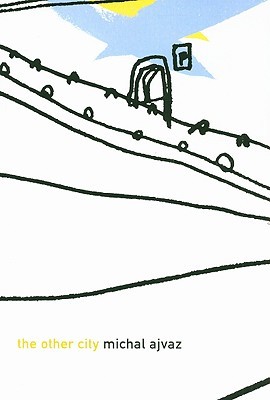 Michal Ajvaz is... something else. I was blown away by The Golden Age last year; I expected something strange and unexpected from The Other City as well. That is exactly what I got. Unfortunately, where The Golden Age was a magical and wonderful reading experience, The Other City was often disjointed, confusing and somewhat lost.
The Other City begins strongly - the idea and the tone struck me as similar to The Golden Age and the strangeness of Ajvaz's Prague was quite intriguing at first. The first half of the book flew by as I, like the unnamed narrator, got sucked into the Other Prague. Except then the themes began to repeat themselves clumsily. And then the stories became completely unhinged and impossible to follow. And then they again became magical, just for a few seconds. And so despite limping awkwardly to the final chapters, The Other City ended as it began - with intrigue and magic and strength.
Ajvaz's writing is strange. I constantly see readers saying it's like Italo Calvino, or Borges, but truthfully I haven't read Borges yet (on my shelf, I swear) and I only read Calvino after Ajvaz, so I have some trouble making the comparison. What I can say is that Ajvaz's writing - particularly in this translation to English - is a little old-fashioned, a little fancy-stiff at times, but generally smoothly appealing. It's not the most accessible or easy-to-read, but there's something special about it, something backwards and twisted that I find particularly appealing.
And what of plot? The Other City is about mood and ideas, not so much actual coherent story. There are a few recurring characters and concepts and sub-plots, but... it's not a plot book. It's not really a character book either, which makes it pretty hard to classify. Which essentially makes it easier to classify as well - The Other City is a bit of a mess. This is a book that had such good ideas and got lost with them. That might have been the point but if it was, it played out poorly.
So I liked The Other City at times, but I also didn't really like it. I got bored by it, I was enchanted by it, I was confused by it. It is nowhere near as powerful a novel as The Golden Age, nor is it as successful at actually playing on its own themes and clever storytelling ideas. But it's interesting. And someone looking for something utterly bizarre and different could certainly do worse than to pick this one off the shelf.
Sunday, January 6, 2013
On getting excited about reading (again)
There must be something in the air. Over the past forty-eight hours I started reading two new books, both which have sparked my interest in a way that no recent read has, both of which have made me want to read more, and more, and more. After two months of many dead ends and rather lackluster reads (with the exception of If on a Winter's Night a Traveler, which sadly lasted only one simple, near-perfect evening), being excited about reading again is... wonderful.
Dry spells come and go. Every voracious reader will easily be able to point to a period of time when they read less, whether because of increased "real-world" activity, or because no book seemed to fit the mood, or because of any one of a million other factors. This happens. I've made sure not to be bothered by it, made sure not to pressure myself into reading more, made sure to keep reading something magical and enjoyable and enlightening. Once I realized I was struggling with new books, I also decided to let myself relax a little and went back to some old favorites: I've been rereading a lot recently. But now, like a small lightbulb turning on, I can feel the excitement starting up again.
The first book is Three Strong Women, by Marie NDiaye. I read the first of the three novellas that make up this book yesterday... and it impressed me. The plot (specifically, the large, seemingly deliberate plot holes) may be a bit lacking, but on the whole, Three Strong Women is off to a good start. It's thought-provoking, curiously written (a bit of a sharp style, but far from jerky or awkward), and NDiaye plays to the strengths of novellas in her characterization and storytelling style. Here's to hoping the rest is as good.
The second book is There Are No Shortcuts by Rafe Esquith. I'm reading this one as part of a small goal to read education-focused books this year. I only just started it this morning, but regardless of whether or not I'll actually enjoy the read, or agree with Esquith's teaching methods, there is no doubt that the book is making me think. A lot. This is a subject I care deeply about, and I feel the book. I feel the fascination as I read.
I don't have much time for reading these days, let alone reviewing them and discussing them at length. I know this. If last year I read a record number of books, I expect to read significantly less this year. But that doesn't mean that I need to have a bad experience reading. Maybe it'll even be better for it. For now, I'm excited about reading again. May it last.
Dry spells come and go. Every voracious reader will easily be able to point to a period of time when they read less, whether because of increased "real-world" activity, or because no book seemed to fit the mood, or because of any one of a million other factors. This happens. I've made sure not to be bothered by it, made sure not to pressure myself into reading more, made sure to keep reading something magical and enjoyable and enlightening. Once I realized I was struggling with new books, I also decided to let myself relax a little and went back to some old favorites: I've been rereading a lot recently. But now, like a small lightbulb turning on, I can feel the excitement starting up again.
The first book is Three Strong Women, by Marie NDiaye. I read the first of the three novellas that make up this book yesterday... and it impressed me. The plot (specifically, the large, seemingly deliberate plot holes) may be a bit lacking, but on the whole, Three Strong Women is off to a good start. It's thought-provoking, curiously written (a bit of a sharp style, but far from jerky or awkward), and NDiaye plays to the strengths of novellas in her characterization and storytelling style. Here's to hoping the rest is as good.
The second book is There Are No Shortcuts by Rafe Esquith. I'm reading this one as part of a small goal to read education-focused books this year. I only just started it this morning, but regardless of whether or not I'll actually enjoy the read, or agree with Esquith's teaching methods, there is no doubt that the book is making me think. A lot. This is a subject I care deeply about, and I feel the book. I feel the fascination as I read.
I don't have much time for reading these days, let alone reviewing them and discussing them at length. I know this. If last year I read a record number of books, I expect to read significantly less this year. But that doesn't mean that I need to have a bad experience reading. Maybe it'll even be better for it. For now, I'm excited about reading again. May it last.
Monday, December 31, 2012
Library eBook lending
This article over at NPR about eBooks and libraries echoes a lot of issues with the current eLibrary models being used: the limited scope of offered books, publishers' instance on bizarre "26 circulations" limitations, and the surprisingly low percentage of readers even using this digital option. This is a fairly good introduction to the problems surrounding eBook lending, but I think it missed part of its own point. The article opens with a sly reference to how few people check books out through these digital catalogs, yet the readers themselves are mostly absent from the article. So, to fill in the blanks, my own take.
I've been checking eBooks out from my local libraries since the day I bought my first eReader. Literally; the evening I bought Artemis, I tested out downloads from three sources: Gutenberg, Overdrive, and Scribd. The Overdrive book was the second eBook I ever read, and I have not stopped using their services since. But I know that I'm in the minority. Not only do digital databases hold an incredible advantage for me over physical ones (after all, I don't have much access to books in English here in the non-Anglo world...), but I also have a fierce resistance to paying for eBooks, and as such prefer any method of getting them for free. The ability to check eBooks out of the library was what drove me to buy a Sony Reader back in the day (over the Kindle, then the only serious competition); it's the same consideration that keeps me using my newer Seshat to this day.
But why is this so rare? I know of countless bloggers who have eReaders, as well as many other friends and family who read digital books in some form or other. These are voracious readers, many of whom hardly read physical books anymore... why aren't they taking advantage of this wonderful system?
Some of the answers are what I mentioned earlier. When you have so few options of books to check out, is it even worth it? Not to mention the fact that finding a book in these databases can be nearly impossible (not what I would call the best search engines). But I don't think all the blame should fall on Overdrive and the other eBook providers. I think some of it has to do with the fact that many readers maybe just prefer getting books in other ways - the convenience of buying a digital edition instantaneously, or even receiving a free eARC. Then there's probably the fact that these sites were at first closed to Kindle books, and have only recently started providing Kindle files for check-out.
I don't know why other readers haven't opted for checking out more library eBooks. I really don't. While it's far from a perfect system (again, NPR's article is quite good at explaining why), it's still something... and something quite incredible. Thoughts?
I've been checking eBooks out from my local libraries since the day I bought my first eReader. Literally; the evening I bought Artemis, I tested out downloads from three sources: Gutenberg, Overdrive, and Scribd. The Overdrive book was the second eBook I ever read, and I have not stopped using their services since. But I know that I'm in the minority. Not only do digital databases hold an incredible advantage for me over physical ones (after all, I don't have much access to books in English here in the non-Anglo world...), but I also have a fierce resistance to paying for eBooks, and as such prefer any method of getting them for free. The ability to check eBooks out of the library was what drove me to buy a Sony Reader back in the day (over the Kindle, then the only serious competition); it's the same consideration that keeps me using my newer Seshat to this day.
But why is this so rare? I know of countless bloggers who have eReaders, as well as many other friends and family who read digital books in some form or other. These are voracious readers, many of whom hardly read physical books anymore... why aren't they taking advantage of this wonderful system?
Some of the answers are what I mentioned earlier. When you have so few options of books to check out, is it even worth it? Not to mention the fact that finding a book in these databases can be nearly impossible (not what I would call the best search engines). But I don't think all the blame should fall on Overdrive and the other eBook providers. I think some of it has to do with the fact that many readers maybe just prefer getting books in other ways - the convenience of buying a digital edition instantaneously, or even receiving a free eARC. Then there's probably the fact that these sites were at first closed to Kindle books, and have only recently started providing Kindle files for check-out.
I don't know why other readers haven't opted for checking out more library eBooks. I really don't. While it's far from a perfect system (again, NPR's article is quite good at explaining why), it's still something... and something quite incredible. Thoughts?
Monday, December 24, 2012
Bad translation of the week
Bad translations can ruin a book. It's a sad fact of life. As someone who has dealt with translations myself, I know how hard it must be to do a book justice - managing to maintain both tone and style, while making sure the writing fits the new language and its many nuances. Translating is tough stuff, but it still stings a little when a good book is poorly translated, and suffers at the hands of its new audience as a result.
Case study no. 5062: The Buddha in the Attic. A lovely, wonderfully written short novel that I really, really looked forward to seeing in Hebrew. Here was an easily accessible, interesting, and well-written book that I could recommend to readers. Today, I finally got the chance to flip through the translation and... well. It stumbles. Seriously stumbles.
Because part of what makes The Buddha in the Attic such an original book is its use of first-person plural. This is not easy to replicate, particularly not in a different language. So it turns out that the clean and powerful style that Julie Otsuka crafted in English turns into a bit of a mess in Hebrew. The "we"s become a little too casual, a little too obvious, a little too abrasive. The long sentences no longer breathe, but shudder. The tone is completely different, and it won't surprise me if readers will outright hate the book as a result. Which is just a shame. It reminds me that no matter how much I'd like to think that I'm aware of how the translation changes the text, there are cases I'll never be able to recognize, and sometimes these translations really do make all the difference in the world...
Monday, December 17, 2012
Wonders of the Invisible World

For starters, the eponymous opening story is fairly weak. Openers need to be strong hooks, and all "Wonders of the Invisible World" managed to do was lull me to sleep. The idea behind the story is nice, but overall... meh. The second story, while better, was also decidedly far from the top of the scale, though it did feel a little more like McKillip's standard, smooth-and-eloquent writing style. It really wasn't until the third story, "The Kelpie", that I began to be remotely interested. And "The Kelpie" is really an interesting story, both in the way it portrays art and artists, and the way it steals little bits of a more old-fashioned writing style, to suit the story's own time period.
But once I began to read the collection with more interest, I also began to read more attentively (and as such, more critically). It soon became hard to ignore the imbalances in this collection, not simply in terms of quality or style (more the latter), rather the recurring themes, ideas and even name fragments that McKillip returned to. Water is perhaps the strongest of these themes, featuring rather prominently in no less than four stories. The thing is, I liked the majority of these stories, but clumped together in the same collection... they lost some of their magic. Similarly the fairy-tale like stories. Individually, there are some fine stories in here. But they overshadow each other, leaving each a bit dimmer than what it might have been. Then there's the downside of any short story collection: quite a few of these stories are utterly forgettable. Stories like "Oak Hill", "The Fortune Teller" and "A Gift to Be Simple" simply didn't stick.
Then there's McKillip's writing style itself. In the previous four books I've read, McKillip maintained a very clean, very subtle writing style. She is a master of the contained fantasy, never overwriting what can be said in a few words. Yet I've found that her short fiction seems to lack that perfect balance. I wasn't particularly fond of her novella The Changeling Sea (though I do intend to reread it, to see how much of my opinion was colored by the circumstances under which I read the book...), and now Wonders of the Invisible World has also struck me as containing slightly... messier writing. The writing rarely feels like McKillip's traditional style. When it worked, the result was truly wonderful ("Naming Day", "Jack O'Lantern" and "The Kelpie"), but sometimes it just... didn't.
Ultimately, Wonders of the Invisible World is a pretty good short story collection. If read properly. If read in pieces, not in one sitting. I like the range of stories, I like the range of styles. The repetitive themes weigh down the collection a bit, as do some of the less memorable stories, but on the whole, this is a good choice for a reader looking for fantasy shorts. Though I would recommend some of McKillip's other books well before this one (namely The Alphabet of Thorn, which remains one of the best fantasy novels I've read), Wonders of the Invisible World is a reasonable starting point for readers new to McKillip, and certainly worth reading for long-time fans.
Monday, December 10, 2012
Middlemarch, part 4 - Ending with emotions
I want to end this extremely disorganized (and delayed) assessment of Middlemarch with the thing that hit me hardest - emotions. George Eliot is not necessarily the first writer I would describe as reaching out to readers on an emotional level - there is something distinctly intelligent in her writing that always makes it feel a bit too precise for the kind of passionate emotional connection many readers seem to have with other authors. She isn't exactly the type of writer who aims to tap readers' basest emotions. I always feel like she's above that.
Yet Middlemarch, more so than any of Eliot's other novels, touched me deeply. There were scenes that moved me nearly to tears, not because they were necessarily sad or manipulatively emotional, but because Eliot was describing some kind of feeling I myself had had hundreds of times beforehand. This may sound trivial, but think about it for a moment - how often does an author truly get it right? How often does a book describe exactly what you've felt in your own day-to-day life, with the right words, and the right inflections, and all the right passion? In my case, this has happened... next to never.
Something about Middlemarch moved me. At first I didn't like the characters... and then I didn't want their story to end. I wanted to breathe in their lives and continue to feel everything they felt forever. I felt every piece of this incredible novel moving through me, filling me up, as though until then I'd been empty and George Eliot had just given me a vital piece of my existence. Middlemarch actually blew me away. This is no ordinary book.
I've said this a few times already, but I cannot pretend that this is a remotely critical or logical reaction to Middlemarch. I don't know if I read it "properly", or took from it the "right" things. All I know is that this has to be one of the greatest books I've ever read. And to any other readers who are maybe skeptical... don't be. Middlemarch is truly something amazing, and two months later, I'm already itching to reread it. Maybe next time I'll be able to organize my thoughts into something coherent. Until then...
Yet Middlemarch, more so than any of Eliot's other novels, touched me deeply. There were scenes that moved me nearly to tears, not because they were necessarily sad or manipulatively emotional, but because Eliot was describing some kind of feeling I myself had had hundreds of times beforehand. This may sound trivial, but think about it for a moment - how often does an author truly get it right? How often does a book describe exactly what you've felt in your own day-to-day life, with the right words, and the right inflections, and all the right passion? In my case, this has happened... next to never.
Something about Middlemarch moved me. At first I didn't like the characters... and then I didn't want their story to end. I wanted to breathe in their lives and continue to feel everything they felt forever. I felt every piece of this incredible novel moving through me, filling me up, as though until then I'd been empty and George Eliot had just given me a vital piece of my existence. Middlemarch actually blew me away. This is no ordinary book.
I've said this a few times already, but I cannot pretend that this is a remotely critical or logical reaction to Middlemarch. I don't know if I read it "properly", or took from it the "right" things. All I know is that this has to be one of the greatest books I've ever read. And to any other readers who are maybe skeptical... don't be. Middlemarch is truly something amazing, and two months later, I'm already itching to reread it. Maybe next time I'll be able to organize my thoughts into something coherent. Until then...
Saturday, December 8, 2012
Middlemarch, part 3 - Life all around
I will admit - as I reached the end of the first section of Middlemarch, I was still somewhat skeptical. The writing was brilliant, of course, but the characterization hadn't sunk in enough yet, and when on page 84 of my edition the narrative suddenly shifted towards other characters (not the titular Miss Brooke of book one), I was a little shaken. It took several chapters until I felt comfortable enough with this new cast of characters, and only then could I fully appreciate the overall marvel of Middlemarch.
Because really, looking back on it now objectively, the shift is unexpected. After having immersed ourselves in Dorothea's life until that point, it isn't exactly the easiest thing in the world to suddenly start caring about Fred, or Rosamond, etc. But once I understood that this wasn't just a temporary move, I began to pay closer attention to these new characters as well. Like with Dorothea, I wasn't exactly drawn to them, but as time went by, I became deeply attached. I don't know how, or why, but by the end of Middlemarch I cared very much for the characters and I had a clear understanding of their lives.
One of those phrases I've always heard about Middlemarch - and what is attached to it by name - is that it's about the lives of all manner of people living in that fictitious province. I didn't really feel that. Dorothea is obviously privileged, but more important is the fact that she's educated. So, it seems, is nearly every other character in the novel. Even the members of the relatively lower classes are extremely well educated. People are in debt, but they are not destitute. Middlemarch is about the lives of the middle-class and up. That lack of the lower social rung was particularly jarring for me, maybe because I was expecting something... different. And yet even so, Middlemarch does a splendid job of showing exactly these classes, showing us their lives and their struggles.
Like I said, it took me a while to get into the other stories. But as I delved deeper into Middlemarch, I stopped feeling like Ladislaw and Lydgate and Mary were foreign, and started feeling as though they were real people. I not only started caring, I started caring. Even Dorothea, who I didn't particularly like at first, became critical. I wanted desperately to know what was going to happen with these people's lives. I felt for them, and it was glorious.
Please do not for a moment mistake these as critical assessments. These are scattered, messy thoughts of someone who, even months later, cannot quite understand how or why this book was so utterly incredible. Next up: finally, an emotional response.
Because really, looking back on it now objectively, the shift is unexpected. After having immersed ourselves in Dorothea's life until that point, it isn't exactly the easiest thing in the world to suddenly start caring about Fred, or Rosamond, etc. But once I understood that this wasn't just a temporary move, I began to pay closer attention to these new characters as well. Like with Dorothea, I wasn't exactly drawn to them, but as time went by, I became deeply attached. I don't know how, or why, but by the end of Middlemarch I cared very much for the characters and I had a clear understanding of their lives.
One of those phrases I've always heard about Middlemarch - and what is attached to it by name - is that it's about the lives of all manner of people living in that fictitious province. I didn't really feel that. Dorothea is obviously privileged, but more important is the fact that she's educated. So, it seems, is nearly every other character in the novel. Even the members of the relatively lower classes are extremely well educated. People are in debt, but they are not destitute. Middlemarch is about the lives of the middle-class and up. That lack of the lower social rung was particularly jarring for me, maybe because I was expecting something... different. And yet even so, Middlemarch does a splendid job of showing exactly these classes, showing us their lives and their struggles.
Like I said, it took me a while to get into the other stories. But as I delved deeper into Middlemarch, I stopped feeling like Ladislaw and Lydgate and Mary were foreign, and started feeling as though they were real people. I not only started caring, I started caring. Even Dorothea, who I didn't particularly like at first, became critical. I wanted desperately to know what was going to happen with these people's lives. I felt for them, and it was glorious.
Please do not for a moment mistake these as critical assessments. These are scattered, messy thoughts of someone who, even months later, cannot quite understand how or why this book was so utterly incredible. Next up: finally, an emotional response.
Wednesday, December 5, 2012
Middlemarch, part 2 - Dorothea and modernity
I knew George Eliot was a good writer after reading The Mill on the Floss. Then I read Silas Marner and knew that she was capable of projecting a whole lot on a relatively small canvass. And then I read Daniel Deronda and recognized her ability to create characters I wanted to keep reading about. How could Middlemarch possibly surprise me?
The book opens with Dorothea Brooks, a character who is immediately both annoying and entirely believable. Her aloofness when dealing with her sister Celia in one of the earliest scenes is striking in its ability to be relevant today. The sisters are dividing their deceased mother's jewelry, yet Dorothea rejects the jewels on account of them being something of a worldly good. Her religiosity is a curious form of Puritanism, yet I can hardly argue with its convincing naturalness. When Celia presses Dorothea to take a certain necklace, Dorothea instead switches the situation on its head and tells Celia that she should take the necklace. The scene sets up much of Dorothea's personality in a surprisingly subtle fashion, but is also entirely in tune with how people behave, and speak, and act.
We need, of course, to remember what era Middlemarch is from. Here is, perhaps, the most surprising side of the book. This is a novel that includes several very different women in it, as written by a highly intelligent woman. Sexism is, of course, rampant (Mr. Brook, Dorothea's uncle, is particularly sexist, frequently dismissing his niece and remarking on women's lack of intelligence and general inability to understand basic ideas), but it felt as though Eliot was actually mocking the sexist characters, rather than encouraging them. Even this hilarious quote: "And, of course men know best about everything, except what women know better." Maybe this is my own wishful thinking, but I couldn't help feeling like Eliot was on our side, here in the future. It was quite comforting.
Indeed, most of Middlemarch feels well ahead of its time. And I don't just mean in terms of Eliot including strong female characters, or a certain pacing to the writing that makes it feel astonishingly fresh. Rather, nothing about the book feels specifically outdated. There are the obvious technicalities, but on the whole Middlemarch didn't seem like it was very distant from my own reality. People are still people. Life is still life.
The book opens with Dorothea Brooks, a character who is immediately both annoying and entirely believable. Her aloofness when dealing with her sister Celia in one of the earliest scenes is striking in its ability to be relevant today. The sisters are dividing their deceased mother's jewelry, yet Dorothea rejects the jewels on account of them being something of a worldly good. Her religiosity is a curious form of Puritanism, yet I can hardly argue with its convincing naturalness. When Celia presses Dorothea to take a certain necklace, Dorothea instead switches the situation on its head and tells Celia that she should take the necklace. The scene sets up much of Dorothea's personality in a surprisingly subtle fashion, but is also entirely in tune with how people behave, and speak, and act.
Celia felt a little hurt. There was a strong assumption of superiority in this Puritanic toleration, hardly less trying to the blond flesh of an unenthusiastic sister than a Puritanic persecution.Later, when Dorothea does indeed find jewelry she likes, she struggles to reconcile her religious inclinations with her simple desires. It's a tug of war between her drive to do what she believes is the right thing, to behave properly, and to be happy. It at times felt a bit like hypocrisy. This early in the book, Dorothea's hypocrisy and religious superiority mostly outweigh her other character traits. But the balance between the two sides of her personality are there. Her passion and beliefs are evident. Her inner strength is apparent.
We need, of course, to remember what era Middlemarch is from. Here is, perhaps, the most surprising side of the book. This is a novel that includes several very different women in it, as written by a highly intelligent woman. Sexism is, of course, rampant (Mr. Brook, Dorothea's uncle, is particularly sexist, frequently dismissing his niece and remarking on women's lack of intelligence and general inability to understand basic ideas), but it felt as though Eliot was actually mocking the sexist characters, rather than encouraging them. Even this hilarious quote: "And, of course men know best about everything, except what women know better." Maybe this is my own wishful thinking, but I couldn't help feeling like Eliot was on our side, here in the future. It was quite comforting.
Indeed, most of Middlemarch feels well ahead of its time. And I don't just mean in terms of Eliot including strong female characters, or a certain pacing to the writing that makes it feel astonishingly fresh. Rather, nothing about the book feels specifically outdated. There are the obvious technicalities, but on the whole Middlemarch didn't seem like it was very distant from my own reality. People are still people. Life is still life.
Sunday, December 2, 2012
Middlemarch, part 1 - Exceeding all expectations
Whatever else I was expecting, it was not this. And that's stupid, because I've known George Eliot for five years now, and she certainly ranks very high up on my list of favorite authors. Middlemarch is one of those classics, though, that's so well-received, that it doesn't matter that I already knew that George Eliot is a brilliant writer: I was suspicious. I was hesitant. I doubted that Middlemarch could really be that good.
But it is. It really, really is.
I have a lot to say about this book. More than can, and should, fit into one post. And this isn't going to be a critical, intellectual, balanced assessment of a classic work of literature. This is going to be my own jumbled and passionate thoughts on a book that managed to surprise me. This is going to be messy. You have been warned.
Middlemarch is so often touted as a book of great scope, a book that on the one hand deals with a relatively small setting, yet manages to paint it in its entirety. I wouldn't call it an epic; I think the story is too limited, too focused on its character, too narrow in its time-span. But it is certainly big, and that word "scope" often crops up when describing the book. Unlike many other long, serialized novels of its era, Middlemarch never sprawls, never falls apart, and never even approaches bloated. It's a surprisingly concise novel.
I read Middlemarch badly. Though my edition kindly recommended pausing for a day or two between each book, I typically could not resist waiting a few hours... and as the book progressed, I could barely even allow myself a bathroom break between sections. Looking back at the book now from a safe, two-month distance, I can say that my need to rush through the book was more detrimental than it was beneficial. I might have enjoyed Middlemarch even more had I given myself some time and space to truly appreciate it. But I'm an antsy reader, and when I read something I love, it's sometimes hard to take that step back. Even when I'm told that it's the right thing to do.
Middlemarch falls into that category of books I could just keep talking about. And I will. At least for a few days more.
But it is. It really, really is.
I have a lot to say about this book. More than can, and should, fit into one post. And this isn't going to be a critical, intellectual, balanced assessment of a classic work of literature. This is going to be my own jumbled and passionate thoughts on a book that managed to surprise me. This is going to be messy. You have been warned.
Middlemarch is so often touted as a book of great scope, a book that on the one hand deals with a relatively small setting, yet manages to paint it in its entirety. I wouldn't call it an epic; I think the story is too limited, too focused on its character, too narrow in its time-span. But it is certainly big, and that word "scope" often crops up when describing the book. Unlike many other long, serialized novels of its era, Middlemarch never sprawls, never falls apart, and never even approaches bloated. It's a surprisingly concise novel.
I read Middlemarch badly. Though my edition kindly recommended pausing for a day or two between each book, I typically could not resist waiting a few hours... and as the book progressed, I could barely even allow myself a bathroom break between sections. Looking back at the book now from a safe, two-month distance, I can say that my need to rush through the book was more detrimental than it was beneficial. I might have enjoyed Middlemarch even more had I given myself some time and space to truly appreciate it. But I'm an antsy reader, and when I read something I love, it's sometimes hard to take that step back. Even when I'm told that it's the right thing to do.
Middlemarch falls into that category of books I could just keep talking about. And I will. At least for a few days more.
Sunday, November 25, 2012
The greatest poem ever written - Love and tensor algebra
From Stanislaw Lem's The Cyberiad, translated by Michael Kandel:
In an attempt to test out a new "bard machine":
Where dyads tread the fairy fields of Venn,
Their indices bedecked from one to n,
Commingled in an endless Markov chain!
Come, every frustum longs to be a cone,
And ever vector dreams of matrices.
Hark to the gentle gradient of the breeze:
It whispers of a more ergodic zone.
In Riemann, Hilbert or in Banach space
Let superscripts and subscripts go their ways.
Our asymptotes no longer out of phase,
We shall encounter, counting, face to face.
I'll grant thee random access to my heart,
Thou'lt tell me all the constants of thy love:
And so we two shall all love's lemmas prove,
And in our bound partition never part.
For what did Cauchy know, or Christoffel,
Or Fourier, or any Boole or Euler,
Wielding their compasses, their pens and rulers,
Of thy supernal sinusoidal spell?
Cancel me not - for what then shall remain?
Abscissas, some mantissas, modules, modes,
A root or two, a torus and a node:
The inverse of my verse, a null domain.
Ellipse of bliss, converge, O lips divine!
The producs of our scalars is defined!
Cyberiad draws nigh, and the skew mind
Cuts capers like a happy haversine.
I see the eigenvalue in thine eye,
I hear the tender tensor in thy sigh.
Bernoulli would have been content to die,
Had he but known such a2 cos 2 φ!
In an attempt to test out a new "bard machine":
"Very well. Let's have a love poem, lyrical, pastoral, and expressed in the language of pure mathematics. Tensor algebra mainly, with a little topology and higher calculus, if need be. But with feeling, you understand, and in the cybernetic spirit."
"Love and tensor algebra? Have you taken leave of your sense?" Trurl began, but stopped, for his electronic bard was already declaiming:Come, let us hasten to a higher plane,
Where dyads tread the fairy fields of Venn,
Their indices bedecked from one to n,
Commingled in an endless Markov chain!
Come, every frustum longs to be a cone,
And ever vector dreams of matrices.
Hark to the gentle gradient of the breeze:
It whispers of a more ergodic zone.
In Riemann, Hilbert or in Banach space
Let superscripts and subscripts go their ways.
Our asymptotes no longer out of phase,
We shall encounter, counting, face to face.
I'll grant thee random access to my heart,
Thou'lt tell me all the constants of thy love:
And so we two shall all love's lemmas prove,
And in our bound partition never part.
For what did Cauchy know, or Christoffel,
Or Fourier, or any Boole or Euler,
Wielding their compasses, their pens and rulers,
Of thy supernal sinusoidal spell?
Cancel me not - for what then shall remain?
Abscissas, some mantissas, modules, modes,
A root or two, a torus and a node:
The inverse of my verse, a null domain.
Ellipse of bliss, converge, O lips divine!
The producs of our scalars is defined!
Cyberiad draws nigh, and the skew mind
Cuts capers like a happy haversine.
I see the eigenvalue in thine eye,
I hear the tender tensor in thy sigh.
Bernoulli would have been content to die,
Had he but known such a2 cos 2 φ!
Tuesday, November 20, 2012
No comment | The Book of Words
You know that feeling, when you read a book that someone has told you is brilliant? And you know to go in with low expectations, because obviously people have different tastes. And then... nothing. You have no opinion of the book; you are left with nothing from its writing or its characters. Neither like nor dislike, just an empty, gaping hole of no-opinion.
 So that's what I had with Jenny Erpenbeck's The Book of Words.
There may be a cheap explanation: I was heavily distracted when I read the second half of the book. I had to stop midway through the week, picking it up again over the weekend, and to say that I gave The Book of Words my full attention over said weekend would be a complete and utter falsehood - I didn't. I flitted in and out of the book, using it as a means to pass the time. Not exactly a stellar way to read.
But I don't really like this "distracted" explanation for one main reason: a good book manages to displace a reader from his/her distracted state and engage them. The Book of Words just didn't engage me. And it's not the first time, either. I've been trying to review Yoram Kaniuk's Sapir winning 1948 for weeks now, but I realized that part of my struggle with it has been that it left little to no impact on me. These are books that I spent time reading, yet they have not affected me in the least.
I hate this situation because it always feels as though I'm the one who's in the wrong. I'm the one who isn't clever enough to understand all the references and subtleties of Erpenbeck's story (if there is one). I'm the one who didn't understand the strength of the writing (even it didn't leave much of an impression). I'm the one who's wrong for not understanding why this is a good book. Having no opinion is worse than having a negative opinion. If I didn't like a book, I can explain why. When I leave a book like The Book of Words, however, I'm emptied of all opinions and thoughts. I have nothing to say.
There you have it: I have nothing to say about The Book of Words, only that I didn't understand it. Whether or not this is because of everything else that's going on right now is irrelevant. The fact is, I read a book. It made no impression. I won't recommend it. End of story.
 So that's what I had with Jenny Erpenbeck's The Book of Words.
There may be a cheap explanation: I was heavily distracted when I read the second half of the book. I had to stop midway through the week, picking it up again over the weekend, and to say that I gave The Book of Words my full attention over said weekend would be a complete and utter falsehood - I didn't. I flitted in and out of the book, using it as a means to pass the time. Not exactly a stellar way to read.
But I don't really like this "distracted" explanation for one main reason: a good book manages to displace a reader from his/her distracted state and engage them. The Book of Words just didn't engage me. And it's not the first time, either. I've been trying to review Yoram Kaniuk's Sapir winning 1948 for weeks now, but I realized that part of my struggle with it has been that it left little to no impact on me. These are books that I spent time reading, yet they have not affected me in the least.
I hate this situation because it always feels as though I'm the one who's in the wrong. I'm the one who isn't clever enough to understand all the references and subtleties of Erpenbeck's story (if there is one). I'm the one who didn't understand the strength of the writing (even it didn't leave much of an impression). I'm the one who's wrong for not understanding why this is a good book. Having no opinion is worse than having a negative opinion. If I didn't like a book, I can explain why. When I leave a book like The Book of Words, however, I'm emptied of all opinions and thoughts. I have nothing to say.
There you have it: I have nothing to say about The Book of Words, only that I didn't understand it. Whether or not this is because of everything else that's going on right now is irrelevant. The fact is, I read a book. It made no impression. I won't recommend it. End of story.
Friday, November 16, 2012
Who says we don't read?
This is from a few weeks ago, but still: Told. You. So. Little is as frustrating as constantly being told that my generation doesn't read. Little is as delightful as finding further proof that this claim is wrong.
Saturday, November 10, 2012
Footnotes vs. endnotes
If there's one thing reading in Hebrew has taught me, it's the value of a properly placed footnote. Unlike English, where footnotes are almost exclusively reserved for nonfiction or particularly whimsical books (Jonathan Stroud, Terry Pratchett, I am looking at you!), footnotes are fairly common in Hebrew translated literature, as a means of bridging the typically wide gap between cultures. This can lead to some fairly boring translations (translations of tatami are unnervingly common...), but occasionally provides interesting information on play-on-words, or locations, or... anything else.
I realized a few years back - I like footnotes. I know: technically they break the flow of the story, they can be unnecessary, they can be randomly specific or absurdly vague... But overall, I've found footnotes to be extremely useful in certain cases. They are easy to read if I want, easy to ignore if I don't, and their benefits overall outweigh any of their detriments.
Endnotes, on the other hand... I do not like endnotes. Here's why:
I realized a few years back - I like footnotes. I know: technically they break the flow of the story, they can be unnecessary, they can be randomly specific or absurdly vague... But overall, I've found footnotes to be extremely useful in certain cases. They are easy to read if I want, easy to ignore if I don't, and their benefits overall outweigh any of their detriments.
Endnotes, on the other hand... I do not like endnotes. Here's why:
- They appear only in classics.
- They are usually about historical cultural differences, usually plot irrelevant.
- They are impossible to read within the flow of the story.
For example: I was reading Middlemarch a month ago (I will discuss it soon, I promise!). My edition has these long, bizarrely detailed endnotes about the most random details. They didn't add anything and were just entirely unnecessary. At some point I stopped reading them. So what's the point? This has happened to me many, many times and I just don't understand it. The only justification I can find for endnotes versus footnotes is in the case when they're long and even then, sometimes it'd probably be better if the notes themselves were shorter. Is this just a personal thing? What do you think - footnotes or endnotes? Or nothing at all?
Sunday, November 4, 2012
Death of the dedicated eReader? I think not...
This is an interesting and vaguely weird article about the potential death of the eReader. Yes, you read that correctly - now we speculate as to when eInk technology will become obsolete because of tablets and alternative eReading devices. To which I say the same thing I say every time someone freaks about the impending death of the book: um... no? Or rather, I suppose: probably not?
The reason I am fairly confident that dedicated eReaders will survive (in some form) is similar enough to the reason I think that print books will survive. While there are relatively few people in the world who are considered dedicated readers, there is still a fairly large global market for people who read enough to justify buying an eReader. Some will prefer the shift to digital, true, but not all digital is made equal. I cannot see someone like my aunt - who now reads exclusively off her Kindle - making the move towards an iPad or any other tablet computer. It's just not the same. Every time I've tried to read off tablets, I've found that it's a little more distracting than my Sony Reader. The reason I like my Reader is because it mimics the traditional reading experience incredibly well (while also giving me a few bonuses, like internet access). A device as glossy as my laptop? Not quite as appealing.
What I find especially interesting about this article, though, is that it establishes eInk devices as part of our general reading history. By attempting to spell its doom, Jeremy Wagstaff is essentially acknowledging eInk's position as a legitimate reading form. And like with the case of critics crying about the demise of the printed word, I get the feeling that this article will only emphasize just how wrong it's assessment is...
The reason I am fairly confident that dedicated eReaders will survive (in some form) is similar enough to the reason I think that print books will survive. While there are relatively few people in the world who are considered dedicated readers, there is still a fairly large global market for people who read enough to justify buying an eReader. Some will prefer the shift to digital, true, but not all digital is made equal. I cannot see someone like my aunt - who now reads exclusively off her Kindle - making the move towards an iPad or any other tablet computer. It's just not the same. Every time I've tried to read off tablets, I've found that it's a little more distracting than my Sony Reader. The reason I like my Reader is because it mimics the traditional reading experience incredibly well (while also giving me a few bonuses, like internet access). A device as glossy as my laptop? Not quite as appealing.
What I find especially interesting about this article, though, is that it establishes eInk devices as part of our general reading history. By attempting to spell its doom, Jeremy Wagstaff is essentially acknowledging eInk's position as a legitimate reading form. And like with the case of critics crying about the demise of the printed word, I get the feeling that this article will only emphasize just how wrong it's assessment is...
Sunday, October 28, 2012
In the Shadow of the Banyan
Though I am a firm believer in the negative review, I can never pretend to like giving one. It gives me absolutely no pleasure to find fault in a novel, nor do I particularly enjoy reading something bad. But when I read a bad book, I often find myself wanting to discuss its failings at lengths. And also, to warn other readers away. If this makes me a bad reader, so be it.
 Anyways: In the Shadow of the Banyan is a bad book.
 Anyways: In the Shadow of the Banyan is a bad book.
I feel I need to be more explicit. It's not just that I didn't like the book. My biggest complaint leveled against In the Shadow of the Banyan (by Vaddey Ratner) is that from a critical standpoint, it just doesn't hold up. Neither writing, nor characterization, nor pacing are deserving of a shred of praise (I can say little about the plot itself seeing as it's mostly autobiographical, and the history of the story is actually quite fascinating). In the Shadow of the Banyan grasps at the most basic, tired cliches and does a bad job with them. So honestly, I can't say that I disliked it because I "didn't connect with the characters", or because I'm not a fan of the genre. No. This is a critical dislike.
I'll begin with the biggest and most important problem in In the Shadow of the Banyan - the main character, Raami. She is built (presumably) from Ratner's own recollections of her childhood, but there is the space of decades between Raami and Ratner. This space is clearly felt through Raami's incredibly unbelievable observations of the world around her. It would be understandable for a seven year-old girl to observe and take in what she sees. It is not, however, understandable for a seven year-old girl to verbalize these thoughts, especially not in a distinctly adult manner:
On the wall near our room's entrance there were several crimson stains - paint or perhaps dried blood - in the shape of hands and fingers stretched to shadowy lengths.
Papa caught me staring at the stains, came over with a wet rag, and scrubbed hard until they merged into one big pinkish blob on the wall.
Why does Raami consider the possibility of blood? Even assuming a child could jump straight to that idea, why does Ratner explicitly say it? This scene would have been distinctly more powerful to an adult reader had it omitted that explicit reference to blood, showing only Raami's father moving in to wipe away the vague stains, without force-feeding us the notion of blood. What about subtlety? This absolute lack of subtlety, it turns out, repeats itself again and again throughout the book. Ratner describes everything, leaving nothing to the imagination. This can be a useful tool when setting a scene. Not so much when it's endless descriptions of the grass moving in the breeze, or the butterflies, or the smell of jasmine, or about fifty other pointless over-descriptions. Ratner paints a scene to such a level of intricate details that the big picture gets lost, and the possibility of reaching any understanding yourself completely disappears. It's also fairly boring.
If it had been only this one case of Raami seeing the world through an adult perspective, I might have been able to forgive Ratner. But this is only one example of many. How about this beautiful sentence? "It was clear to me now that while books could be torn and burned, the stories they held needn't be lost or forgotten." Wonderful, right? But do you know of a single seven year-old who would: a) think this, and b) put it to words? My answer is an emphatic "no". Nor do I know any children (or even many teenagers) who use the words "bovine" or "calamity", or who would say something like "Silently, secretly, I wondered if this moment could be capture somehow, in a crystal vessel of my own, to be invoked again and again should I find myself forever alone." This is the exact opposite of how you write a child character.
Let's turn now to the writing. Because technically, this is nice stuff, right? I mean, Ratner's got the words in all the right places and these are such rich words, and such vivid descriptions, and such elegant sentences... Well, no. Ratner's writing style is the type that I especially hate - it's got all the fancy words with none of the impact. This is overwriting, folks. Also: cliched. Early in the book, Raami uses a phrase from her father's poetry to describe her mother: as a butterfly. This motif repeats itself again and again, but it isn't a subtle, gentle idea. Ratner uses her favorite descriptive words like a blunt tool, with little deviation. Even more frustrating, her way to make the reader feel that they are in the "bloody" and "devastating" Cambodia (and not in their comfortable Anglo existence) is through numerous trite descriptions, whether of food, or spirituality, or of Cambodia's landscape. It did not feel natural and true. It just felt repetitive.
Then there are the characters other than Raami. Except, there aren't any. With the exception of Raami's naturally biased impression of her parents (one of her only believable childish traits), no other character makes enough of an impact to even factor in. Raami's uncle, various aunts, grandmother... none left any impression whatsoever. Nor do any of the people Raami meets during her various journeys. Characters exist in an entirely one-dimensional existence - they appear, they disappear. But they do not exist.
Even Raami's parents: Raami sees their love and devotion to each other. She quotes her father's poetic descriptions of her mother. But we see only idealized, auto-tuned characters. Any potential traits are smoothed out. All I know of Raami's father is that he's a poet. All I know of Raami's mother is that she's beautiful. These are half-characters at best.
I should have known to avoid In the Shadow of the Banyan. I should know by now that most authors don't know how to write child narrators, or to describe an unfamiliar locale for an Anglo audience without resorting to basic stereotypical cliches. I should know by now that most books that are described as "beautifully written" are in truth overwritten. I should know all of this by now. But it happened again: I fell for a marketing campaign. I just hope that other discerning, critical-minded readers won't.
Tuesday, October 23, 2012
Falling asleep while reading
What does it mean if the book I'm trying to read now lulls me to sleep almost every time I pick it up? I'm not reading it late at night, and I wouldn't necessarily define it as boring (I managed to read and finish a much more boring book recently - I'll be talking more about that one in a few days). There is something, however, about this specific book that stumps me.
It's not a long novel - 200 pages. And I'm 40 pages in. Sure, the font is small, but the pace is surprisingly pleasant for a book that does not appear to have any discernible plot for now. But these forty pages were read in very, very short segments: a couple pages here, a paragraph there. After nearly ever segment: a nap.
I don't think I've ever had this before. Certainly I've read boring books in the past, or have read books that were maybe a little more difficult, but I do not recall a single instance in which the act of reading made me fall asleep. I have to wonder if it's just a mark of a book I'm not particularly enjoying. Thoughts?
It's not a long novel - 200 pages. And I'm 40 pages in. Sure, the font is small, but the pace is surprisingly pleasant for a book that does not appear to have any discernible plot for now. But these forty pages were read in very, very short segments: a couple pages here, a paragraph there. After nearly ever segment: a nap.
I don't think I've ever had this before. Certainly I've read boring books in the past, or have read books that were maybe a little more difficult, but I do not recall a single instance in which the act of reading made me fall asleep. I have to wonder if it's just a mark of a book I'm not particularly enjoying. Thoughts?
Subscribe to:
Posts (Atom)