What's worse - a bad book that makes you feel so passionately about it you're angry for days and days just thinking about the ending, or a mediocre book that slips from your memory almost immediately?
Once upon a time, when I was a less educated and critical reader than I am today, mediocrity hardly existed. When I was growing up, books generally fell into the camps of "books I love" and "books I hate", with very little in between. The more I read and grew and expanded my literary perception, the more I began to find a middle ground. I realized that I could like a book without it being good, and I realized a book could be good without necessarily enjoying one iota of it. The potential of a lukewarm response - for mediocrity, for ambivalence - suddenly arose.
It's been particularly bad this year. Besides the fact that I've read very few books this year (relatively speaking), I've noticed that few have stood out in any way, whether positively or negatively. There are some books I disliked and some books I quite liked, but nothing this year has evoked anywhere near the passion and excitement I felt after reading, say, Wolf Hall. Or The Golden Age. Or A Monster Calls, The Name of the Wind, even the absolute hatred I felt after reading In the Shadow of the Banyan or Across the Universe. Some books have been good, some have been bad. But I've been feeling utterly empty regarding most of them.
I don't like mediocrity. I don't like ambivalence. I like gaining something from the books I read, whether intellectually, emotionally, or imaginatively. I like my books to change me, for good or for bad. Books are supposed to leave an impact on their readers. A book that fails to do so is, in my mind, committing the greatest crime - worse than bad plotting, bad writing, or bad characterization will ever be. Because books need to matter.
Thoughts?

Wednesday, July 31, 2013
Wednesday, July 24, 2013
Thoughts on poetry and Sylvia Plath
The cliche to reading Sylvia Plath entails a certain darkness. It should be nighttime, cold, the reader in a dark and hushed environment, wrapped in a heavy blanket, melancholy and sadness set deep in order to fully appreciate the distinctly depressive undertones that ripple throughout Plath's poetry. The reader is in a deeply meditative mood, contemplating each word and every sound individually and carefully. That's the cliche.
So of course I sat down to read Plath's The Colossus on a bright, sunny Friday afternoon at a pool party, with a loud, cheerful pop playlist and the happy sounds of the party-goers enjoying themselves in the pool accompanying Plath's gorgeous heavy poetry.
I've liked Sylvia Plath for years, ever since I first read The Bell Jar. I read the book in one sitting at the library, curled up in a thoroughly uncomfortable chair, but completely and utterly enraptured by the characters and the language of Plath's only novel. I was barely sixteen, at a particularly difficult point in my life, and that "gorgeous heaviness" spoke to me. A few weeks later, I started investigating Plath's poetry, but I never really delved into it fully. Now, a few years later, I find myself visiting this strange tortured land again and yes, I love it.
This isn't a review of The Colossus. At this point in my life, I absolutely lack the credentials to review poetry. I can only enjoy poetry for what it is, enjoy it for its sounds and its rhythms, for the emotional impact it leaves on me and for the way it touches me. Poetry is less about the technical, individual aspects that I can dissect novels into. Poetry is much more personal - what hits me like a ton of bricks might not even make your eyelids twitch.
I liked The Colossus. Plath has an obvious way with words (her vocabulary is unreasonably and wonderfully complex), but more than that the poems breathe. They're different and beautiful and powerful all at once. Unlike most poetry collections, I was able to sit and swallow The Colossus in one or two sittings, without feeling like the poems repeated themselves thematically or lyrically. And contrary to what we like to say, Plath's poetry isn't really dark. It's a bit heavy, yes, but I didn't feel as thoroughly depressed as I might get reading teen poetry anthologies. Or even some classic Romantic poetry. Not happy, but I left The Colossus feeling not as though I'd been emptied, but as though I'd been filled somehow - beautiful words, images and thoughts that have left me with a taste for more poetry...
So of course I sat down to read Plath's The Colossus on a bright, sunny Friday afternoon at a pool party, with a loud, cheerful pop playlist and the happy sounds of the party-goers enjoying themselves in the pool accompanying Plath's gorgeous heavy poetry.
I've liked Sylvia Plath for years, ever since I first read The Bell Jar. I read the book in one sitting at the library, curled up in a thoroughly uncomfortable chair, but completely and utterly enraptured by the characters and the language of Plath's only novel. I was barely sixteen, at a particularly difficult point in my life, and that "gorgeous heaviness" spoke to me. A few weeks later, I started investigating Plath's poetry, but I never really delved into it fully. Now, a few years later, I find myself visiting this strange tortured land again and yes, I love it.
This isn't a review of The Colossus. At this point in my life, I absolutely lack the credentials to review poetry. I can only enjoy poetry for what it is, enjoy it for its sounds and its rhythms, for the emotional impact it leaves on me and for the way it touches me. Poetry is less about the technical, individual aspects that I can dissect novels into. Poetry is much more personal - what hits me like a ton of bricks might not even make your eyelids twitch.
I liked The Colossus. Plath has an obvious way with words (her vocabulary is unreasonably and wonderfully complex), but more than that the poems breathe. They're different and beautiful and powerful all at once. Unlike most poetry collections, I was able to sit and swallow The Colossus in one or two sittings, without feeling like the poems repeated themselves thematically or lyrically. And contrary to what we like to say, Plath's poetry isn't really dark. It's a bit heavy, yes, but I didn't feel as thoroughly depressed as I might get reading teen poetry anthologies. Or even some classic Romantic poetry. Not happy, but I left The Colossus feeling not as though I'd been emptied, but as though I'd been filled somehow - beautiful words, images and thoughts that have left me with a taste for more poetry...


Sunday, July 21, 2013
A prologue to a non-existent book | In Her Absence
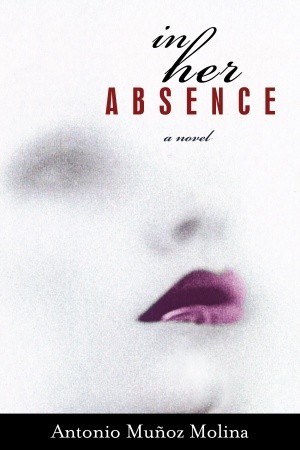
This has been happening to me quite a bit recently - I'll read a book, it'll be moderately worthwhile but generally disappointing, to the point that I finish it and wonder what I'm supposed to say and do now. What can I possibly say about In Her Absence, other than the fact that it's an introduction more than it's its own story? How long can I discuss the writing (good, but not particularly noteworthy or remarkable)? The clearly drawn characters who ultimately go nowhere? The utter lack of plot that leads to a bizarre and thoroughly open-ending conclusion?
Essentially, yes: I was disappointed by In Her Absence. As a stylistic exercise, I can understand the appeal of this short story - it builds two characters from scratch, presents readers with their lives and backgrounds and flashes of their personalities, all developed between the rather mysterious and inconclusive concept that opens and closes the story. The writing is definitely solid and there are no glaring issues. It's the lack of resolution that made me feel like it's a prologue. I could easily imagine a four-hundred paged novel that uses the entirety of In Her Absence as Part 1, a backdrop to a larger story, the introduction to the characters, the various mysterious plot threads, and a general mood setter. It would work wonderfully as such. By itself, it felt rather empty.
Normally I don't say things like this. Normally I tell longer novels that they need to be shorter. Normally I'll recommend threads of a story be cut down into a slim novella rather than a bloated five-hundred paged mess. I never even knew that I could want a short story to be more broadly developed. I never thought I'd ever hope for less minimalism. What a contradictory feeling...
Friday, July 12, 2013
Friday links
- A great post about the impact of eReading on one's reading habits - for me, eReading will never be able to fully replace print (for practical reasons, among which is the fact that my eReader doesn't support Hebrew), but generally speaking, Greg is spot on. Not only has the eLibrary (in part because of its limited scope...) introduced me to books I might otherwise not have read, I've also started reading books concurrently, leading to, yes, more books read.
- Israel is the guest of honor at this year's Guadalajara International Book Fair (FIL), with plans for several very popular Israeli writers to be stopping by - it sounds like a trip to Hebrew Book Week, except with all the good authors there at the same time, and with a lot, lot, lot more people attending.
- The stats on U.S. children's books reveal that most main characters are white, despite clearly changing demographics. One theory seems to be "diversity doesn't sell", but... I'm not buying it. This is something that needs to change.
- The short lists are out for the Science Fiction & Fantasy Translation Awards, and as always I'm just thrilled that this award exists, if only to remind people that sci-fi and fantasy are not, have never been, and should never be an exclusively Anglo affair.
Sunday, July 7, 2013
How our experiences influence our reading
I want to link to Ria's excellent post over at Bibliotropic not only because it's brilliant, but also because it's something that I've thought about a lot over the past few years. Ria wonders about whether we as readers can ever "read in a vacuum" or somehow read objectively, without prior experiences influencing the new stories we consume.
This is exactly the not-vacuum that Ria is talking about. Everything influences us in some form. Ria specifically mentions the familiar "I've read it before" sentiment we bibliophiles encounter when reading a book that might have been good had it not been the twentieth book of its kind we'd read in a short while. But I think there's another, broader option. The fact is, I've found that as a book reviewer - by the sheer number and breadth of books I've read - I have inevitably changed my perceptions of literature. I can no longer read without the critical lenses on. Even when I read a book and might enjoy it on the simplest level, I can't help but pulling it apart on a deeper one. This has extended to music, to film, to television... everything.
A bookseller at this year's Hebrew Book Week made a recommendation for me based on the titles in my hand. "You've got strange choices there," she told me. "Really different books. Let me find you something else that's a bit... different." And she was right. The books I had chosen came from many different countries, represented many different styles, and had a distinctly "different" flavor from the majority of so-called mainstream literature. Years and years of reading have made me less inclined towards books whose plots I can easily pull apart, or books with cardboard cut-out characters, or books that fail to do anything new with age-old ideas. Innovation - even when I don't necessarily like it - is more important to me now than the internal elements that I once valued in books. My experiences have changed how I read - no vacuum.
It doesn't mean I can't read those old books again. It doesn't mean I can't occasionally read something predictable and still find it brilliant because of its writing or its characterization. It doesn't mean that just because there's a similar plot point to another novel I'd previously enjoyed, there is no value to the new book. It doesn't mean that I can't recognize innovation even in straight-forward contemporary novels that seem to break no boundaries. It just means that I as a reader am constantly - at every given moment - influenced by the books I've read before. Whether it's an outright comparison to a previously read book or a more general shift in my reading tastes, there is not a single moment that I can truly disconnect my individual reading experience from the hundreds of others I've had in my lifetime. I might be losing something small in terms of "spoiling" the experience and not coming "clean", but I am gaining something back as well. And it's kind of beautiful.
[...]I look back at some of my early reviews and wonder just what I was thinking. Some books I read and rated 3 years ago may now not pass muster if I read them for the first time today, because my experience has grown, my literary world expanded, and my opinions refined and honed beyond what they were in the past. [...] It’s a rare person, I think, who doesn’t look back on their past critiques and wonder what they might think now. Would they rate something higher or lower? Would they even bother to read that book now, if now was the first time they came across it?I've written before about how I don't think that reviews are fixed walls, and that opinions can't change. As I mentioned in that post, I think that it's perfectly normal and understandable and legitimate to feel one thing immediately after finishing a book, and then realizing three months later that actually, no, your opinion is completely changed. Time does strange things to our perceptions of art and literature; it can certainly alter our overall opinions. There are books that I only moderately disliked when I read them, but years have turned me bitter and fiercely against them. Or books that I wasn't particularly impressed with that have slowly grown on me. Or books that I loved once when I was a certain type of reader, but years of experience (or changing tastes) means that I can no longer revisit the book without a sour taste.
This is exactly the not-vacuum that Ria is talking about. Everything influences us in some form. Ria specifically mentions the familiar "I've read it before" sentiment we bibliophiles encounter when reading a book that might have been good had it not been the twentieth book of its kind we'd read in a short while. But I think there's another, broader option. The fact is, I've found that as a book reviewer - by the sheer number and breadth of books I've read - I have inevitably changed my perceptions of literature. I can no longer read without the critical lenses on. Even when I read a book and might enjoy it on the simplest level, I can't help but pulling it apart on a deeper one. This has extended to music, to film, to television... everything.
A bookseller at this year's Hebrew Book Week made a recommendation for me based on the titles in my hand. "You've got strange choices there," she told me. "Really different books. Let me find you something else that's a bit... different." And she was right. The books I had chosen came from many different countries, represented many different styles, and had a distinctly "different" flavor from the majority of so-called mainstream literature. Years and years of reading have made me less inclined towards books whose plots I can easily pull apart, or books with cardboard cut-out characters, or books that fail to do anything new with age-old ideas. Innovation - even when I don't necessarily like it - is more important to me now than the internal elements that I once valued in books. My experiences have changed how I read - no vacuum.
It doesn't mean I can't read those old books again. It doesn't mean I can't occasionally read something predictable and still find it brilliant because of its writing or its characterization. It doesn't mean that just because there's a similar plot point to another novel I'd previously enjoyed, there is no value to the new book. It doesn't mean that I can't recognize innovation even in straight-forward contemporary novels that seem to break no boundaries. It just means that I as a reader am constantly - at every given moment - influenced by the books I've read before. Whether it's an outright comparison to a previously read book or a more general shift in my reading tastes, there is not a single moment that I can truly disconnect my individual reading experience from the hundreds of others I've had in my lifetime. I might be losing something small in terms of "spoiling" the experience and not coming "clean", but I am gaining something back as well. And it's kind of beautiful.
Sunday, June 23, 2013
Beautiful, inconsequential | An Armenian Sketchbook
 An Armenian Sketchbook is a short book, almost an interlude. I first heard about it from Stefanie of So Many Books, and was so enamored by Vasily Grossman's writing style in the quotes Stefanie included that I decided I had to read this book. And I'm glad I did, even if by the end of it I was feeling a bit bored, a bit scattered, almost as if I myself had gone on a trip that had lasted just a bit too long.
The thing is that An Armenian Sketchbook is beautiful and incredible and powerful at times, but it also feels a bit inconsequential. Banal, even. The first half of the book is mostly comprised of Grossman making these lovely, carefully worded observations of this new land he has come upon, whether of the people or of the places. His fixation on stone, for example, is predictable but nonetheless remarkable - in these passages, Grossman contemplates civilization, history, the passage of time, architecture and so much more. It might be a bit pointless, but good god it's gorgeous.
The problem begins in the second half of this short book. Because here, Grossman shifts the focus a bit more towards himself and his experiences. Here Grossman muses about religion and faith. About culture differences. About Russia. About drinking. It's a turn inwards, and though aspects of it were again very nicely written and quite interesting, I found that it just wasn't holding my attention the same way the first parts had. It became less about the travel and more about the presence. Like I said - the trip lasted too long and I got bored.
There's also the fact that I felt as though it didn't really change anything. Travel books (or in general books about places) are supposed to change our point of view, give us something new and expand our horizons. An Armenian Sketchbook did a bit of that, but it's mostly in the title - "sketchbook". I learned a little about Armenian history and culture, but... it was only a little. Minor. I sort of hoped Grossman would delve a bit deeper, but his observations - even when sharp and utterly enchanting - still felt somewhat on the surface.
But it's a short book. Really short. There's no reason not to read it and there's no reason not to enjoy it. Grossman's writing is splendid even in the less interesting parts, and the translation is as natural as any I can imagine. This was a fine introduction to an author I've been meaning to get to for a long time - I'm now looking forward to tackling Life and Fate even more.
Wednesday, June 19, 2013
Brave, bizarre, disappointing | Among Others
 I'll say this - Jo Walton does deserve some praise and respect. Not only does Among Others break free of many of fantasy and sci-fi's traditional tropes, it does so through crisp and readable writing. It deals with issues in a way that doesn't feel like it's "Dealing with Issues". It has characters who are foreign and local, straight and gay, disabled, complicated, realistic. Unfortunately, much as I read through it with some degree of interest, the book ultimately disappointed. Really disappointed. Not simply because of some weird stylistic choices Walton made, or because of the book's structure, or the general lack of characterization, or even because of the extremely weak and frustrating ending (though this is the primary reason). At the end of the day, Among Others read like a blog, not a novel. And I'm sorry to say that sometimes that's just a bad thing.
There were a lot of reasons I read Among Others late into the night. The style is very brisk, very contemporary, very... believable. Even with the fantasy elements, even as it's infused with a healthy dose of sci-fi fandom, Among Others is written in a natural teen tone, with natural thoughts and feelings and behaviors, all expressed extremely believably. Sometimes even too believably. Mori thinks and writes about her love of sci-fi, the fairies she sees, her family, sexual thoughts, friendships and more. The flat-written parts of Mori's diary were utterly realistic, but they were interspersed with that all-too-familiar nonsense of having quoted speech in what is supposed to be a diary. The real-time versus post-time storytelling felt skewed and awkward, as it usually does in "recorded" stories.
But then there's the matter of the story. And the characters. Because my true frustration and disappointment from Among Others stems from here. The entire first half of Among Others builds a general background story for Mori to live in - we are introduced to her family dynamic, her fantasy world, her status as a "cripple" (which we know is from a relatively recent accident). We're introduced to half sketched characters - Mori's sci-fi loving father, her trio of utterly personality-less aunts, both her grandfathers, her "close" aunt from her mother's side, her schoolmates, her friends... and of course, her absent mother. These characters are loosely drawn at the best of times, having a clearly defined personality trait for the sake of "character", but not much beyond. The characters fit in nicely as background items, but though they certainly felt believable, I never felt like I could understand them fully. Their motivations are unclear. Their behaviors are inconsistent. Believable, yes. But not real.
Place these characters in strategic locations and you'd expect to get a plot. But there's no plot. There's a bit of story, yes - Mori's struggles to fit in at school, to find friends in her sci-fi book club, to move past the accident that left her disabled, the accident that killed her twin sister, to avoid all contact with her mother... These are story elements, but when Walton tries to tie them together to form a plot, the whole thing sort of collapses. The entire premise of the final magical climax felt utterly ridiculous, so baseless, that I was certain my library's digital copy must be damaged. I was certain there must have been parts missing, because nothing in the ending felt remotely developed. Quite frankly, it fell from the sky, and not in a good way. And the final lines were even worse, a clumsy attempt at resolving everything that really resolved nothing. I finished the book and wanted to throw it. Really. Throw it.
Is magic meant here as a metaphor? Probably. Is Mori's love of sci-fi meant to show us of her desire to find new and better worlds to live in? Maybe. Does it come together to form a cohesive novel? Absolutely not. Among Others has some wonderful, brilliant moments scattered throughout, but I cannot by any means refer to it as a good book. It's nostalgic in the best of ways and it's given me a lot of classic sci-fi book recommendations, but I have no idea beyond the nostalgia and perhaps Mori's believable voice as to why it's received such high accolades. Yes, it's a brave book (to a certain degree), with the way it uses magic and sci-fi and the characters it includes and some of the half-themes it houses, but I won't pretend that overall it was anything other than a disappointment. I would love to see what Walton does with a real plot and some better developed characters, but Among Others? Just a shame.
Tuesday, June 11, 2013
Hope: A Hebrew Book Week story
I'm linking to this video, even though it's in Hebrew and I know the majority of you won't be able to understand it, but just in case, it's worth a view. Essentially, an "undercover reporter" goes to the two major bookstore chains in Israel to observe their downright embarrassing Hebrew Book Week selling and marketing tactics. On a superficial level, nothing in this video is new to me, but it highlights a lot of the problems I have with the Israeli publishing and bookselling markets.
Israel has two major bookstore chains. These two chains do not merely compete, they battle each other tooth and nail, while almost any other form of competition has been pushed to the sidelines. To be perfectly honest, until a year ago the only independent Israeli bookstores I knew about were secondhand shops. Recently I've discovered a few legitimate, non-chain bookstores that stock new books, but even these stores usually have discounts along the lines of the major chains, also publisher-based.
The problem with Steimatzky and Tsomet Sfarim (the two major chains) isn't just their aggressive competition. It's their ties to the publishing industry. Tsomet Sfarim is owned by two major Israeli publishers, Steimatzky is partnered with two others. There is a constant, never-ending stream of discounts and sales, but exclusively for the books that that specific store is teamed with. The popular titles from the other publishers are obviously sold, but finding a slightly more obscure, older or (god forbid) independently published book is nearly impossible. The focus is entirely on the bestsellers, and more specifically on the bestsellers from the partnered publishers.
None of this is new. I stopped buying at these bookstores years ago, once I got tired of booksellers who knew way less than me and were just trying to earn a commission. Which makes the linked video even more interesting. Because in it, an experienced worker explains that "the customers don't need to know" that the books that are on display and are discounted are actually the books that the store's owners are publishing. And it strikes me that many readers probably don't know, probably in the same way that they don't grill their bookseller enough to figure out if the recommendation is sincere or scripted.
Some take this as an opportunity to declare the end of Israeli literature. Specifically one someone: the always outspoken and rather prickish Mr Menachem Perry, himself the editor of an Israeli publishing house. Perry has been declaring the death of Israeli literary culture for at least six years now (six years that I'm aware of it, at the very least). And though I completely disagree with him when it comes to most of the crotchety old man nonsense he spouts out, he's right that the current situation is seriously harming Israel's literary culture, in the same way that any homogenized, limited and severely profit-based literary culture may be.
Here's the reason I feel hope regardless. It's possible to dig through. It's possible to find booksellers who truly and sincerely care about the literature, with no regard for the publisher. I once had a long, very detailed conversation with a seller who eventually recommended a book to me that was from a different publishing house (we'll ignore for a moment that I hated the book, though it's considered to be a grand literary achievement...). During Hebrew Book Week, some booksellers try only to peddle the bestsellers, but behind them are the selectors and the publishers and the translators, and a whole heap of people who do care. And who, when I ask for a backlog title, squeal with excitement and tell me how much they love that book. Or lean forward and whisper, "I shouldn't be telling you this, but if you liked this book, you should read [other publisher's book]." Or stare, dumbstruck, as they realize that I've read most of the books on their table and a few that aren't. And then say, "You're my hero!"
It's possible to find readers who know how to look for books. It's possible to find bookstores that - despite their perpetual discounts and attempts to match the larger chains - genuinely want to sell you good books. It's possible to find beautifully crafted Israeli novels published by both larger publishers and smaller ones. It's possible to find quality literary critique. It's possible to change things, if we're only willing to try.
This year I'm feeling more disconnected from Hebrew Book Week than I ever have in the past. It might have something to do with my unrelenting schedule, my recent reading slump, and the fact that I am far away from the major Tel Aviv fairground. But I will be attending Hebrew Book Week this year, just as I have every year. Like last year, it will be without rose-tinted glasses. It will be knowing full well which books the publishers want me to read. It will be knowing full well that there will be arguments, and glares, and difficulties getting what I truly want.
But it will be with hope.
Israel has two major bookstore chains. These two chains do not merely compete, they battle each other tooth and nail, while almost any other form of competition has been pushed to the sidelines. To be perfectly honest, until a year ago the only independent Israeli bookstores I knew about were secondhand shops. Recently I've discovered a few legitimate, non-chain bookstores that stock new books, but even these stores usually have discounts along the lines of the major chains, also publisher-based.
The problem with Steimatzky and Tsomet Sfarim (the two major chains) isn't just their aggressive competition. It's their ties to the publishing industry. Tsomet Sfarim is owned by two major Israeli publishers, Steimatzky is partnered with two others. There is a constant, never-ending stream of discounts and sales, but exclusively for the books that that specific store is teamed with. The popular titles from the other publishers are obviously sold, but finding a slightly more obscure, older or (god forbid) independently published book is nearly impossible. The focus is entirely on the bestsellers, and more specifically on the bestsellers from the partnered publishers.
None of this is new. I stopped buying at these bookstores years ago, once I got tired of booksellers who knew way less than me and were just trying to earn a commission. Which makes the linked video even more interesting. Because in it, an experienced worker explains that "the customers don't need to know" that the books that are on display and are discounted are actually the books that the store's owners are publishing. And it strikes me that many readers probably don't know, probably in the same way that they don't grill their bookseller enough to figure out if the recommendation is sincere or scripted.
Some take this as an opportunity to declare the end of Israeli literature. Specifically one someone: the always outspoken and rather prickish Mr Menachem Perry, himself the editor of an Israeli publishing house. Perry has been declaring the death of Israeli literary culture for at least six years now (six years that I'm aware of it, at the very least). And though I completely disagree with him when it comes to most of the crotchety old man nonsense he spouts out, he's right that the current situation is seriously harming Israel's literary culture, in the same way that any homogenized, limited and severely profit-based literary culture may be.
Here's the reason I feel hope regardless. It's possible to dig through. It's possible to find booksellers who truly and sincerely care about the literature, with no regard for the publisher. I once had a long, very detailed conversation with a seller who eventually recommended a book to me that was from a different publishing house (we'll ignore for a moment that I hated the book, though it's considered to be a grand literary achievement...). During Hebrew Book Week, some booksellers try only to peddle the bestsellers, but behind them are the selectors and the publishers and the translators, and a whole heap of people who do care. And who, when I ask for a backlog title, squeal with excitement and tell me how much they love that book. Or lean forward and whisper, "I shouldn't be telling you this, but if you liked this book, you should read [other publisher's book]." Or stare, dumbstruck, as they realize that I've read most of the books on their table and a few that aren't. And then say, "You're my hero!"
It's possible to find readers who know how to look for books. It's possible to find bookstores that - despite their perpetual discounts and attempts to match the larger chains - genuinely want to sell you good books. It's possible to find beautifully crafted Israeli novels published by both larger publishers and smaller ones. It's possible to find quality literary critique. It's possible to change things, if we're only willing to try.
This year I'm feeling more disconnected from Hebrew Book Week than I ever have in the past. It might have something to do with my unrelenting schedule, my recent reading slump, and the fact that I am far away from the major Tel Aviv fairground. But I will be attending Hebrew Book Week this year, just as I have every year. Like last year, it will be without rose-tinted glasses. It will be knowing full well which books the publishers want me to read. It will be knowing full well that there will be arguments, and glares, and difficulties getting what I truly want.
But it will be with hope.
Friday, May 31, 2013
Weekend laughs
I normally don't like these types of lists, but seriously this one is spot-on. Read and enjoy.
(number nine's flowchart is particularly apt)
(number nine's flowchart is particularly apt)
Monday, May 27, 2013
War, peace, love, family, life | The Time of the Doves
I was introduced to Mercè Rodoreda back in my early days of book blogging, through Three Percent and Open Letter Books. I read Death in Spring and thought the book was decidedly weird - but good. But, as is usually the case, I didn't really think much about Rodoreda until three years later, when I rather randomly bought La plaça del diamant (The Time of the Doves) in the Hebrew translation. I got it at Hebrew Book Week, as I was browsing through the output of a new-to-me publisher. Seeing the name tripped a wire in my memory, and so now, almost a year later, the verdict is in: Rodoreda is definitely a strange author, but I really, really enjoyed The Time of the Doves. Even if I'm not quite sure why.
So I liked the writing - a bit blunt, to-the-point, no loops or unnecessary lyricism that might drag the story down. No great heaving piles of interpersonal drama, but rather the much larger - and much smaller - drama of daily life during tumultuous times. I liked the brisk pace - it's a bit no-nonsense, like Rodoreda is frowning at me and saying, "Well, what did you expect? Do you really need to know what happens in those two years?" and my abashed answer would obviously have to be "No". It's a very crisp style, one that manages to say a lot more in a single paragraph than most authors can say in an entire chapter. This is exactly what all stream-of-consciousness should be like - expansive, but not rambling.
 What I find most interesting about The Time of the Doves is how every reader seemed to view it differently. Some see a love story, others a family saga, others still a down-to-earth war story. One view even sees a story about the loss - and regaining - of identity. What does that say about the story? How can a single novel mean so many different things to so many different readers?
Personally, I fell in the camp of war story. The entire first half of the novel serves as a set-up for the Spanish Civil War, mainly through small hints and a subtle tense vibe. Obviously there's a bit of everything else in there too - our protagonist Natalia is not merely a figurehead for a historical story. We watch her mature, marry, have children, work, struggle, suffer and move on. The focus of the novel isn't on family, but it's impossible to extract the influence Natalia's husband and children have on her life - in fact, I would even say the way they take over her life. Yet even as this is a major theme - and critical to just about everything that happens in the book - the war looms larger. It's the war that serves as a backdrop for the most powerful scenes in the book. It's the war that catalyzes what has to be some of the quietest, most off-the-cuff dramatic scenes I've ever read. The war occupies every inch of the second half of the book, overwhelming it with fear and anxiety for both the characters and the reader. Even though most of the story takes place in peacetime, this was ultimately - for me - a story about a war.
I would say it's the strength of the small scenes scattered throughout The Time of the Doves that make it a good book. I liked everything overall, but a handful of pages really took my breath away. Because of the generally level tone, these scenes could have easily gotten lost in a worse-written book. But they didn't. Instead they managed to punch hard and fast, quickly slipping back into the general story tone. The effect may not suit all readers, but even if I'd thought the parts in between these scenes were weak (which I don't), I would probably still recommend The Time of the Doves. It's a classic for a reason - I'm very glad to have read it.
So I liked the writing - a bit blunt, to-the-point, no loops or unnecessary lyricism that might drag the story down. No great heaving piles of interpersonal drama, but rather the much larger - and much smaller - drama of daily life during tumultuous times. I liked the brisk pace - it's a bit no-nonsense, like Rodoreda is frowning at me and saying, "Well, what did you expect? Do you really need to know what happens in those two years?" and my abashed answer would obviously have to be "No". It's a very crisp style, one that manages to say a lot more in a single paragraph than most authors can say in an entire chapter. This is exactly what all stream-of-consciousness should be like - expansive, but not rambling.
 What I find most interesting about The Time of the Doves is how every reader seemed to view it differently. Some see a love story, others a family saga, others still a down-to-earth war story. One view even sees a story about the loss - and regaining - of identity. What does that say about the story? How can a single novel mean so many different things to so many different readers?
Personally, I fell in the camp of war story. The entire first half of the novel serves as a set-up for the Spanish Civil War, mainly through small hints and a subtle tense vibe. Obviously there's a bit of everything else in there too - our protagonist Natalia is not merely a figurehead for a historical story. We watch her mature, marry, have children, work, struggle, suffer and move on. The focus of the novel isn't on family, but it's impossible to extract the influence Natalia's husband and children have on her life - in fact, I would even say the way they take over her life. Yet even as this is a major theme - and critical to just about everything that happens in the book - the war looms larger. It's the war that serves as a backdrop for the most powerful scenes in the book. It's the war that catalyzes what has to be some of the quietest, most off-the-cuff dramatic scenes I've ever read. The war occupies every inch of the second half of the book, overwhelming it with fear and anxiety for both the characters and the reader. Even though most of the story takes place in peacetime, this was ultimately - for me - a story about a war.
I would say it's the strength of the small scenes scattered throughout The Time of the Doves that make it a good book. I liked everything overall, but a handful of pages really took my breath away. Because of the generally level tone, these scenes could have easily gotten lost in a worse-written book. But they didn't. Instead they managed to punch hard and fast, quickly slipping back into the general story tone. The effect may not suit all readers, but even if I'd thought the parts in between these scenes were weak (which I don't), I would probably still recommend The Time of the Doves. It's a classic for a reason - I'm very glad to have read it.
Monday, May 20, 2013
When the translator is recommendation enough
The Goodreads group Loosed in Translation has a discussion I only just noticed, essentially asking members whether they've ever read a book because it was translated by someone specific. Short answer? Yes. But alas, short answers utterly lack the complexities that we seek here in the book blogging world. And so the long answer: yes, but usually as a crossover between my Hebrew and English reading. Does this make sense?
Here's how it goes. Last year I read 46 books that were not originally written in English. 13 of those books were originally in Hebrew, which was also the language I read them in. An additional 11 were books originally written in non-English languages that I read in translations into Hebrew. The remaining 22 were read in translations into English. In a lot of cases, I read a book in Hebrew versus English because of availability - for example, Halldor Laxness is available in Hebrew only through rather awkward double translations from Icelandic. Or alternatively, Christian Signol's Un Matin sur la Terre has not even been translated into English.
But then there are times I choose to read a translation in Hebrew or in English exactly because of a specific translator. Take Philippe Claudel, for example. I've mentioned before that I have a clear preference for the translations into Hebrew versus into English. It's obvious that I will wait a little longer to read Claudel's other works in Hebrew, just so I can enjoy what I find to be a superior translation.
There's an interesting flip side to this as well. Being a native English speaker, I obviously don't read English books translated into Hebrew. But I do take note of their translators. There are certain English-to-Hebrew translators whose tastes I like, and who have a knack for capturing the feel of a certain novel so strongly that I'll actively look into what other books they've translated, if only to get some good recommendations of books to read in English.
Does it seem like this post is heavily skewed towards Hebrew translators? It should. The Hebrew book market is significantly smaller than the Anglo one - it's surprisingly simple to learn about the most prolific translators, and it's even easier to gain an appreciation for them after face-to-face meetings (at events like HBL) or correspondences. I can't think of any to-English translators who I actively follow the way I have to-Hebrew ones, but I'm gradually learning. It'll be interesting to see how I answer this questions a few years down the line...
Here's how it goes. Last year I read 46 books that were not originally written in English. 13 of those books were originally in Hebrew, which was also the language I read them in. An additional 11 were books originally written in non-English languages that I read in translations into Hebrew. The remaining 22 were read in translations into English. In a lot of cases, I read a book in Hebrew versus English because of availability - for example, Halldor Laxness is available in Hebrew only through rather awkward double translations from Icelandic. Or alternatively, Christian Signol's Un Matin sur la Terre has not even been translated into English.
But then there are times I choose to read a translation in Hebrew or in English exactly because of a specific translator. Take Philippe Claudel, for example. I've mentioned before that I have a clear preference for the translations into Hebrew versus into English. It's obvious that I will wait a little longer to read Claudel's other works in Hebrew, just so I can enjoy what I find to be a superior translation.
There's an interesting flip side to this as well. Being a native English speaker, I obviously don't read English books translated into Hebrew. But I do take note of their translators. There are certain English-to-Hebrew translators whose tastes I like, and who have a knack for capturing the feel of a certain novel so strongly that I'll actively look into what other books they've translated, if only to get some good recommendations of books to read in English.
Does it seem like this post is heavily skewed towards Hebrew translators? It should. The Hebrew book market is significantly smaller than the Anglo one - it's surprisingly simple to learn about the most prolific translators, and it's even easier to gain an appreciation for them after face-to-face meetings (at events like HBL) or correspondences. I can't think of any to-English translators who I actively follow the way I have to-Hebrew ones, but I'm gradually learning. It'll be interesting to see how I answer this questions a few years down the line...
Thursday, May 16, 2013
Unsettling, one step further | Beside the Sea
 It's kind of hard to start a book like Beside the Sea without knowing how it's going to end. Maybe it had been spoiled for me in the past (a basic Google search brings up major reviews that completely spoil this novella's end...), maybe it's just something so hypnotically expectant about the writing, but the story's end didn't feel particularly surprising. That said, I'm not going to spoil it. I'll leave you anxiously expectant, as I was. But I will give you the bare-bones summary: a single mother takes her two sons on an unexpected trip to the sea. There. Story - summarized. That's a review, right?
We took the bus, the last bus of the evening, so no one would see us.I've encountered reviews of Beside the Sea that tout its opening sentence as encompassing the mood of the novella. Other readers have focused on the phrase "so no one would see us" in that first sentence, commenting that here the mysterious mood is set. Why would anyone board a bus in such fear? Who would care? But for me, the line that really captures Beside the Sea comes just a bit later, when the mother says: "I wanted us to set off totally believing in it." And here I ask another question, the one that defined my reading experience: believing in what? I felt expectant, I felt like I was waiting for something.
Beside the Sea is the type of book you'll read in one short, rather intense setting. Is this also something everyone else has already told you? Probably. Probably because it's true. Beside the Sea is short - terribly short - just that length and pulsing and hypnotizing that you don't even notice it's well past midnight and you have a test the following morning. It seems like nothing really happens until the last two pages, but then everything seems to have happened (in retrospect). It is no doubt a very unique novella, but I really don't know how much I can say I liked it.
This happens sometimes. I appreciate the artistic value behind Beside the Sea, because it's just bursting with it. The simple writing, the rather incredible pacing, those occasional punchy sentences that leap from the page... and then there's the hint of the bigger story, which Olmi never introduces to us. We catch only glimpses of the mother's life beyond her children, masterfully written in such a way that it's not as though it's just a topic she's avoiding, rather it's something that hasn't come up specifically.
And of course the ending. Not surprising in the least, it probably won't actually catch readers off guard. But if people admire the opening sentence, I have to admire the closing one - in three words, Olmi leaves readers even more unsettled and uncomfortable than everything else that had come before it. That's a pretty major achievement. But still. I couldn't actually like the book. You can't just like this type of book. And I can hardly imagine recommending it to someone. I'm not sure I'd be able to look them in the eye and hand off this strange and powerful experience. I'll leave that decision up to any prospective reader, I suppose. On your own head be it.
Friday, May 10, 2013
Flipping book cover gender expectation
This is brilliant, courtesy of Maureen Johnson.
The point here, of course, is fairly simple - covers (particularly in the young adult category) have a gender bias. It often doesn't matter what the content of the book is. Case in point. And it's not as though we can pretend that books aren't judged by their covers. Of course they are. That's why publishers make certain choices, hoping and thinking that by making a book seem more effeminate, they'll be able to draw in more female readers, absolutely disregarding any potential male readers who will most likely now completely ignore the book. And the critics, who will now most likely completely ignore the books. And our collective literary consciousness.
Basically, Maureen Johnson: thank you.
I asked people to take a well-known book, then to imagine the author of that book was of the opposite gender, or was genderqueer, and imagine what that cover might look like.Some of the results, as seen at the first link, are positively genius. The pink and lace on the gender-swapped A Game of Thrones is remarkably similar to endless fantasy books written by women, and On the Road is spot-on. Seriously. Spot. On.
The point here, of course, is fairly simple - covers (particularly in the young adult category) have a gender bias. It often doesn't matter what the content of the book is. Case in point. And it's not as though we can pretend that books aren't judged by their covers. Of course they are. That's why publishers make certain choices, hoping and thinking that by making a book seem more effeminate, they'll be able to draw in more female readers, absolutely disregarding any potential male readers who will most likely now completely ignore the book. And the critics, who will now most likely completely ignore the books. And our collective literary consciousness.
Basically, Maureen Johnson: thank you.
Monday, May 6, 2013
When ideas within a framework fail to impress | The Garlic Ballads
Is there something about Chinese fiction that's problematic for me? Of the four Chinese novels I've read (or gave up on for very good reasons) in the past few years, ironically only the one I read in a translation into Hebrew has been any good (Chronicle of a Blood Merchant)*. Of the English translations, I couldn't finish The Fat Years, The Dictionary of Maqiao was a slog most of the way through despite its clever structure, and now the fourth, The Garlic Ballads... I just finished Mo Yan's novel and am feeling distinctly underwhelmed.
I've been trying to finish The Garlic Ballads for weeks, actually. It's a bit like the situation I found myself in with The Fat Years - I wanted to keep reading out of sheer inertia. The Fat Years I gave up on the moment I lost a bit of momentum. I kept reading The Garlic Ballads because one thin aspect of the story seemed like it might develop further. It ultimately developed into a rather horrifying scene, but otherwise fully failed to move me.
If the eBook hadn't been returned to the library a few days ago, I would have been able to actually quote from the passages that highlighted much of what I didn't like about the book. But even without the book in front of me, I can clearly state that somewhere - either in the translation or while actually writing the novel - someone missed an important lesson on dialogue. The Garlic Ballads has a bizarre mash-up of flowery prose alongside extremely brash colloquial speech. It has nothing to do with certain characters speaking one way or another - the same character might give a very proper, stilted speech, and two pages later use slang that seems utterly out of place. Every translation from Chinese I've read - whether in Hebrew or in English - has had a very specific stiff feel to it, recognizable even across the different languages. This, coupled with the scant Chinese I know, leads me to be more lenient when it comes to translations from Chinese. But not this lenient. You lose me once the inconsistencies start.
I don't know why I didn't like The Garlic Ballads quite so much. It's not a horrible book, but I never felt like I connected with it: I didn't care about the characters, I didn't like the writing, and the plot kept feeling like some slippery ice-cube I was trying to grab inside a giant bath. I wasn't sure if Mo was winking at the readers, or at the government, or at the Western world, or what. But it felt like he was winking. Each chapter opens with a quote from the blind minstrel's "garlic ballads", where a lot of the political stuff gets jammed. It's generally a clever idea, having quotes from one of your characters framing the story (though the minstrel remains generally background until the very end), but... did it lead to anything? Did it enlighten me? Things happened, yes, and ideas were tossed around, but was there a plot? Was there character development? Was there anything?
So I end up feeling a bit like I did after The Fat Years. Namely, that Mo had a bunch of ideas, and decided to place them within a specific framework. Unlike the awful mess that was The Fat Years, The Garlic Ballads does a much better job of telling some kind of story (even if it's unclear what that story is). The gimmick here - the framing - is much more successful. The writing is also much better. But overall, I can't say that I enjoyed this book or took something significant from it. Even when reading the "difficult" scenes, I felt like an outsider who was uncomfortable, not like a character going through these events myself. I finished the book and just felt relieved to be done with it. I could now mark a V next to its title. Going through the motions... never a good indication when it comes to literature.
* This is mostly ironic because the vast majority of Chinese books are translated into Hebrew through English. I bought Chronicle of a Blood Merchant in large part to send a subtle hint to publishers that they can translate directly from the original language, and shouldn't be quite so cheap. Turns out I liked the book.
I've been trying to finish The Garlic Ballads for weeks, actually. It's a bit like the situation I found myself in with The Fat Years - I wanted to keep reading out of sheer inertia. The Fat Years I gave up on the moment I lost a bit of momentum. I kept reading The Garlic Ballads because one thin aspect of the story seemed like it might develop further. It ultimately developed into a rather horrifying scene, but otherwise fully failed to move me.
If the eBook hadn't been returned to the library a few days ago, I would have been able to actually quote from the passages that highlighted much of what I didn't like about the book. But even without the book in front of me, I can clearly state that somewhere - either in the translation or while actually writing the novel - someone missed an important lesson on dialogue. The Garlic Ballads has a bizarre mash-up of flowery prose alongside extremely brash colloquial speech. It has nothing to do with certain characters speaking one way or another - the same character might give a very proper, stilted speech, and two pages later use slang that seems utterly out of place. Every translation from Chinese I've read - whether in Hebrew or in English - has had a very specific stiff feel to it, recognizable even across the different languages. This, coupled with the scant Chinese I know, leads me to be more lenient when it comes to translations from Chinese. But not this lenient. You lose me once the inconsistencies start.
I don't know why I didn't like The Garlic Ballads quite so much. It's not a horrible book, but I never felt like I connected with it: I didn't care about the characters, I didn't like the writing, and the plot kept feeling like some slippery ice-cube I was trying to grab inside a giant bath. I wasn't sure if Mo was winking at the readers, or at the government, or at the Western world, or what. But it felt like he was winking. Each chapter opens with a quote from the blind minstrel's "garlic ballads", where a lot of the political stuff gets jammed. It's generally a clever idea, having quotes from one of your characters framing the story (though the minstrel remains generally background until the very end), but... did it lead to anything? Did it enlighten me? Things happened, yes, and ideas were tossed around, but was there a plot? Was there character development? Was there anything?
So I end up feeling a bit like I did after The Fat Years. Namely, that Mo had a bunch of ideas, and decided to place them within a specific framework. Unlike the awful mess that was The Fat Years, The Garlic Ballads does a much better job of telling some kind of story (even if it's unclear what that story is). The gimmick here - the framing - is much more successful. The writing is also much better. But overall, I can't say that I enjoyed this book or took something significant from it. Even when reading the "difficult" scenes, I felt like an outsider who was uncomfortable, not like a character going through these events myself. I finished the book and just felt relieved to be done with it. I could now mark a V next to its title. Going through the motions... never a good indication when it comes to literature.
* This is mostly ironic because the vast majority of Chinese books are translated into Hebrew through English. I bought Chronicle of a Blood Merchant in large part to send a subtle hint to publishers that they can translate directly from the original language, and shouldn't be quite so cheap. Turns out I liked the book.
Friday, May 3, 2013
Yes, eLibraries are improving
It was about a year ago that I wrote a fairly angry post about the Boston Public Library's general failings as, well, a library. Though it went against all my instincts to criticize any library, I felt as though the BPL and I had reached an impasse - they remained firmly in an old-fashioned, clunky, messy state of mind while I wanted them to move forward. Then, over the past couple of months, as both my other local eLibraries have made the excellent step of adopting Overdrive's new website style (and longer check-out periods as well), I began to think that maybe it was time to write off the BPL for good. Why was I still holding on?
The reason is actually quite simple - content. The BPL has a large, very diverse eBook collection. Even though everything else about their site (and their overall library) is distinctly lesser, there's no way around the fact that they often have access to books and media that smaller libraries don't. And now, despite their instance on sticking to Overdrive's old, clunky site design, the BPL has actually gained back some of my respect.
Why? Because the BPL has the option of recommending eBooks for the library to purchase. And more surprisingly, they actually listen. The day I discovered this rather hidden feature, I recommended five books immediately. When I came to recommend the sixth, I realized there was a limit. A week or two later, this limit was lifted and I was able to recommend another five books. I assumed these recommendations were going to the same place my complaints about the non-electronic library had gone, but I figured I might as well show an interest in these smaller publishers whose books I wanted to read.
The other night just as I was about to go to sleep, I saw a new e-mail from the BPL, informing me that the book I had placed on hold was ready for check out. Then another e-mail came in, and another seven in quick succession. Nine out of my ten requests were now on hold for me. The tenth was a book I had recommended the BPL purchase for the sake of other readers - Brodeck, one of my favorite books from the past few years. It too was suddenly in the library's collection.
eLibraries get a lot (a lot) of flak. Truthfully, most libraries have fairly limited collections and awkward search engines. Most probably do not enable recommendations as easily as the BPL does. Of the two other eLibraries I patron, one has no option to recommend titles, and the other has a much less intuitive recommendation form.
But the fact that the BPL is doing this is tremendous. The fact that recommended books are bought within two weeks is incredible. Digital libraries may still be flawed, but now the heaviest claims are starting to disappear. I love that browsing is improving for some eLibraries. I love that I can recommend the library purchase boatloads of translated fiction, or books from the NYRB or a publisher like Small Beer Press. I love that I recommended the BPL buy Brodeck, a gem of a book, and now within 48 hours of its purchase, it's already been checked out and there are two other people on the hold list. I love that half of the books I requested already have others clamoring to check them out. Most of the books in the BPL's digital catalog are mass-market romances, or thrillers, or books that simply don't interest me. But now there are ten more interesting, diverse, and somewhat unexpected books within the BPL's collection. More on the way, with the books I requested today. And I'm looking forward to reading them.
The reason is actually quite simple - content. The BPL has a large, very diverse eBook collection. Even though everything else about their site (and their overall library) is distinctly lesser, there's no way around the fact that they often have access to books and media that smaller libraries don't. And now, despite their instance on sticking to Overdrive's old, clunky site design, the BPL has actually gained back some of my respect.
Why? Because the BPL has the option of recommending eBooks for the library to purchase. And more surprisingly, they actually listen. The day I discovered this rather hidden feature, I recommended five books immediately. When I came to recommend the sixth, I realized there was a limit. A week or two later, this limit was lifted and I was able to recommend another five books. I assumed these recommendations were going to the same place my complaints about the non-electronic library had gone, but I figured I might as well show an interest in these smaller publishers whose books I wanted to read.
The other night just as I was about to go to sleep, I saw a new e-mail from the BPL, informing me that the book I had placed on hold was ready for check out. Then another e-mail came in, and another seven in quick succession. Nine out of my ten requests were now on hold for me. The tenth was a book I had recommended the BPL purchase for the sake of other readers - Brodeck, one of my favorite books from the past few years. It too was suddenly in the library's collection.
eLibraries get a lot (a lot) of flak. Truthfully, most libraries have fairly limited collections and awkward search engines. Most probably do not enable recommendations as easily as the BPL does. Of the two other eLibraries I patron, one has no option to recommend titles, and the other has a much less intuitive recommendation form.
But the fact that the BPL is doing this is tremendous. The fact that recommended books are bought within two weeks is incredible. Digital libraries may still be flawed, but now the heaviest claims are starting to disappear. I love that browsing is improving for some eLibraries. I love that I can recommend the library purchase boatloads of translated fiction, or books from the NYRB or a publisher like Small Beer Press. I love that I recommended the BPL buy Brodeck, a gem of a book, and now within 48 hours of its purchase, it's already been checked out and there are two other people on the hold list. I love that half of the books I requested already have others clamoring to check them out. Most of the books in the BPL's digital catalog are mass-market romances, or thrillers, or books that simply don't interest me. But now there are ten more interesting, diverse, and somewhat unexpected books within the BPL's collection. More on the way, with the books I requested today. And I'm looking forward to reading them.
Friday, April 26, 2013
Magic on other worlds | Trafalgar
 There's a hint of "finally" in my discovery of Trafalgar by Angélica Gorodischer (translated by Amalia Gladhart). Not just because it's one of the better books I've read this year. Not even because I had to wait a few weeks between reading the first chapter in this book and the rest. Mostly, it's a feeling of finally finding what I'm looking for - high quality, well-written, unique fantastic sci-fi from an interestingly non-Anglo perspective. It's almost as though Gorodischer has tailor-made this novel-in-stories for me. Decades before my birth. And continents away. Well played, Angélica Gorodischer, well played.
If you're looking for information on Trafalgar, you'll be hard pressed to find any on its back cover. Rather than giving hints about the stories found within its pages, the blurb instead aims to set a mood. Relax, it says. Open your mind. Take in something new and different and maybe just a bit unexpected. This might be frustrating for some readers (indeed, I personally found it to be an annoying gimmick-like choice), but it does set the mood fairly well. Because these aren't whip-fast, neck-breaking stories. These aren't swashbuckling sci-fi tales to set your hair on fire. These are coffee-shop stories that happen to take place on other worlds, with other cultures, and other frames of reference.
The first thing of note in Trafalgar is its wonderful clarity. A lot of books (particularly sci-fi) stumble over how to build their world without resorting to bloated, heavy-handed descriptions, but Gorodischer leaps over this hurdle lightly, opting instead for a casually limited scope. Because each story takes place on a different world, and because the stories are being told directly to another character, they remain small and relatively undeveloped. But we don't expect there to be a lot of descriptions of the places, the buildings, the people. That wouldn't be very conversational, would it? By making these actual stories, Gorodischer is able to get away with a crisper, cleaner storytelling style. I loved it.
The stories themselves touch on such a wide array of topics that it's hard to even classify them. Our titular main character, Trafalgar, doesn't seem to find anything wrong with this either. His stories aren't quite adventures, really - he's a businessman, after all. These are just the odd things that sometimes happen on his business trips. We get glimpses of wonders through this very particular filter.
There were two things I kept finding myself comparing Trafalgar to: one with a bemused excitement and one with a fair share of annoyance. The first was related to the way certain phrases and philosophies of the book resembled Star Trek (with a particular resemblance to TNG, which would not exist for another decade as of this book's original publication). In more than one story, Gorodischer touches on themes that often crop up in Star Trek, such as various cultural distinctions and even ideas resembling the Prime Directive. The stories were just light enough to keep me from getting too bogged down in them, but also thoughtful enough to keep me thinking throughout them. Also afterwards.
The third comparison is both the strongest, and the most frustrating. Because, though a much better book, Trafalgar very strongly reminds me of Stanislaw Lem's The Cyberiad, a book I've been struggling with for many, many months. Both are novels in stories, surrounding the somewhat bizarre travels of seemingly ordinary people in outer space (engineers in The Cyberiad, a businessman in Trafalgar), to odd, yet often very human, societies. Superficially, this makes these books extremely similar. Except whereas The Cyberiad is utterly absurd - and seems perfectly aware of this - Trafalgar is subtly whimsical. The Cyberiad drags on and on, while Trafalgar ends quickly and as lightly as it opened. The Cyberiad piles on more and more details; Trafalgar focuses purely on its storytelling.
This, of course, is Trafalgar's major flaw. A book that is so slim and so heavily tilted towards a storytelling form cannot dig quite so deep in other areas. World building is obviously low on Gorodischer's list of priorities in this book, but so is character development. The characters are just that - characters - but they move through their stories comfortably. They didn't feel out-of-place or particularly stiff. They don't necessarily leap from the page, but... it works. Within the context of Trafalgar's storytelling style, it makes sense.
I enjoyed Trafalgar. If it had just a bit more of a firmer impact on me, I might have even said that it was brilliant. But it falls just shy of that claim. Instead it will stand as a wonderful book with a lot of interesting ideas and vividly imagined stories. Easily recommendable.
Friday, April 19, 2013
How to be social (media)
So I've been thinking about this Youtube video for the last couple of days and I've reached the following non-conclusions: generations matter. Mediums matter. Content matters. And we, as content consumers, are pretty integral to this whole thing*. Sanne (the vlogger in this video) makes the strong point that social media is not only important, it's critical. The way she stresses the fact that many publishers are trying to use social media but failing... it's an interesting argument.
There's a lot in the video that I find striking. Maybe it's because I've been writing about books for so long (writing versus any other form of media) and maybe it's because I was just thinking about social media and the reviewer-publisher relationship the other day, but it seems to me like Sanne is viewing things differently from me, even though we should be coming from the same place.
And so I'm wondering. Do social media sites really influence the way people read (or the way we consume any content, for the matter)? My instinct would be to say "no". Book blogs, I could argue, are much more in the way of traditional print media. Except that's obviously not true. Some book blogs, yes, mostly eschew the notion of social media, but many (I'd even say by now most) book blogs have integrated their blogging with Twitter, Facebook, Goodreads, Tumblr, Pintrest, etc. Bloggers tweet publishers to let them know that they just reviewed one of their books. Bloggers host giveaways and contests through Facebook. They display every one of their books-read on Goodreads. And, of course, the blogging itself. Is blogging really akin to a print, critical review? Or is it something, as Sanne notes, more personal? And more believable as a result?
Obviously there are generalizations at hand here. While I would agree with Sanne that I personally would be more inclined to take advice from a reviewer I know (even if only superficially, anonymously, through the internet), it's not always true. Simply put, there are bloggers I've followed for years that I don't trust (different tastes, rating inflation, etc.). The personal, social aspect isn't what convinces me; I'm certain of most reviewers' sincerity. What convinces me is a good track record. You can tweet as much as you like, but it won't change the quality of your reviews.
Generations matter. I belong to a generation that was raised on the internet. We have been encouraged from an early age to share - share content, share our opinions, share our statuses... share everything. This is a concept my parents find foreign (and somewhat appalling). This is a concept even I find somewhat jarring at times (hence my anonymity and lack of serious social media interaction**). But the fact that a generation of readers has been raised expecting information to flow freely influences how that generation will behave as consumers. John Green's popularity is a perfect example of this. He is a rock-star writer for many, many, many readers, in large part because of his prolific and open online persona. He has made his personality and his life part of his author profile. At the end of the day, it's so much easier to enjoy and appreciate a novel when you like and understand its author. I understand John Green after having watched hundreds of his videos - it colors how I read his books and how I view his characters. How can it not?
Mediums matter. Reading a long post about my thoughts on social media and book reviewing might be boring to some people, but if I used my (crappy) webcam and did cool jump-cuts, it could be more accessible to them. Reading a book review on a blog could be more engaging than a review in the NYT Book Review. Getting a recommendation from a Facebook friend could mean more than Goodread's recommendation algorithm. It's entirely subjective, but mediums do matter. Otherwise we wouldn't distinguish.
Which leaves me with one last thought: publishers.
I'll probably be discussing this more in depth over the next few weeks***, but Sanne tosses out a small reference to the reviewer-publisher relationship near the midpoint of the video. She reminds reviewers that they can just ask for review copies - they don't necessarily need to be offered by the publishers. This is something I've known about and seen over the years, but I'll be honest that I never really made the connection between asking the publishers for review copies and social media. Except it's sort of the same thing, isn't it? It's all about sharing - sharing with the publisher that you want to read a book and sharing with your blog followers (or Youtube subscribers) that you liked (or disliked) a book. Publishers give out books for review because reviews benefit them. Why shouldn't they want reviewers approaching them, essentially guaranteeing them publicity and attention? Why shouldn't they use social media to determine who best to review their books?
I'm curious to hear from those who use social media about how it influences their book buying and/or their book reviewing. I'm curious to hear from people who avoid social media to understand why they don't use it. I'm curious about how publishers view the social media aspect and I'm curious about how an older generation - one that didn't grow up with the instant gratification and constant sharing we know today - views this growing reliance on social media. Thoughts?
* My subconscious is clearly trying to remind me to finish my math homework, yes thank you I noticed the word integral, now go away.
** Also my early aversion to use of the words "I" and "me". I've gotten over it since I first started this blog.
*** Or months. Or years, since my track record is not very good in this area...
There's a lot in the video that I find striking. Maybe it's because I've been writing about books for so long (writing versus any other form of media) and maybe it's because I was just thinking about social media and the reviewer-publisher relationship the other day, but it seems to me like Sanne is viewing things differently from me, even though we should be coming from the same place.
And so I'm wondering. Do social media sites really influence the way people read (or the way we consume any content, for the matter)? My instinct would be to say "no". Book blogs, I could argue, are much more in the way of traditional print media. Except that's obviously not true. Some book blogs, yes, mostly eschew the notion of social media, but many (I'd even say by now most) book blogs have integrated their blogging with Twitter, Facebook, Goodreads, Tumblr, Pintrest, etc. Bloggers tweet publishers to let them know that they just reviewed one of their books. Bloggers host giveaways and contests through Facebook. They display every one of their books-read on Goodreads. And, of course, the blogging itself. Is blogging really akin to a print, critical review? Or is it something, as Sanne notes, more personal? And more believable as a result?
Obviously there are generalizations at hand here. While I would agree with Sanne that I personally would be more inclined to take advice from a reviewer I know (even if only superficially, anonymously, through the internet), it's not always true. Simply put, there are bloggers I've followed for years that I don't trust (different tastes, rating inflation, etc.). The personal, social aspect isn't what convinces me; I'm certain of most reviewers' sincerity. What convinces me is a good track record. You can tweet as much as you like, but it won't change the quality of your reviews.
Generations matter. I belong to a generation that was raised on the internet. We have been encouraged from an early age to share - share content, share our opinions, share our statuses... share everything. This is a concept my parents find foreign (and somewhat appalling). This is a concept even I find somewhat jarring at times (hence my anonymity and lack of serious social media interaction**). But the fact that a generation of readers has been raised expecting information to flow freely influences how that generation will behave as consumers. John Green's popularity is a perfect example of this. He is a rock-star writer for many, many, many readers, in large part because of his prolific and open online persona. He has made his personality and his life part of his author profile. At the end of the day, it's so much easier to enjoy and appreciate a novel when you like and understand its author. I understand John Green after having watched hundreds of his videos - it colors how I read his books and how I view his characters. How can it not?
Mediums matter. Reading a long post about my thoughts on social media and book reviewing might be boring to some people, but if I used my (crappy) webcam and did cool jump-cuts, it could be more accessible to them. Reading a book review on a blog could be more engaging than a review in the NYT Book Review. Getting a recommendation from a Facebook friend could mean more than Goodread's recommendation algorithm. It's entirely subjective, but mediums do matter. Otherwise we wouldn't distinguish.
Which leaves me with one last thought: publishers.
I'll probably be discussing this more in depth over the next few weeks***, but Sanne tosses out a small reference to the reviewer-publisher relationship near the midpoint of the video. She reminds reviewers that they can just ask for review copies - they don't necessarily need to be offered by the publishers. This is something I've known about and seen over the years, but I'll be honest that I never really made the connection between asking the publishers for review copies and social media. Except it's sort of the same thing, isn't it? It's all about sharing - sharing with the publisher that you want to read a book and sharing with your blog followers (or Youtube subscribers) that you liked (or disliked) a book. Publishers give out books for review because reviews benefit them. Why shouldn't they want reviewers approaching them, essentially guaranteeing them publicity and attention? Why shouldn't they use social media to determine who best to review their books?
I'm curious to hear from those who use social media about how it influences their book buying and/or their book reviewing. I'm curious to hear from people who avoid social media to understand why they don't use it. I'm curious about how publishers view the social media aspect and I'm curious about how an older generation - one that didn't grow up with the instant gratification and constant sharing we know today - views this growing reliance on social media. Thoughts?
* My subconscious is clearly trying to remind me to finish my math homework, yes thank you I noticed the word integral, now go away.
** Also my early aversion to use of the words "I" and "me". I've gotten over it since I first started this blog.
*** Or months. Or years, since my track record is not very good in this area...
Saturday, April 13, 2013
Why have I written to you? | Black Box

Yes and no.
I've known for years that my mother - the original voracious reader in the family - did not like Amos Oz or his writing style. When mentioned that I had liked - even loved - Scenes from Village Life, she was surprised. She dismissed his sharp, often coarse writing style as compared to the more elegant A. B. Yehoshua, or to the exceedingly readable Meir Shalev, or to David Grossman's emotional lyricism. Oz's style, by her measure, simply couldn't hold up. And for the most part, I agree with her assessment. Oz writes more bluntly than many of his Israeli counterparts. But it doesn't matter, because one thing is clear - Oz is an author in perfect command of his writing. Black Box is an excellent example of this.
 Scenes from Village Life was special in large part because of the way Oz seemed to know exactly when to end his stories. There was a perfect level of suspense in each, wrapped up cleanly into small stories that drove me to keep reading. Though Black Box obviously has a larger narrative, this same care applies to each aspect of the novel-in-letters. Though the letters may sometimes drag on for longer than I would want/expect, it's obvious that Oz knows exactly what his characters need to say, and how.
Black Box revolves around the collapsed marriage of Alex and Ilana. At the start of the novel, Ilana is contacting Alex (a well-known professor living abroad) for the first time in seven years, asking for his assistance with their angry, often violent teenage son Boaz. Ilana's writing style is clean, one-sided and lyrical. We immediately get the impression that there's more to the story than what Ilana is sharing, and as the novel progresses, we learn about why Ilana and Alex got their divorce (with Alex completely cutting off ex-wife and son). Ilana is meanwhile remarried to Michael (Michel), whose influence on the story grows alongside Alex's re-involvement in his ex-family's life.
The story is mostly told through letters between these four major characters, with the occasional correspondence between Alex and his lawyer, clippings from Alex's notes on military history or literature, and occasionally letters from other family members. Oz does a brilliant job of switching between characters, on a level I don't think I've ever encountered in an epistolary novel. If normally the reader needs to be told who is narrating the letter before beginning to read it, in Black Box each letter-writer is so clearly distinct from one another that within the first few lines, it's obvious who is writing to whom.
For example, Ilana, as I mentioned, writes pretty. Hers is a literary style; she invokes long, beautifully written passages meditating over her impressions on what Alex is doing at any given moment. She quotes entire conversations comfortably, as though writing a novel. But her letters feel like novels in other regards as well. Ilana is an unreliable narrator, admitting to certain lies and omissions from one letter to the next, gradually letting down her guard as the story progresses. Boaz, meanwhile, writes with numerous spelling errors. His style is loose, colloquial, bad. He writes like you would expect a poorly educated teenager to write.
There is no external narration in Black Box. Most of what we know about the characters is either through their writing style or through secondhand accounts. The only character who really describes her own life is Ilana, but she herself casts doubt on most of what she says. We know she is intelligent, manipulative, and passionate from her writing style, just as we know her husband Michel is religious, single-minded and vaguely possessive from his own accounts. Alex, meanwhile, comes off as stiff and cold, whether in his sharp telegrams to his harassed lawyer or in his long, oddly pained letters to the other characters.
Though each character is thoroughly unappealing, together their letters create a clear sense of intimacy between reader and fiction. Each character frustrated me for other reasons: Boaz for his aggression and impulsive view of the world, Michel for his method of applying his political beliefs, his hypocrisy and his sexism (in general, there's an uncomfortable thread of sexism running through Black Box), Alex for his violence and coldness, Ilana for her manipulations, lies and generally victimized perspective... These are people I wouldn't want to deal with in real life, but I was nonetheless drawn into their world through Oz's clear-minded writing. I cared, even if I sort of wished I didn't have to.
I didn't love Black Box. I don't think I ever could. It's hard to love a book when its characters are so unappealing or when it brushes against politics so lightly without really revealing its true feelings. But it's also hard not to like a book that creates such a strong level of intimacy between these awful characters. Past the halfway mark of the book, I felt almost overwhelmed by one of the letters: Ilana is recounting the beginning of her relationship with Alex, her former army commander. Reading what felt like such a personal, intimate letter unnerved me, unsettled me entirely. Worse are the moments from the other end - Michel's impassioned, almost fanatical letters to Boaz felt a little too believable. By the end of the book, I had to remind myself that these were fictional characters. I had to remind myself this because an already grim story turned even more inwards. The effect was... powerful. This is not as easy a book to recommend as Scenes from Village Life, but yes - it is recommended.
Friday, April 5, 2013
Fantasy of a different flavor | The Killing Moon
 It is perhaps the mark of a relatively weak reading year thus far, but there's no doubt that the book I tore through the fastest (and with the most interest) is N. K. Jemisin's The Killing Moon. Jemisin is an author I've grown to respect, even as I can't pinpoint any particular trait to her writing that I especially like (I've had specific issues with each of her books thus far, though different issues every time). What's important is that Jemisin is trying something new in fantasy, and I respect it. I also happen to like it. In the case of the The Killing Moon, I happened to like it very much.
From the back cover blurb, it's easy to understand why people regard Jemisin as a "different" sort of fantasy writer. The Killing Moon, as other reviews will already tell you, takes place in a quasi-ancient-Egyptian culture. Jemisin treats her setting carefully, making her references to the real Egypt both obvious and non-intrusive. The Killing Moon doesn't get bogged down in descriptions and bloated world building, but on the other end of the scale, I never felt like I was living in a half-developed world. This in itself is rare in fantasy, where world-building is often equated with page count. Jemisin mostly opts just to show the world - it isn't until relatively late in the novel that we begin to fully understand the events of the first chapters. This may make the opening a bit shaky for some, but I was confident enough that the story would come together... and it did.
The Killing Moon is a fantasy, but it's definitely a different type. Not only does Jemisin eschew the comfortable cliches of a European Medieval fantasy, she also opts for a very different type of magic. Indeed, rather like The Inheritance Cycle (of which I've only read the first two books), The Killing Moon feels a lot more like mythology than it does fantasy. By latching the use of magic onto the in-story religion (and its in-story mythological origins), Jemisin creates a very realistic magical approach. Magic is ubiquitous, but uncommon. It's limited to a very narrow group of people, but it applies to everyone. More than anything, the magic in The Killing Moon is an acquired ability than an inherent born talent (though there's a bit of that as well). This makes it less like the dramatic high fantasies many of us associate with the genre, and more like a strange piece of historical fiction. With magic.
All of this magic, interestingly, takes left stage to the core of the novel - diplomatic intrigue. This was where I found the true strength of the book to be - the way Jemisin makes readers believe in the politics and diplomacy within this fantasy world. Toss in a good helping of mythology, magic, manipulation and murder, and you've got something special. Jemisin raises questions about life and death, never really answering them but leaving them lingering throughout the story. Ethics and morals are important; Jemisin never fully lets her readers forget that.
But much as I enjoyed the story, I have to admit that there are some important technical flaws in this one. Characterization, for example. I liked the characters and they felt fully-formed (ish), but they didn't feel particularly real. Ehiru is intriguing, but he is not particularly engaging. Nijiri, meanwhile, is engaging, but also flatter and less developed. And Sunandi is a strange blend, where I mostly liked her, but didn't really care about her. I felt little to no emotional connection with the characters. That's fine when you're breezing through a book, but it's not exactly the mark of quality literature.
The writing is also a bit strange, but here it might have been a matter of expectations. Jemisin's style felt a bit more jaded than it did in The Hundred Thousand Kingdoms or The Broken Kingdoms. It mostly fit the story, but sometimes I was struck by how standard it was. Though I liked The Killing Moon significantly more than Jemisin's previous efforts, I found myself preferring the writing style in those novels over this one. Now I'm wondering if the writing style even really changed, or if it's just my memory playing tricks on me. Either way, The Killing Moon is written in a super standard "easy-to-read" style that suits its pace and its story admirably. It's good enough, but I wouldn't call it good.
Yes, I enjoyed The Killing Moon a lot. It does what fantasy is supposed to do: displace the reader, tell a good story, make the reader think. Jemisin may have stumbled a bit with two-dimensional characterizations and a distinct, somewhat blunt writing style, but overall her novel works. Not necessarily an example of true fantasy literature, but a fine book nonetheless.
Tuesday, April 2, 2013
A predictable Goodreads/Amazon post
You've all probably heard by now that Amazon has bought out Goodreads. This is turning out to be a pretty big deal in both the book blogging world and the external business-y world, which seems to find the acquisition either amusing or bemusing. Goodreads users are, for the most part, not in either of those camps. Most seem thoroughly unhappy about the move - some on a level that they have publicly and loudly deleted their Goodreads accounts - while the rest seem cautiously optimistic. With the exception of a few Goodreads members who commented that Amazon's acquisition will hopefully mean a better integration between Kindle devices and Goodreads, nobody was really excited or happy about this move.
"Cautious optimism" is the key here. The best case scenario, as many members have pointed out, is that Amazon only takes advantage of Goodreads' vast data store and doesn't interfere with the actual community behind this information. There might be an increase in certain types of advertisements, and more syncing with Amazon owned products or Amazon affiliates (for example, in giveaways, in compatibility with Kindles, in ads, etc.), but this best case scenario assumes that the basic functionality of Goodreads won't change.
The worst case scenario is that Amazon's policy of "your reviews belong to us" (which I didn't really realize until now, and am suddenly thoroughly uncomfortable by just how much I've given them over the years) will extend to Goodreads. That the functionality will go from a bookish social networking site that aims to build a community to another extension of Amazon's dominance in the book industry. That Goodreads' recommendation algorithm will be replaced by Amazon's significantly more commercial one. That the ease of finding old, indie or little-known books will evaporate. That the option of buying a book through an independent provider will disappear. The worst case scenario? Goodreads loses everything that made it the site that it is.
Personally, I believe in the middle ground. Obviously Amazon will be mining our personal collections now in order to better understand its customers, but is that necessarily a bad thing? I've complained for years about Amazon's stupidity when it comes to book recommendations, and the clumsy way it tries to throw the bestseller-of-the-moment at readers. With this new (and significantly improved) pile of data behind it, maybe Amazon will actually improve. Maybe it'll adopt Goodreads' book recommendation algorithm, and not the other way around. Maybe it will learn.
Goodreads is probably going to change. It's going to feel different, if only because everyone will expect it to change, and be on alert for any suspicious behavior on Amazon's part. Like most Goodreads users, I'm uncomfortable and nervous and a little upset by how brazenly Amazon has been going about creating a true monopoly in the book world. But I'm not about to delete my Goodreads account. Unlike most readers, I don't really need Goodreads to catalog my books (I have a significantly better Excel document that has much more information than I'll ever give the site...). I don't even use it for the social/community aspect very well, though recently I've made a bit more of an effort. I don't really like reviewing on Goodreads, and I don't necessarily love their recommendations algorithm. But all together, it's a convenient site. The ability to access simpler, more sincere reviews than Amazon is pleasant. Seeing the different methods by which people tag and label their books is fascinating. It's less severe than LibraryThing (which I also don't like because of its price tag), and it's less commercial than Amazon. Goodreads filled a certain niche in the literary world. Hopefully this will not change, even if other details do.
Subscribe to:
Posts (Atom)