Wednesday, August 7, 2019

WITMonth Day 7 | The Court Dancer Kyung-sook Shin | Review

I don't know why I came into The Court Dancer with both high expectations the sense that I wouldn't like the book at all. True, I was mostly ambivalent about Shin's earlier novel Please Look After Mom (didn't love it, didn't really hate it like some other reviewers I admire; mostly forgot about its finer details), but that was almost five years ago. And honestly, I'd been craving historical fiction for months leading up to reading The Court Dancer. I was skeptical by the marketing (so many books have disappointed me this past year, after all...), but I was also excited. So there was that.

It was a pleasant surprise, then, that I did simply enjoy The Court Dancer - it swept me up in exactly that cliched book blurb way, it kept me hooked throughout, and it made me think. (I was not really expecting that last one.) In addition to its slice of Korean history (and specifically cultural history), I enjoyed the personal story and style. Here, I felt like Shin Kyung-sook's vaguely old-fashioned writing worked well for the story, ably translated by Anton Hur. I felt like the whole book was playing with perspective, but the quietly distant style through the eyes of a character who really doesn't speak/do much in-text ended up working for me in a surprising way.

This is a little bit of an unexpected novel: It's a book with a gentle, pastel veneer that has at its core deep, roaring issues like colonialism, racism, isolationism, and the blunt side of international affairs and politics. Its progression is at times bleak, refusing to whitewash Korean history. Indeed, I found the framing of the novel - an almost silent main character whose life follows rather than leads - quite fascinating in contrast to the way the book criticizes Western tendencies to romanticize Korea and Korean women in particular.

Jin - our titular court dancer - is perhaps often unheard, but she is far from a character with no agency. Quiet as she may be, much as the story at times feels like it happens around her rather than from her, Jin emerges as someone I felt I could understand. Her loyalty, her strength, her defeat - all these felt more tangible than her beauty or stated talents (regardless how often these were mentioned...). In fact, I disliked how perfect Jin's external image remained, even as we readers see her internal conflicts.

The book is at its strongest when it deal in politics and culture. The Court Dancer has quite a bit to say about Western involvement in East Asian countries, not shying away from critiquing Jin's lover Victor (the local French legate, who falls in love with Jin), nor her new home of France once she arrives there. Jin struggles with her status as Victor's exotic "wife" (though he does not actually legally marry her), as well as her identity as a Korean woman in France. These shape a lot of the conflict in the second half of the book. 

Shin also hones in on Korea's status as a pawn in the larger regional political games from the period, whether in referencing France's ambivalence about Korea itself (rather than its vested interest in China and Japan), Japan's military influences, or internal political machinations within the Korean court. If you (like me) did not have a solid understanding of late 19th century Korean history, you might find that there are many details and references in The Court Dancer that don't always make all that much plot sense, but seem part of a larger picture. The book gained multiple dimensions once I began reading more about this period of Korean history. This actually made me appreciate The Court Dancer and Shin's writing more, particularly in the way that Shin's references made me want to read and learn more. Rather than feeling disconnect, I emerged feeling newly enlightened.

The story's pacing is solid, the writing is (as I've already mentioned) suitably old-fashioned, and there is plenty to unpack beneath the surface. There are a few things that frustrated/angered me quite a bit, though: I deeply disliked the romance between Jin and Victor (which was not remotely romantic, and indeed at times seemed explicitly framed to make me dislike it?). Jin is also frequently objectified by those around her, which while understandable in the context of the story that The Court Dancer is trying to tell, felt a little too thickly laid for my taste. Her character occasionally came too close to simply being a passive prop, particularly when seen through Victor's eyes. These are not minor quibbles, either, as they end up taking up a good deal of the book. While the story ultimately does give a lot more volume to Jin herself, the constant shifts to Victor's perspective felt like it was undoing the rest of the novel's work. All in all, I enjoyed the book more than I expected to - it seemed to fit exactly where I needed it to at exactly the right time.

Tuesday, August 6, 2019

WITMonth Day 6 | Stats (part 1) | Let's do things a little differently...

The annual stats posts have become a WITMonth fixture. While I haven't written stats for every single year since 2014, stats are typically among the most popular of my August posts and the ones that people find most useful in understanding why we need a month dedicated to promoting women in translation. The truth is, though, I've started to feel that the stats as I've presented them until now have only given part of the picture. People have often - rightfully! - asked me how things were changing, and whether I'm pleased with the gradual yearly upticks. And it's true, the numbers are increasing! In some cases, the situation is even increasing at a surprising and thoroughly heartening rate, as you'll soon see. It seemed unnecessary to rehash the same things as last year.

I decided to do two things a little bit differently this year. First, this post uses a different methodology for data collection than previous years and has a much more limited scope. The next stats installations will also focus on a new language (not English!!!) for the first time, but we'll get there. For now, let's take a brief look at women in translation through a very specific lens: What happens when we include all of those books that until now have been excluded? What happens if we... do things a little differently?

Until now, the methodology for these stats posts has been fairly simple: I've worked using the marvelous Three Percent database (formerly at that website, now hosted by Publisher's Weekly) and worked within the confines of their database's definitions. That is, it looked at first-time translations of fiction and poetry. Wonderful as it is, I've long felt that there must be something missing in that extra data. What happens when you factor in children's literature? Is nonfiction still dominated by men writers? How do reissues feed into existing biases?

There were things I simply wouldn't be able to find out by working with an existing database, and so I decided to start building a list of my own and looking at catalogs directly. The purpose was never to have something truly encompassing or all-defining, rather to get a stronger feel for publisher catalogs and the status of women in translation across different publishers. It also meant that I was very loose about which publishers I selected, largely disregarding regional constraints (i.e., I looked at both US and UK publishers). For this reason, it's very important for me to note that this year's methodology is not scientific or necessarily the "full" picture in the same way as might have been in previous years. Publishers were chosen through my personal choice, as well as ease of data collection. These stats are meant to reflect, not to define.

So! Disclaimers aside, let's dive into what I found...

We'll start with the good news: Things are improving! I checked several publishers who had previously displayed poor rates of publishing women in translation and found some surprisingly positive stats. Take New Directions, for example. New Directions is a publishers that had a gently upward trending rate over five years of data, but they were one of few publishers who responded last year with surprise at their low rates and a pledge to do better. While this year's data obviously reflects books that were already in the pipeline, the leap is huge - from not-quite reaching the 30% rate in 2018, New Directions' 2019 catalog (best as I can tell) is perfectly balanced, with 10 books by men and 10 books by women (in translation, of course). These include, as I mentioned earlier, both nonfiction and reissued works. Even with categories that we may assume are more likely to favor men writers (and I'll elaborate on this at a later time), we see that New Directions actually landed on perfect parity.

Other "never-quite-there" publishers also managed to up their games. Open Letter, almost perpetually with one book more by men than by women, finally shifted their balance to publish more women than men in 2019. Europa Editions came as close as possible to their 2015 parity, with a one book difference between men and women in translation. And FSG, one of the big-name publishers that has long been solidly dominated by men-writers, came surprisingly close to 50% as well. I also tossed in some independent British publishers like Charco Press or Fitzcarraldo Editions, and found that they did fairly well in terms of their gender balance, with Charco over 50% and Fitzcarraldo just under. If we were to include AmazonCrossing, the heavyweight champion of women in translation, I'm certain the overall picture would look very rosy. In general, the fact that there have been shifts in specific, previously disappointing publishers is wonderful news and I do not want that lost in what I'm going to write next. So let me reiterate: Things are getting better!

And yet.

Part of the reason I opted for this new analysis methodology was to get a better sense of the nuances behind the data. Knowing that the average publication rate for women writers in translation is going up is brilliant, but it's also, still, only part of the picture. While certain publishers are improving, which aren't? Are there certain fields or genres that remain particularly hostile to women writers? How can we begin to fix those? Where do we need to be looking?

I started by looking at publishers that I feel sit on the bubble of disappointment - definitely not great, but also not as bad some others. (High praise, indeed.) Take Pushkin Press, for example. If we take its combined catalogs (children's imprint alongside adult), we have reasonable 39% translation rate. Not bad! But if we split the two catalogs (and indeed, that's how Pushkin themselves market the books), we see that the children's imprint (which includes both kidlit and YA) tilts the playing field, with the latter imprint at a 60% and the adult at 32%. It's worth noting that Pushkin Children has certain series that may be contributing that 60%, though of course this may be a recurring theme - I'll need to collect more data to be certain. Another note: one of the Pushkin Press catalogs I sampled (representing different seasons) had near balance and the other had a sharp 2:12 ratio, which seems to suggest that there is no targeted effort on the part of the publisher. Again, something worth tracking.  

Another disappointment was a publisher I looked at for the first time: MacLehose Press. This is one of the more prominent and well-respected British literature-in-translation publishing houses, yet they sit at a not-great 26% women in translation rate. (It's telling, I think, that I call 26% "not-great"; after all, when the base rate has hovered between 28-31% for the past 5 years, that's a pretty reasonable stat, isn't it?) (No.)

One of the more personally frustrating stats came from NYRB. While it has an overall higher rate than MacLehose, for example (at almost 30%), it's disappointing given that they were positively receptive to the problem last year (again, see this post). My hope is that this is a delay bias (in terms of works already in the pipeline) and that we'll see higher numbers from NYRB in the near future. In the meantime, it's more of the same. Here at least, like with Pushkin, we see some benefit from the inclusion of a children's literature imprint... but not much of one. Graphic novels don't seem to shift things much in either direction, perhaps because there aren't many overall.

And then. Then things start to get infuriating. 

...to be continued. (Graphs to follow in the next post!)

Monday, August 5, 2019

WITMonth Day 5 | Celestial Bodies by Jokha Alharthi | Review

Jokha Alharthi's Man Booker International winner Celestial Bodies (tr. Marilyn Booth) is an odd and special book, made odder by my own expectations of it. Not that these expectations came out of nowhere - this is another example of a book with a thoroughly misleading book cover blurb and marketing effort from almost all readers. From the marketing, the book casts itself as the story of three sisters whose love lives reflect societal changes in Oman over the 20th century. It's quite simple/standard, isn't it?

As interesting a summary as that may be, it sorely undersells the modernist, vaguely experimental, extremely nonlinear techniques that Celestial Bodies utilizes to tell its story. Little about this book is particularly standard, nor does it play to reader expectations all that much, despite how the marketing may spin it. (And what I've found fascinating is also how many other readers seem to have embraced this interpretation of the text, even though the book is... really not that.)

I've struggled to write my own summary of Celestial Bodies that doesn't feel similarly inaccurate. Is this truly a cultural history, or is it simply a story that encompasses within it 2-3 generations? Does describing societal changes really make it a book about society? Is it a family epic simply because it is largely focused on one family (and its offshoots)? None of the traditional phrases used to describe books feel entirely right. The best I could come up with was "a story told in a nonlinear style, tracking deep emotional divides of its characters". Ah yes, that's helpful! (Not.)

Part of the problem is that Celestial Bodies just doesn't follow the traditional, expected norms of "first woman writer from [insert country] to be translated into English"... which of course is not its fault at all. We've (wrongly) grown to assume that "firsts" serve as encompassing cultural introductions, plus the very concept of "first"s is fraught with issues. While Celestial Bodies can certainly teach quite a bit and sell itself on that front, that's just not what it's doing on a literary level. The story isn't straight-forward and designed to be easy reading; it switches narrators, perspective, and focus easily and quickly. Moreover, its nonlinear storytelling plays with memory and perspective in ways that constantly challenge the reader. The book feels thoroughly modernist in parts, with its contrast between the very structured narration of some characters versus the loose style of others. It's a novel that feels like it carries within it so much more than appears on the surface, even as it remains accessible to most readers. Thus it emerges an odd novel for its simultaneously standard story (...no, but really... is it, though?) and its very non-standard storytelling style.

From a plot/story perspective, Celestial Bodies doesn't have all that much. It's not the sort of book that will leave you feeling wholly satisfied upon its ending. The story feels more like layers peeling back than anything direct. It's also very imbalanced in terms of characters and narration; not all characters are equal in the novel. And to take it a step further, it turns out the story is less women-focused than its framing suggests. The stories are heavily reliant on each other and feed into each other in unique ways in terms of character interactions, but the most consistent narrator turns out to be Abdallah (the second narrator in the book, who even gets his own font in the Sandstone Press edition), with a loose, out-of-time story that seems to connect most of the other stories. So there's another point against the marketing.

On top of that, the three sisters touted as the main characters? We don't actually get to know all three to the same degree. We end up learning far more about the oldest, Mayya, than either Asma or Khawla; Khawla in particular is relegated to the margins of the story and never develops into her own whole character. Asma's story begins fairly strongly, but essentially gets cut off the moment she starts to have children, effectively finishing within the space of a few lines and never getting full closure. It was a startling decision - clever, perhaps from a storytelling perspective, but ultimately disconcerting.

These all added to the odd feeling that the book left me with. Nonlinear... sure. I liked that. But the fact that some characters get totally rushed conclusions (or have sidelined arcs to begin with) left me fairly cold. It's hard to feel for a character that just exists in the background. Unfortunately, Celestial Bodies occasionally feels like it wants to be more far-reaching than it is, as such forgetting the characters that it already has. It sprawls in a way that seems more suited to a book three times its size, on the one hand making me want more and technically appreciating the novel, and on the other hand... deeply frustrating me.

But there's a lot more to Celestial Bodies. Again, to counter some of the marketing, while it very much exists in the context of Oman's history and cultural shifts, it's not really about that. It's not written to exoticize or perform changes in Oman's society, they simply are. (Which is a nice change from many Western perspectives on "exotic"/unfamiliar countries and goodness do I dislike those sorts of stories...) This means that on the one hand, the book doesn't explain a lot of background/context (and shouldn't have to!), but on the other hand... it also feels like there are nuances I will never quite understand. Which is definitely neither a point against the book nor in favor of it, simply an observation.

Which leaves me with this review. I realize that until now, I have mostly focused on the things that bothered me. This review sounds like I didn't like the book, and that's really not the case - I enjoyed Celestial Bodies overall, found it interesting, and can easily recommend it to a lot of readers. That said. false advertising is obviously not the fault of the novel itself, but it's hard to shake off the effect that it had on my reading. I actually liked a lot about the book, whether the unique style, the way it challenged my expectations, its intelligence, and its clear-sighted approach to writing about cultural changes. I also liked many of the characters and the way that the story felt like it flowed between them. And yet I came away from the book feeling somewhat... cheated is maybe too strong a word, but I'm not sure what else works. Again, it's not the novel's fault, but I came into the story with certain expectations (from the publishers and marketing, specifically) that were not met. And within the novel itself, I felt like there just wasn't enough - at just under 250 pages, this isn't a particularly long book. It left me wanting more, both in terms of those underdeveloped characters and in terms of fully understanding how the stories that did exist fit together.

Wanting more isn't necessarily a bad thing. Here, it mostly washed for me: I was already somewhat dissatisfied by the framing, which meant that I was ready to be disappointed by something else. Ultimately, I wish I could read Celestial Bodies again with fresh eyes. I wish I could erase the perception that the misleading back cover blurb instilled in me and just enjoy the book for it is - a clever, intelligent story that does a lot of brilliant work within its pages. It doesn't have to be more than that. For most readers, the experience was just those positives and I totally understand that. I find myself maybe a little cooler on the book itself than some other readers, but also able to give a warm recommendation: This is very much a book worth reading. But it might help to know what you're (not) getting.

Sunday, August 4, 2019

WITMonth Day 4 | How do (and should) we argue about WITMonth's validity? | Thoughts

It's happened a few times in recent days: Someone will respond - snarkily, at times even cruelly - to a passionate, excited post that talks about why women in translation is important. The man (for it is, almost inevitably, a man) will proceed to declare the project useless. Perhaps the project is sexist? Or perhaps it is, simply, an annoying insistence on being PC. An obsession with feminism. An obsession with gender.

To be perfectly honest, it had been years since I'd last gotten snarky, trolling remarks. It's actually rather surprising, since there were quite a few in the early days of the women in translation movement. In those early days, I frequently found myself at the receiving end of angry denunciations by (again, inevitably) men who insisted that literature must be judged by pure merit alone and that a project such as mine would ruin literature forever. Or something. The claims have now become a little more complex, with the suggestion that I am somehow "demeaning to [...] women" (yes, that's a direct quote) by virtue of hosting WITMonth, or the man who snottily commented that he was tired of the "obsession with gender" and "nobody is trying to claim that women don't know how to write".

Here's what I find so fascinating about these two comments in particular:

1. Both attempt to reframe their criticism in a "feminist" light. One did so explicitly, suggesting that women in translation is, at its core, sexist and demeaning to women. (Again, those were... literally the words used.) We are supposed to sympathize, ultimately, with the person fighting for women's rights, and against those who would demean women, isolate them, or sequester them. It's a valid argument in a certain light, assuming you ignore all of history, our current cultural context, oh and also the literal facts by which women writers are still woefully underrepresented in translation. But you know. Feminism!

In the second example, the criticism assumes that the entire argument in favor of women writers (at all, ever!) is void. Nobody has ever, ever in the history of literature claimed that women aren't good writers! (I wrote this sentence intending to pull up all the quotes from, like, just Nobel winners alone, but the idea frankly exhausted me so I've decided not to include it. If anyone is reading this and doubts the veracity of my sarcasm, just Google it, I'm done doing all your work for you.) Here, I am effectively making up an issue. J. K. Rowling, he continues, is one of the best-selling writers of all time! Nobody doubts her. (Except... her publishers, who had her publish using initials rather than her full, clearly feminine name. Also, she herself, when the time came to write a second series under a fully masculine pen name.) "If the book is good," he writes, "we read it. What does it matter if a man or a woman wrote it?" Once again, the suggestion is that I - or other feminists - are creating a gendered divide where there originally was none. Thus: He is the true feminist!

It's an odd and interesting shift from the blunt "maybe women just don't write as well as men" arguments I got in 2014. (Wait, I thought nobody had ever made those arguments...?) It's something worth thinking about...

2. Neither men were willing to engage in calm discourse. In the first case, the man who called my work "demeaning to women" was, in fact, explicitly tagging me in a post I otherwise would not have had any reason to notice. He deliberately called my attention to his remark. And this could have been fine, if not for the fact that just one week earlier, this same person tweeted at me that my work was useless and I should turn my efforts to... unpublished books. (No, I still don't understand what he wanted from me, since I'm not sure how I'm supposed to assess the status of works that... haven't... been... published...) At the time, I responded (politely, if a bit curtly) that I did not find my work useless, would not be able to do whatever it was he was suggesting, and would be happy to explain why I felt that my work is useful. If he was interested.

There was no response, until the aforementioned tag a week later.

In the second case, I also bit my tongue. The post on which he was commenting was a link to an interview I had given, in which I had explicitly answered the "why do we need this" question in great detail. He had, quite obviously, not clicked the link and not read the interview. More than that, the quote in question was literally in the post itself, as the person who shared it had decided to use that as a hook for readers. I again - politely - explained why we deal with this (refusing to use his "obsessive" phrasing), linked to some of my statistics, and offered to answer any more questions if he had them.

There was no response.

And here's where I get to the point of this long, rambling blog post. Relatively speaking, I have been blessed with fairly few interactions with trolls, sexist or otherwise. But when someone does come along with these sorts of critiques, my first instinct is always to respond. I responded plenty in WITMonth's early, more troll-filled days and I found that some readers truly changed and grew. Some simply decided that this wasn't for them... and that's fine! If you don't want to take part in WITMonth, literally nobody is forcing you to. This is the thing that surprises me most: Today, they no longer respond back. People comment sharply, angrily at times, often rudely... and that's it. They've said their part. It doesn't matter if I carefully craft my response, defending my work or suggesting that we have a deeper conversation. They're out. Oh, yes, they might tag me again a week later to say how terrible I am, but there's no room for a discussion.

That is a problem.

So here we are, after all this preamble. How do we fix the fact that there are those who simply aren't interested in having this discussion? I don't just mean random men on the internet, either. (Sorry, menfolk, for how poorly this blog post paints you! I know you're not all bad.) I also mean publishers. How does one have an open discussion with a publishing house that consistently publishes abysmal rates of women in translation, but then refuse to respond to messages, emails, or tweets that address this? How do we engage in calm discourse with those who repeatedly insist that our work is useless, sexist, or harmful? And more importantly - do we need to have that discussion with those who have made it abundantly clear that they don't want to? Why force it?

I'll be perfectly honest: I loathe the modern-internet thing of one-directional insults. I won't pretend that I haven't on occasion also taken part in it, but it's something I quite regret doing and have tried to reign in. I firmly believe that humanity needs to be able to have these discussions, to learn from each other and to understand the others' view. With each of these critiques, there are grains of truth that I don't necessarily disagree with. It shouldn't matter what an author's gender is, man woman or otherwise! We shouldn't have to define "women in translation" and single them out for WITMonth! But we unfortunately do not yet live in a world where I feel we can make those claims, and I believe I am capable of convincingly explaining that, if I were given the chance.

I want to be able to have those conversations, but I also feel that there is little point in chasing after those who have no desire to actually discuss. Then again, I also feel that we must have these conversations - if some of the most prominent publishers of literature in translation are still at ~20% rates of women in translation, isn't it about time we sat down and had a talk? What other option do we have?

What do you think?

Saturday, August 3, 2019

WITMonth Day 3 | Disoriental by Négar Djavadi | Review

I won't pretend that I didn't warm to Disoriental more slowly than I was expecting. Négar Djavadi's novel (translated from French by Tina Kovar) was hyped up for me to such an intense degree that I was extremely hesitant to begin reading it. How does one go about reading a novel that everyone has loved, knowing that you always end up with opposing opinions? This time, I can safely say that I did not emerge with a contrary opinion. While it took me about 100 pages to really get into the rhythm of Disoriental, once I did it was hard for me to get out. The book builds slowly, but it builds, pulsing through until a thoroughly satisfying ending.
Reading Disoriental at a rainbowed Grand Canyon

Disoriental tells multiple stories at once, but I'm not sure it's quite the story that the publisher blurb advertises. In fact, I again find myself wondering who wrote the blurb and to what end. The suggestion that this book is a sort of wide-reaching epic, told from Kimiâ's perspective ends up feeling off. Not that Disoriental isn't a wide-reaching story, but Kimiâ - unnamed for a significant portion of the story - hardly features in its first half. As we alternate between Kimiâ's stories of her family history and her own vague, at-present presence in a fertility clinic (why? how old is Kimiâ? where is her partner?), we get a fairly deep exploration of Iran's history and culture.

The imbalance in the narrative is probably what threw me off at first. Last year, I read an Israeli novel מטבעות הזהב של סנובר חנום (roughly translated as Sanober Khanum's Gold Coins), which is a multi-generational story of a Jewish-Iranian family, spanning their origins in northern Iran to their migration to Tehran, and then their relocation to the US, the UK, and Israel. I liked the book a lot and the synopsis of Disoriental definitely reminded me of that novel. Disoriental's opening - mostly historical, distant, written in a deeply reflective style - made me feel like the book was just a little too similar. The writing was good, but it didn't quite mesh. The mysterious initial narration (who is Kimiâ?) made me feel like the book was missing something, not that it was building to something.

But Djavadi proves to be a far more capable writer than that. Indeed, Disoriental achieves that rare feat of growing so precisely that it neither feels like the shift came out of the blue, nor that it never actually lifted off. What's fascinating is that Disoriental is not a thriller by any means, it is simply... thrilling. While Djavadi leaves certain things unspoken until much later in the book (and I use that word deliberately, since it soon emerges that these are not exactly mysteries...), the revelations don't end up feeling like too much of a statement or a process. Kimiâ tells her story differently in different parts, which at first feels like a writing flaw, but soon emerges as one of the more effective means of storytelling at Djavadi's disposal.

Disoriental does a lot. Alongside its family epic (of a sort), it is still a mildly political novel, even as it also... isn't. Of course any novel that writes about Iranian exiles is inherently political, and yet that is never the focus of Djavadi's story. As the narrative jumps backwards and forwards through time, through loops and Kimiâ's meandering thoughts, a small piece of Iran's history does emerge. Sort of. At times. In pieces. (This is something that Kimiâ herself muses about, the nature of political stories and what makes a certain story inherently political. It's a topic that I tried to write about during WITMonth a few years back and I found myself practically punching the book in excitement as I read it in-text.

If the first part of Disoriental is very heavy on Kimiâ's family history, part two insists on making sure we know who exactly we're dealing with. Here, we learn about Kimiâ's own personal history, her childhood, her relationship with her parents and sisters, and her outlook on life. We learn about why she is in the fertility clinic (I prefer to leave this part vague, because I was actually unaware of the reason and quite enjoyed the gentle build until this question was answered). We also learn about the Event that Kimiâ's references throughout part one, the massive, life-changing event that reshaped her life and that of her family. And while it's sort of easy to guess what the Event might be and feeling like it'll just end up being another event that vaguely disappoints (as many of those earth-shaking central mysteries in novels often do), Djavadi surprises by not leaving the mystery ongoing for too long, nor by treating it as something it isn't. Its effect, after all, is focused on Kimiâ herself, creating a far more intimate effect than I expected.

This is how the book builds, and build it does. Even with two clearly defined parts (Kimiâ gently mocks the B-side, which details her story), it never feels like the story shifts in a dramatic way. Kimiâ's narration in particular keeps the story well-grounded and I grew to love her voice. By the time we actually get to know her properly, I felt deeply invested in her life and emotional state. As the second half gently shifts gears, I almost didn't notice how much I cared. It's at the novel's end that it suddenly hit me that I was all in. Which is a fairly effective way to tell a story, if we're going to be honest about it.

That's how all of Disoriental feels - effective. It's not a particularly long book, but it achieves so much, whether in terms of its storytelling technique or its character building or its use of omission and tension. The books works on so many levels by its end, I genuinely felt like I wanted to share it with a dozen more readers. And so I finish this review on that note: This is a wonderful book, well worth your time. Even if you start off a little rocky, like I did. Trust me: It's absolutely worth the journey.

Friday, August 2, 2019

WITMonth Day 2 | Here we go again...

One of the first things I remember thinking when people starting asking about a second year for WITMonth was, "Wow, I hope that someday we won't need this". When I first started this project, I kept feeling like it would all be fixed within a year or two. Publishers would immediately notice their bias, everyone would get up in arms, and that's it, no more problem!

So here we are. August 2019. WITMonth year 6.

It's hard to deny that this project has grown from year to year. I have a variation on this exact post for pretty much every one of the past few years, because... it's surprised me every time! A few more translators, a few more writers, a bunch more blogger, and a whole lot more readers. We grow from year to year in the most wonderful way, with publishers taking part and bookstores organizing events and readers hosting readathons and so on. These are all excellent signs that we're moving in the right direction when it comes to giving women in translation the proper space they deserve in our literary consciousness.

And yet. And yet...

We're here because we still need to be. Literature in translation remains shockingly niche in the English-speaking world. Most English-language readers are still hard-pressed to name more than one or two books they've read by women writers in translation, and readers from around the world are similarly stumped when they try to find many non-Anglo women writers. And honestly, it's okay if you haven't had the chance to read many books by women writers in translation, it's not trivial, they're too often not part of the canon (though of course, we'll be getting to that a bit more in depth later in the month), and they're rarely the ones given center stage in either the major literary reviews or on the shiny "new releases" table at your local bookstore. (Not to mention certain online retailers...)

That's part of why we still have WITMonth, to be honest. It's still a struggle to explain to my real-world friends what this project is, and there is still a major awareness gap between those who spend a lot of time in these literary circles and those who are, perhaps, more "casual" readers. This is a gap I'd like to see bridged and I think that as the years go by, it becomes smaller. More and more readers are finding WITMonth through different platforms and means. It's truly wonderful.

But there's another part, the one that I'm always a little uncomfortable pointing out. And that's that the main reason we still have WITMonth is because progress has been crushingly slow in certain regards. No matter how much I hope that this will be the year that publisher [fill in the blank] will take part or message back or acknowledge their bias, it never is. More than that, the bias still exists. As you'll see a little later in the month, I did something a little bit differently with the women in translation statistics this year, trying to widen the lens a little bit (while also narrowing the scope somewhat). I won't get into too many details now (spoilers!), but there's a lot to be hopeful for in the data, and a lot that disappoints.

The truth is that we do still need to give this extra space to women writers in translation, because the default remains (dishearteningly) masculine. More than that, we need to give space to the discussion. We need to be able to talk about why it is that certain biases exist, how it is that certain things are changing for the better (and they absolutely are!), and where it is we want to ultimately end up. WITMonth, more than anything, is our chance to try to understand what it means to support women in translation. What it means to take part in this project in the first place.

Here we go again...

Thursday, August 1, 2019

WITMonth Day 1 | Year six!!!


It's the first of August and that means... WITMonth! WITMonth has arrived!

Every year brings with it something new and miraculous and 2019 will be no different. This year sees new readers joining the party on a multitude of different platforms: We've got friends on Twitter (*waves*), Instagram, Youtube, hopefully some discussions on Goodreads, Facebook, and more. And it's not just the internet, either. As there have been in the past few years, there are plenty of lovely bookstore or library displays going up in various countries around the world. Many magazines are featuring women writers in translation this month (sidebar: if you can read Hebrew, feel free to check out this interview with me!) and also discussing the matter. Publishers have discounts and giveaways on their websites and social media. Translators are promoting their works, readers are sharing their TBRs, and the #WITMonth tag is getting busy.

But wait, there's more!

This year, I'm organizing the "100 Best Women in Translation". The project (as mentioned in my last post) seeks to create a new canon. Rather than sticking with the tired, repetitive, and frankly not-that-great canon of straight, white, Anglo men, this is our chance - and I use the term "our" very deliberately! - to craft something a little different. Of course this list cannot be a definitive women-in-translation canon, but it can come close! Readers have been sharing their top 10 picks for the past month. The list is now just over 500 titles long, with almost 900 votes. Readers are encouraged to vote for their top 10 and share with as many other readers as possible, so that we get the most inclusive list possible! More than that, the list also eschews the "in translation" part of our challenge, but not the internationalism; any book written by a woman (or trans or nonbinary or intersex) writer in a language other than English (whether or not it has been translated into English or other languages!) is eligible. The final 100-strong list will be published shortly after the August 25th deadline, but all nominated titles will eventually be published as well, and I'll be discussing some aspects of the project throughout the month. (But no spoilers! The idea is for readers to come up with their favorites, with as little bias as possible.) See the official details below, or this video.


There's also the annual new releases database, which can be a useful resource for anyone looking for new books to read this month or throughout the year. Last year's list can be found here. I'll also be posting all sorts of recommendation lists and so on throughout the month, so keep an eye out, but in the meantime you can check out the various genre-specific lists I prepared last year.

This year will also seem some new projects. Rather than the standard statistics as published in years past, I've been working on compiling data from a wider range of publishers this year including all works in translation, regardless genre. As you all probably know, I respect the Three Percent database like nothing else (formerly here, now here), but its focus on first-time translations and fiction/poetry only does limit the degree to which we can fully assess the status of women in translation in English. This year's data will hopefully clarify some of the longstanding questions about how prevalent the women in translation problem really is.

I'm also expanding the statistics to something very new and different. Later this month, I hope to publish the first Hebrew-language author gender breakdown. While this analysis is also limited in as much as it covers only one language/country (and select publishers within it), I've found some pretty interesting things in the data and am looking forward to sharing it with you all.

I've got a few more ideas for WITMonth, but I'll hold off on them for now... don't want to ruin all the surprises. For now... sit back, relax, and... WITMonth! 

Sunday, June 30, 2019

It's summer! Are you ready for WITMonth?

WITMonth! WITMonth! It's almost WITMonth!

There are a few things going on this year... First and foremost, there are some new WITMonth banners and they are a slight step up from what they were back in 2014. (Can you believe it's year 6? Also when I say "slight", I mean "tremendous".) This year, you can pick whichever banner best suits your taste on any particular day... or none at all! What do you think of them? Any favorite?


We've also got the now-annual "WITMonth Database", covering titles published from September 2018 - August 2019. As always, if you spot any mistake or missing title from the database, feel free to comment, message, or email and I will add it as quickly as possible!

I'm also working to compile a crowdfunded "100 Best WIT". The rules are fairly simple:


Feel free to comment, email, Tweet, message, or smoke signal to get your favorites out. But remember... only the first ten count! Choose wisely.

I'm also hard at work on some new and cool projects for this year's WITMonth. Hopefully things will work out, but there's still a lot more work ahead. In the meantime, please let me know if you're interested in participating in any sort of readalong. It might be a bit tight, but we've still got some time to pick something!

Still so much work ahead... but best of all, so many great books to read too! What are your plans for this August?

Tuesday, April 30, 2019

Award lists are important, but framing is important too

Over the past few weeks, I have had decidedly mixed reactions to the release of the Man Booker International Prize shortlist. The award - which has gone to women in translation twice in its history (as well as once to an English-language woman writer back when it was given to writers alone and twice in the parallel history of the International Foreign Fiction Prize) - suddenly emerged with a shortlist that was, to quote the Guardian and the NYT and just about every media outlet, "dominated" by women.

For the first time in history, the prize was not in its usual gender breakdown of 4 men and 2 women or 5 men, 1 woman. These are not just ratios of recent years, these are consistent numbers across the years (for the IFFP, at least). Women were consistently minorities, consistently outnumbered 5:1. They almost never took home the prize. And suddenly this year, the ratio flipped. Now it's 5 women writers and 1 man.

A shortlist "dominated" by women.

On the one hand, I am delighted by this shift. It's not about "beating men", rather it's a wonderful indicator that the women in translation project is working. The prize judges specifically cite the importance of diversity in their shortlist, in a way that makes it obvious that they are aware of what it means to have women in translation at the forefront. Prizes mean visibility, visibility means more sales, more sales means more readers, and ultimately more readers means that publishers may realize that it's in their financial interest (as well as their moral one...) to publish more books by diverse women in translation.

On the other hand... Framing is important, and the current framing of this shortlist as one "dominated by women" undercuts all of the hard work that has gone into this effort. It also undersells the list. It was deemed unremarkable for years that the IFFP had similarly ratio-ed shortlists, but with men "dominating"; men writer dominance was never commented on. The degree to which men writers have dominated literary discourse for decades despite stunning output by women writers is only discussed in the context of feminist perspectives. This creates the impression that women succeed only when there is a feminist agenda working in their favor. But the unremarked upon mostly-men shortlists? Those are simply as a result of the quality of the text, right?

It's important to recognize this shortlist. It's important to specifically recognize the degree to which it's still a rarity, that this is a shortlist that goes against market trends. Most important of all, recognize the women writers themselves, who are getting their moment in the spotlight, something that is still all too rare for women writers in translation.

Saturday, April 6, 2019

"Translated literature", here and in the world

One of the biggest questions I ask myself when thinking about WITMonth and the women in translation project at large is whether or not I am helping or hurting. This, after all, is a project I've been working on for years; I have dedicated countless hours to assessing the state of women in translation in English. But that question of "in English" is another one that I think about quite often. After all, I am not monolingual, I also read in Hebrew (albeit less frequently than English). And I often think about how my efforts maybe segregate women in translation; if people are only reading WIT during WITMonth, doesn't that entirely defeat the purpose?

On Twitter, Tim Gutteridge responded to a tweet by Vagabond Voices (quoting Katy Derbyshire's desire to see an end to the segregation between original and translated literature), asking: "I wonder if this is a peculiarly English-speaking way of thinking about things. I don't think Spanish readers, for example, self-consciously read "translated literature" in this way. Any thoughts from those familiar with other reading cultures? I also wonder (I'm in a curious mood!) if some of the brilliant ways in which we promote translated literature - and the kinds of books we seek out - inadvertently strengthen the boundaries between translated and non-translated, rather than breaking them down."

These are extraordinarily valid questions that sit within an extraordinarily complicated realm.

Several responses addressed the complexity of the issue. Some noted that in certain countries, "translated" literature may be obvious simply by author name; I would argue that a similar "foreignness" metric (which was raised in relation to the French perspective) applies to English as well, though it is no guarantee of whether or not the book is in translation or originally in English. Others still responded to the way that segregating translated literature has created the perception that only "certain" types of books are actually translated into English, in essence removing the majority of "middlebrow" literature that originates in other languages.

I can't speak to every language or culture, of course, but I can speak to the situation as I see it in both English and Hebrew, as well as stories I have heard since embarking on this project.

This past WITMonth, I received some gentle disagreement from an Israeli blogger (Shiri, from Books on Buses) who felt that my insistence on defining translation (for myself) as originating from languages other than English was unfairly exclusionary. Examining the bias from a translators perspective, it seemed to her than translations from English were no less worthy of attention. I continue to maintain that translations from English need no help; English-language books are constantly translated (into Hebrew and just about every other language on Earth...), often regardless quality. Hebrew in particular seems to have as many books translated from English on the bestseller lists than books originally written in Hebrew... often more, in fact. Books translated from languages other than English, while still relatively more common than in English (remember that the Hebrew book market is significantly smaller), are far more rare. Yet I concede that not all translations from English are made equal - for an Israeli reader (as well, I imagine, for many non-Anglo/European readers), a translation of an Indian or African or Native English-language writer (for example) can often be as enlightening in its diverse perspective as a translation from a "foreign language". Sometimes more so. (See: European/Western dominance in translation.)

I have no doubt that the situation in English is unique. Viewing "literature in translation" as a concept that we need to focus on stems from a unique lack of foreign perspectives. English seems perfectly content to define diversity through the lens of English alone, often failing to recognize that different languages thoroughly shape different experiences. This is true not only of literature, but culture at large. While the rest of the world absorbs Anglo-American culture from birth (whether through television, movies, music, or books), many Anglo-Americans feel uniquely comfortable entrenched in their own limited perspectives.

Defining what "literature in translation" means in other languages does become more complicated (as that Israeli blogger noted), because literature in translation simply isn't rare in other languages. Everyone reads books translated from English, from the US, the UK, South Africa, Nigeria, Australia... and there are also relatively more books translated from other non-English languages. And while in Israel, many bookstores do distinguish between original and translated literature (most bookstores, in fact), the translated shelves are almost always significantly larger than the originals. That's just how it goes.

The question about the types of books translated, meanwhile, feels like it strikes right to the heart of everything I have been trying to do with the women in translation project these past six or so years. Tim is absolutely that the current market for literature in translation is highly defined: we view literature in translation as a genre, rather than a description. Literature in translation is disproportionately published by independent publishers, and this too defines how these books are received by the wider public. Like it or not, independently published books are not going to be available to the vast majority of readers, regardless questions of their literary style. Small town public libraries cannot afford to purchase largely unknown books, nor will certain chain bookstores (e.g. Barnes & Noble) carry them either. Nor is the marketing of these books ever intended for mass consumption, meaning that even people who predominantly purchase their books online are unlikely to stumble across these titles.

This is not to say that I'm satisfied with the current situation. On the contrary, my constant pleas for the women in translation movement to go "mainstream" is exactly meant to push back against this frustratingly niche constraint. The fact that on top of the practical accessibility constraints, much of literature in translation is more experimental and as such does not appeal to many "average" readers. With the exception of Scandinavian thrillers (which boomed in the early 2010s), most genre literature from around the world simply doesn't get translated. More than that, children's/YA literature and even contemporary literature are rarely translated, removing exactly the sorts of books that are most popular in the English-language market today.

As such, there are a lot of misconceptions about literature in translation. For every passionate fan, there are a dozen or so readers who bemoan cultural differences "lost in translation", without any attempt made at bridging those difference. The primary faces of literature in translation (overwhelmingly men, typically of a certain background writing with certain literary quirks) do little to dispel these myths. The framing of literature in translation as its own category is also a double-edged sword; I steadfastly believe in the importance of promoting diversity and believe that literature in translation provides this in a unique form, but this should not "other" or exoticize it.

This leaves us in a tricky position. In English, we have to emphasize literature in translation because there is so little of it, even as the distinction becomes murkier in other languages. But the very act of defining translations also limits us in what we are given, with perceptions often defined by those publishers brave enough to devote themselves to the more experimental/diverse sides of translation, which then leads to fewer mainstream publishers embracing literature in translation in their genres. The self-feeding cycle means that, yes, we're not quite breaking free of problematic boundaries and assumptions regarding literature in translation.

And so... there's no real bottom line here. Yes, "literature in translation" is a highly context dependent term. Yes, we are limited by what that phrase has come to mean. Yes, there is a global lack of mainstream literature in translation and a particular lack of literature in translation across a wide range of popular genres/designations. But also: No, I don't believe that these are fixed states. More and more books in translation are becoming popular in English-speaking spheres. As bookish communities embrace diversity of literature in a variety of forms, I believe that the market for more international literature will also grow. And ultimately, I can also hope for that ideal future that Katy speaks of, when literature in translation (and women in translation in particular!) does not need to be defined as such, because there is nothing odd or rare about it.

We're just not quite there yet.

Sunday, February 17, 2019

I am an uneducated feminist | Thoughts on Simone de Beauvoir's The Second Sex

I don't think I quite expected to be confronted by my ignorance to such a stark degree while reading The Second Sex, Simone de Beauvoir's classic of feminist literature. I am currently reading the version translated by Constance Borde and Sheila Malovany-Chevallier, slowly immersing myself in this book I had heard so much about in references, but had never actually read myself. I kept telling myself there would be no reason for me to actually read this "original", second-wave text; after all, I have read so much literature from future generations of the feminist movement. Right?

I'm not a new feminist, nor do I consider myself to be a young feminist. I have followed feminist discourse since my early teen years and I have even actively engaged in it through the women in translation project. Feminism is a key part of my identity and I have long made sure that I read plenty of essays and discussions about feminism. I have often found myself enlightened by online feminists, but almost as often exasperated or frustrated. At times, I've even been angry with mainstream, popular feminist writers and their writing. But I certainly never considered myself uneducated, nor did I think that they were uneducated.

It's hard to come away from reading The Second Sex and not wonder if perhaps many more of us are ignorant than I previously believed: ignorant of the history of feminism, of the literature, and of our own inflated sense of self-importance.

Early in The Second Sex, de Beauvoir writes about the ways in which being a woman is not the only determining factor in political views or approach: "women as a sex lack solidarity: they are linked to their classes first; bourgeois and proletarian interests do not intersect". The use of the word "intersect" immediately caught my attention. While the translation is modern, it seemed unlikely that the choice of this word was necessarily modern. In essence, it struck me that I was reading a clear reference to intersectional feminism, years before it was canonized as a term by Kimberlé Williams Crenshaw. de Beauvoir actually has several discussions that are surprisingly parallel to modern intersectional theory, specifically in reference to the complex status that racial/ethnic minorities have in society (i.e. black people in the US, Jewish people in Europe).

I was surprised by these references, though I'm not sure why. Crenshaw is certainly the figure in truly establishing intersectionalism as a concept within the feminist movement, and her status as such should not be diminished. Rather, I use this example to point toward my own recurring ignorance of how prevalent certain ideas have been in feminist discourse long before they appeared on the internet in filtered, shallow versions. Furthermore, my own interest in this specific example emphasized that while I've seen Crenshaw - like de Beauvoir - referenced time and time again in online pieces or essay collections, I had never actually read any of her works or writing on the topic. It suddenly occurred to me that I had been reading watered down versions or reworkings of feminist theory, rather than the original.

There are a lot of things in The Second Sex that are outdated (and not just funny things, like references to Queen Elizabeth... singular, since in 1949 there had only been one). It's understandable that certain norms and psychological understandings would have changed over 70 years. The clearest example of de Beauvoir being a product of her time probably comes from her now-conservative interpretations of gender/gender roles and sexuality. Specifically, her writing would place her on the border of the modern definition of "transphobic", with a sort of closed-mindedness to the fluidity of gender identity that most modern feminists of her ilk have forsaken. The adherence to Freudian psychology similarly feels rather old, and certainly some of the studies are no longer relevant or have been disproven since de Beauvoir's time. She also has a bizarre tendency to over-cite male authors writing about women, as though these are more accurate than women's own accounts. These all make some degree of sense when taken as a product of de Beauvoir's time (and if we view her work as truly revolutionary), though it is still worth pointing out. Even as de Beauvoir goes out of her way to emphasize extremely progressive-for-her-times interpretations of gender roles or sexuality, there are still gaps or interpretations that have simply proven to be false. These, if anything, emphasize the ways in which feminist discourse has changed... and the ways in which it hasn't.

Because ultimately The Second Sex remains shockingly relevant to the modern reader. More than that, it often reads like a more critical, in-depth version of a feminist blog. Topic after topic strike me as those which I still see being discussed today, even if the specific references and studies cited have changed (thankfully). Which makes me wonder... why are there so many feminist blogs of this sort, if it's already been written and analyzed? Some parts even left me embarrassed that I've tried to write about the same topics myself, yet it now becomes obvious that I was missing so much necessary context and history.

What strikes me while reading The Second Sex is that many pop-feminists are just as uneducated as I am. The uncomfortable truth is, for all my "feminist stripes", I've actually never engaged with the canon before this. Yes, I've read plenty of the fictional feminist canon (e.g. The Handmaid's Tale, The Bell Jar), and I've even read Bad Feminist (though some of you may recall what my opinion on the book was...), but I've actually read very little of the canon. Most of what I read of feminist literature is actually regurgitated online pop-feminism, and while this has benefits of a sort, I was thoroughly misled to believe that it was ever enough.

What do I mean by this? Take discussions of "intersectionality". Most online posts that discuss the importance of intersectionality (and I include my own blog here!) do so from a vague, hand-wavy perspective. We can all cite Crenshaw as the originator of the idea because just about every blog post has ever referenced her (almost furiously), but we rarely discuss what it actually means. I've seen countless arguments that center around the idea that intersectionality (or, indeed, intersections) can only refer to the intersection between race and another marginalization: namely, that since it was initially used to describe the intersection between race (specifically, being black) and gender (female). This is an odd claim when it is evident that the concept of intersectionality existed long before the phrase became popularized by Crenshaw. Again, this is not to take away from the importance of Crenshaw's writing (especially since her work focused on the black experience specifically, which is still too often ignored!), but it does remind me how easy it is to reference existing work that you (I) have never actually read or studied and moreover to reference it without any of the work that actually went into the original research/theory.

This is far from the only example. In her chapter on motherhood, de Beauvoir dedicates a great deal of time and words to describing the hypocrisy of contemporary abortion policy. It is almost identical to something that we might read today, with the only major difference being that abortion is somewhat more freely available today (somewhat). Yet her descriptions of the limitations placed on it and the moralistic arguments against it could just as easily have been posted to The Guardian last week. I've always felt vaguely uncomfortable with the way that many feminist columns or blog posts feel similar to each other; many popular feminist writers will want to place their own stamp on a certain topic and will write about it, even when it has been explored by other writers. This is not inherently wrong (since personal experience can obviously shape interpretation, and more feminist writing means more exposure to feminist thought!), but it leaves me feeling as though many writers are only constantly rehashing existing ideas rather than exploring new concepts. The Second Sex has made me feel that even more strongly, with the sense that when we have these discussions, we're forgetting for how many years feminists have already been writing about these same concepts (and often with far more depth).

I'm not quite done with The Second Sex yet and I still hope to write a review of it more fully. This, after all, is not a review. I'm not even sure it's a fair assessment of modern feminism, rather than disappointment in my own ignorance. To be perfectly honest, I'm suddenly wondering whether I even have the stripes to be able to comment on pop-feminism - is that even a thing? Have I simply misunderstood what most of the feminist writers I've been reading for years have been trying to tell me?

Here's the bottom line: I like how extensive The Second Sex is, but it's not the compiled nature of the book that makes it important. If a feminist were to focus an entire book on a topic that de Beauvoir covers in only one chapter, it would not make it a lesser work simply because it is shorter/covers fewer topics. Rather, it occurs to me that it's the pseudo-academic style that de Beauvoir utilizes that has been missing from most of the works I've read. While I often disagree with the literal sources that de Beauvoir cites (and occasionally thinks she cherry-picks anecdotes without acknowledging contradictory experience), she is still casting a wide net. She references literature, memoirs, and scientific studies. de Beauvoir is not simply reworking existing ideas through the lens of their existing context, she is compiling a comprehensive study of a wide range of topics as though from scratch. (And do I really know whether this was from scratch? Clearly many of these topics had already been widely discussed...)

It took me a long time to read The Second Sex in large part because I mistakenly assumed that I didn't need to read it. There are few topics that de Beauvoir has covered so far with which I have not already been familiar. Most of the ideas that she cites that I didn't know are ones that are clearly outdated. But that just isn't what makes the book important. At the end of the day, this is a bit like the sciences: I might read a review of a topic in order to generally learn about it and the most recent updates in the field, but if I really care about it, I'm going to have to read the source papers that the review cites.

It's time for me to read the sources.

Monday, February 11, 2019

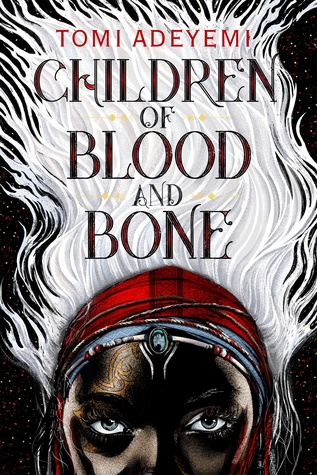
Children of Blood and Bone by Tomi Adeyemi | Review

I find myself, once again, at odds with the broader literary community.

It's exhausting, isn't it? You must be saying to yourself: "Why do I even bother to read this book blog, when all the writer ever does is muse about her inability to agree with most readers about whether or not a book is good? (When she even bothers to write at all!) Isn't it obvious that she's just not a very good reader?" And, dear reader of this blog, I wouldn't blame you for a moment if you packed your bags and left these dusty halls forever. Believe me, I'm just as exasperated as you are.

The case of Tomi Adeyemi's Children of Blood and Bone feels a little bit more complicated than most of my recent literary disagreements. To begin with, I did generally enjoy the book! I thought there were a lot of things it did fairly brilliantly, and I enjoyed many aspects of its mythology a great deal. But as I read it, I was repeatedly struck by a rather curious sensation that I was not reading something particularly... original.

If you're rolling your eyes now and declaring me to be an absolute fool, it's okay. I understand. After all, Adeyemi's young adult novel has been touted for its originality in rooting a fantasy story in West African mythology! And I don't deny that for a moment. The ways in which Adeyemi sidestepped the more common (and yes, at this point boring) Western European fantasy tropes was quite refreshing. It speaks to a boldness of storytelling. Yet it wasn't quite enough for me.

One of my favorite book blogs, The Book Smugglers, write in their Goodreads review that Children of Blood and Bone is "a superb, exciting, astonishing mix of Avatar: the Last Airbender and Black Panther". It's the sort of endorsement that should really set my blood pulsing. I have my issues with "Black Panther" as a film overall, but I loved the worldbuilding and the degree to which it played with different mythologies at its root. And I adore the show "Avatar: The Last Airbender" (ATLA).

Perhaps if I had read this review before reading Children of Blood and Bone, it would have more positively shaped my impression. Ultimately, I agree with half of the Book Smugglers' assessment: Children of Blood and Bone most definitely could feel like the lovechild of ATLA and "Black Panther", and it is precisely this that made me rate the novel that much lower.


It occurred relatively early in the book. As the narrative settled down and three POV were introduced, I was struck by several seemingly superficial similarities between Children of Blood and Bone and ATLA. We have a brother and sister from a persecuted class, in which the sister has a previously untouched form of magic and the brother is magic-less. We have a princess with a powerful artifact joining the siblings (quickly becoming a love interest for the brother). And we have her brother, the prince, hell-bent on chasing these three fugitives across a wide swathe of land in order to capture them, though his motivations may actually be more pure than previously believed... or maybe not. Oh, and the trio have to achieve their highly specific goal to restore balance... er, I mean magic... on the date of a celestial eclipse. Which is in less than a month!


With the exception of the princess, does this sound a bit familiar?


Like the Book Smugglers, my first thought was instantly of ATLA. The similarities to the story felt so pronounced that I could quickly guess how the story was panning out. In fact, it even ruined certain plot points for me because I could so easily figure out what they were supposed to be. For an "original" story, Children of Blood and Bone simply felt like a West African inspired version of ATLA, though perhaps a little bit more grown-up. Unfortunately, comparisons to ATLA will rarely end well for the piece of art in question - ATLA is one of the rare shows that works on a stunning range of levels. Few stories have quite reached its caliber, fewer still that attempted to mimic it too strongly.


Children of Blood and Bone does a lot of good things in its pages. Its exploration of racist power structures is obviously important, and there is no doubt that there's a lot to enjoy in the way Adeyemi crafts her world. I was also particularly impressed by her decision to include a meta-question about whether or not magic is inherently good and should be brought back. In the second half of the book, characters are confronted with both the importance and danger of magic. The lingering question remains, with little in the way of an easy answer or neat solution. In fact, the cliffhanger ending almost seems to emphasize the question. And when magic is so clearly linked to ethnicity and cultural expression, doesn't its suppression inherently mean the oppression of those who have it? These are interesting questions that fantasy too rarely explores, particularly when magic is a weak stand-in for real-world prejudices.


In other aspects, unfortunately, Children of Blood and Bone just falls apart. First and foremost, as I already mentioned, the story didn't feel original to me. The overwhelming similarities to ATLA (just swap the roles of a couple characters and you're good!) had me rolling my eyes, rather than delighting in the story as an homage. It's possible that this is simply my own, unfair jaded reading, but I couldn't shake off the feeling the entire time I was reading and I grew tired of constantly comparing certain creative choices with those that so neatly aligned with those from ATLA. It also left me cold whenever the book did diverge, because it felt like too little too late. At the end of the day, it felt too familiar, and not in a way that gave me warm, nostalgic vibes. (Maybe if I had seen ATLA as a child and not as an adult just a few years ago...?) 


It's not just that, though. The book also does a fairly bad job as distinguishing the voices of its three POV characters. Our magical Avatar stand-in (or rather, Aang-Katara mix), Zélie, doesn't sound all that different from her fierce enemy-later-love-interest (Zutara wish-fulfillment...?) Inan, nor from his sister Amari. I often forgot whose chapter I was reading until a reference to one of the other characters clarified it for me, and that is not the way POVs should work. The characters had such distinct character traits, yet they ended up feeling so similar on the page.


And there's also the writing.

Or rather. The melodrama of the story.

The way every line of moderate importance gets its own punchy paragraph.

But then these are quickly followed by more punchy paragraphs.

The chapters are short and dominated by writing of this style. Don't get me wrong, I have no problem with punchy chapter-ends as a concept. I actually kind of love them as a way to build drama. I rather write that way myself, with all my sentences that begin with "but"! But... the insistence on having so many dramatic pauses and paragraph breaks left me tired. It felt like I was reading a book that simply hadn't been edited properly. Rather than feeling focused and tight, every chapter felt like it lost some sort of thread as it tried to sound more and more dramatic.

If it sounds as though I'm being unduly harsh on Children of Blood and Bone, I... don't really mean to be. It's not a bad book! But it's also not as great a book as I was hoping. Even setting aside ostensibly personal things like the ATLA comparison (which is clearly very subjective, since different fans had different reactions to the degree of similarities), I was deeply bothered by the way the romances were written. I thought the pacing was rushed (largely due to the compressed time-scale the book had to work with). I struggled with the writing in many parts. But I also liked a lot, which left me feeling almost more disappointed. I was looking forward to this book more than almost any other recent YA, yet even something so universally acclaimed let me down somehow. Children of Blood and Bone may simply emerge as another example of hype not bearing out, but considering the praise, it's hard not to wonder at this point what is wrong with me specifically.

Friday, January 25, 2019

An open letter to Elena Ferrante | Frantumaglia

Dear Elena Ferrante,

It's a little odd for me to be writing this post in the form of an open letter. I could, after all, just write a real letter, I suppose, but it feels so unlikely that it would ever reach you (and thus, anyone) that I find myself more inclined towards simply writing an open letter, sending it out into the void known as the internet, and hoping that maybe (maybe!) you'll see this letter someday and find it interesting or worthy of your time.

I've finished reading the collection of letters and fragments published in English as Frantumaglia: A Writer's Journey (translated by Ann Goldstein and a few others). It was, I have to admit, a bit of an odd, at times unsettling read for me. The first section was perhaps the least interesting, to a certain degree, because I have yet to read Troubling Love. I know, I know, what sort of fan am I? (I also haven't read The Lost Daughter, and I've had that on my shelf for almost four years! I am soundly ashamed...) I definitely want to read it now, but it complicated my ability to read Frantumaglia, since I tried to skim through the early section and had to skip entire portions. I suddenly feel as though I'm missing a whole lot of necessary context to understand and engage with your writing, but there you have it.

The unsettling part for me, though, wasn't so much in the content. I've thought a lot about narratives over the past year or so, specifically the degree to which modern journalism is built around the idea of building narratives from nothing and then perpetuating them by giving them more and more airtime. So it becomes easy to craft a narrative about, say, a certain politician. Or about a certain demographic. Or even craft a narrative about a complex conflict or disagreement. It's enough to suggest that there is a narrative, and then build a whole story around that suggestion.

And as I read your repeated, almost exhausting (frustrated?) responses to journalists and readers persistently questioning you about your "identity", I grew angry. Truly, I grew angry for your sake. I realize, rationally, that these journalists weren't coming from my perspective of reading your interviews/letters/responses one after the other and could thus see with cold clarity the degree to which you have explained your stance over the course of almost thirty years, but it seems to me honestly shocking how persistent they are in disregarding your obvious wishes. Why every interviewer felt the need to re-ask the same questions that they knew (and cited!) from previous interviews about information they felt they deserved to know... I'm sorry, I truly am.

I was struck by your response and how it ties into this question of narrative that I've been obsessing over for so long. You say it exactly right - the story comes from the fact that the media wants there to be a story. After all, many writers don't engage in much publicity of their works. There's nothing too shocking about wanting to stay out of the limelight or writing under a pen name. Would anyone have even noticed if you'd used a fake jacket photo and written a bland blurb about living in a fake town with your fake children and your fake dog? I'd offer my photo, but seeing as I was barely alive when your first novel was published, I don't think it'll fly.

I wish I could undo the nonsense that others have asked you. I wish I could remove the question from our lexicon. And yet you see, even without me asking the questions (because, frankly, I don't think it's necessary; my curiosity is secondary to my respect for an individual's privacy and I steadfastly refuse to read or acknowledge attempts to dismantle it), I have to address it. It's become a necessary part of the story of your works. How exceedingly disappointing and frustrating. Here's to hoping the narrative will truly die down, and with that I will leave the matter behind.

There are so many interesting points raised within the pages of Frantumaglia that it's a little overwhelming to try to address them all. I honestly don't think I can, and as I write these words it occurs to me that perhaps I also shouldn't. I'm not nearly clever enough to be able to adequately address so much of what you have written about your own works, and I'm the sort of reader who doesn't retain very much in the way of plots or individual lines from a text, rather holds on to the emotions I felt while reading, which means that I can hardly be viewed as an expert on any book I haven't reread at least a dozen times. (And I have only read each of your works once, alas. This will change soon.)

I think the biggest point of contention I have with you is about feminism. While not as ubiquitous as the Big Question That Shall Not Be Named, it's a topic that cropped up again and again in many of your interviews. The evolution of your response to the question was actually fascinating to me, particularly the way you seemed almost cautious to use the label in the 1990s, and then more confidently embrace the term (and adjacent phrases such as "the patriarchy"!) by the early 2000s. I found some of your comments disappointing, though. I'm not going to argue how you view your feminism, particularly when your writing has inspired so many women readers (young and old) from a deeply feminist perspective. Death of the author and all that. But I find your characterization of young feminists to be somewhat concerning.

Are there young feminists today who don't fully appreciate what battles feminism won in the past? I'm sure! I also have no doubt that you have encountered modern feminists who perform a sanitized, stripped down version of feminism that feels as though it is little more than a game. I certainly have! But the vast majority of young women that I know who identify as feminists are nothing like what you write. I am nothing like what you write. And I am not quite "militant" myself (though I think I wouldn't feel as uncomfortable with the term as you seem to be). I feel you have engaged in a rather serious act of oversimplification, viewing the young generation as lazy and substandard simply because you are unfamiliar with what our causes actually are. I'd also argue that the degree to which so many of my feminist friends adore your novels is an indication that we probably speak a much more similar language than you realize.

It's an odd experience, reading a book that feels so intimate while being thoroughly repetitive. I'm not saying that to be cruel, it's obvious to me why themes repeat and recur. When journalists constantly pose the same questions, it seems inevitable. Unfortunately, it does complicate matters from my own critical perspective; I can't quite say that I loved the book when I glossed over so much of it. Some of your conversations are so detailed that they also felt like an infringement upon my own interpretations of the text. As interesting as it is to read, it's not necessarily something I want to adopt. Does that make sense?

I'm glad I read Frantumaglia, and I'm grateful for the opportunity to have spent this time with you. I like your writing and I like what you have to say about it, even if we don't always agree. I feel that you approach the world in an interesting way, which probably explains why I like your novels - they seem to capture a perspective that I connect with, even when I have nothing in common with the characters or the narrative. It was an honor to get a glimpse of some of the thought process behind your writing.

Sincerely yours,
Meytal (aka Biblibio)

Wednesday, September 5, 2018

DNF | "House Arrest"

Noa Yedlin's novel בעלת הבית (House Arrest) won Israel's top literary prize in 2013. It's a novel that had been largely praised and admired, plus it seemed like Yedlin was an up-and-coming star I ought to actually read (I've had her earlier novel, Shelf Life unread for... years). It turned out that the same thing that kept me from ever actually getting around to reading Shelf Life (an odd pretentiousness that has kept me away, again, for literally 7ish years) kept me from getting into House Arrest.

The truth is, I abandoned House Arrest around a third of the way through not even because I thought I couldn't finish it. The style is clear enough that I probably could have managed to finish, plus there's a certain swiftness to the writing that makes it generally pretty "readable" (ah, that word). But here's the thing: I got stuck somewhere around a third, my attention drifting instead to other books. And when I came back to finish reading the book for my "partially read" challenge in the Great Book Buying Ban, I realized I didn't want to.

I didn't want to spend any more time with the insufferable characters that populate House Arrest, I didn't want to have to listen to the obnoxious main character (Asa), a man so pretentious I almost wished he really existed in real life just so I could smack him. I didn't want to spend any more time in a book that feels like it starts 70 pages too late, taking its time to "establish" the characters before getting to the drama that the back cover has already revealed.

One of the things I've been trying to work on in recent years is abandoning books more easily. And it's true, sometimes my motivations aren't entirely fair. Like here. House Arrest probably gets better not long after the point I abandoned it. I'm sure the internal character conflicts grow more interesting. Maybe even the characters themselves become less annoying (though I doubt it). I kept feeling like there was something I was missing; here is a novel that presents one of the more privileged portions of Israeli society, yet continuously casts them as hero-victims. There seemed to be such a huge dissonance between the world Yedlin expects me to recognize and the real world. This, I should note, is actually quite common in "well-received" Israeli literature, particularly of the sort that wins the Sapir prize (indeed, I rarely like the books they select, and even those I did like fit this description).

And so... I abandoned House Arrest. Maybe someday in the (far off) future I'll try to read it again. For now, I have removed the bookmark, placed the book on a high, far-off shelf, and dusted my hands.

Friday, August 31, 2018

WITMonth Day 31 | Where do we go from here?

I always have mixed feelings about the end of WITMonth. Part of me is thrilled that another successful WITMonth has come and gone, with readers actively engaged, excited, and taking part in the women in translation project, seeking out new books, and learning more. Part of me is melancholic, remembering that despite the world of good that may come out of WITMonth (and I do believe that every single book read or discussed throughout WITMonth is a wonderful world within itself), it remains a sequestered achievement, with most readers and literary outlets still swayed by existing biases throughout the year. And another part of me is anxious that nothing is going to change, that despite our best efforts and the increased profile of WITMonth (growing from year to year!), things remain static and that women writers from around the world will always fall behind, either in favor of men writers in translation or in favor of English-language women writers.

I've already discussed some of my goals for the women in translation project's future, how much I'd like to see it go beyond a minor niche and become a reasonable part of the larger feminist diversity movement. But that's not the only goal I think we need to have in mind as readers. Recall that WITMonth is our opportunity to broaden our horizons. That means that yes, we should make sure that we're reading books that extend beyond Europe, Eastern Asia, and Argentina. Yes, we should make sure we're reading books by and about queer women (or nonbinary or trans people). Yes, we should include books by and about disabled women. Children's literature. Genre literature. Nonfiction. Feminist texts and science books and history.

It also means honing in on the fact that WITMonth should not be limited to English-language readers and bloggers. Readers should feel at home discussing and promoting women writers from their own languages, as well as translations between different languages. The same way that I discuss Israeli women writers who have yet to be translated, I would love to see readers promoting Sinhalese women writers or Thai women writers or women who write in indigenous languages. I've loved seeing tweets this year in languages I could only partially understand; I would love to see many more such posts and discussions. This isn't - and should not be - an English-limited project.

I've also already talked about how I'd like to see things change. Literary gatekeepers need to step up and take action. Readers need to hold them accountable. These are all perfectly doable and they should not be limited to August. WITMonth? More like WITallthetime!

As for myself...

Five WITMonths. Five years of hosting this wonderful project. I'm not quite ready to give it up yet, but I do have to admit that it's grown well beyond me at this point. At the very least, I am confident that WITMonth will take place (and successfully!) even if I do not post daily next year. And I may take a few steps back. You - all of you - have made WITMonth happen in the most incredible and beautiful way. We are building a movement here that is growing by the day. Bookstores, libraries, publishers, reviewers, and readers - together, we are all making it easier to find and read books by women writers in translation.

August may be over, but WITMonth never really is. Not for me, anyways.