Showing posts with label Israel. Show all posts

Wednesday, August 4, 2021

WITMonth Day 4 | When poetry works | The Things We Don't Discuss by Shlomit Naim Naor

My poetry reviews always contain the same disclaimer: I am not qualified to review poetry. I'm not, truly! When I read poetry, the thing that remains - more than an appreciation for the language, for the craft, or for any sense of originality - is how the work made me feel. Did it manage to make me cry? Did it manage to make me sigh? Did it manage to make me feel?

If the answers to those questions are "yes", then it's good poetry and very possibly one of my favorite books of the year, it's as simple as that. If the answer is "no", I can start to unpack the technicalities about the writing, about the framing, about the shaping of the poems themselves. But those are wholly secondary to me when it comes to how poems make me feel.

Which means that on the rare occasions that I come across a poetry book that manages to hit me right in the feels (shh, I'm a millennial, it's how we speak), I am left feeling almost speechless. How can I review a book that ends up feeling so personal? Because that's where The Things We Don't Discuss (הדברים שאנחנו לא מדברות עליהם) by Shlomit Naim Naor has left me. It's a book that punched me straight in the face with its first poem and didn't let up. It's a book that - for the first time in my life - has me itching to translate a poem from Hebrew into English. It's a book that feels like it understands me, even though very little of it is actually parallel to my life. But somehow, Naim Naor gets it. Gets me. Nothing else really matters, does it?

But because this is a review (of sorts), I'll try to explain why. First, there's a technical matter - Naim Naor's writing style is diverse and varied within this single slip of a collection by itself. While she revists certain themes more than others, the poems don't bleed into each other. Several even manage to stand out, bluntly unique in both style and tone, though they do not clash with the rest of the works. The collection isn't one of those smooth poetry books I'm so often gushing about, it certainly feels like a collection of smaller sub-collections, but it straddles the line between having its poems stand out and also not having them discordant with each other. 

Naim Naor also does an admirable job of playing with different ways of writing in poetry; a frequent criticism of Israeli poetry is that all one has to do to write a "poem" is slap the vowel symbols on a few staggered lines. This criticism is really just a critique of pretentiousness that markets itself as poetry, but there is a universal truth behind it when it comes to bad poetic styles suffocating potentially good poem ideas. And simply using a common poetic style is not enough to turn a string of words or sentences into a good poem. Naim Naor easily side-steps this criticism by not limiting herself to a single, standard poetry style. I don't mean that she's particularly experimental (she is not), but more that she is willing to have poems that have very different rhythms and flows set alongside each other. It's a mix of different standards, in a way, and I actually rather liked it. Her poems do feel a little more natural for this mix, and a little less... performative.

The truth is, though, that I loved The Things We Don't Discuss because of its poetic topics. Naim Naor is one of the only observant Israeli women writers I have had the pleasure of reading, and her writing is clearly steeped in that experience. That first poem - the one that punched me in the face - kicks things off without a moment of hesitation, describing the loneliness of being a single religious woman on Shabbat, asking "And what will I do with all the Shabbat leftovers from my singlehood?" The poem references traditions and experiences that will be instantly recognizable to any observant Jewish-Israeli woman, but more than that it includes the struggles behind a lot of normalized dating traditions surrounding Shabbat meals. In one particularly gut-punch-y line, Naim Naor writes "There is no room for who I want to be" - I started crying. And that was only the beginning. (The second poem is the one that absolutely consumes me and I would love to translate, if only because I wish I could feel it even more deeply. Does that make sense?)

Naim Naor is true to the promise of her collection's title (which, I should note, is female-gendered in Hebrew - that is, the things that we women don't discuss), raising topic after topic after topic that are too rarely discussed. She writes of her struggles with her past singlehood, with motherhood, with grief at the loss of a parent, with giving birth... These are poems that seem determined to be straight-forward in precisely those topics that often get glossed over, particularly among religious women. It's this, I think, that made The Things We Don't Discuss such a unique collection for me. The concept of taboo-breaking poetry is hardly new, and there are many who would likely read these poems and scratch their heads at the supposed taboos Naim Naor is breaking. Because that's not what she's doing. It's not about being loud and deliberate, it's not about making some sort of point in writing about unknowable subjects. It's just about being able to get out those small, painful pieces. And for me, at least, seeing enough of myself in those small pieces and feeling understood was revelatory. 

So yes, The Things We Don't Discuss hit me emotionally. It worked technically, with good pacing and technical flow and diversity of tone (but not too diverse). It worked thematically, broaching different topics without being overly defined by one (even if certain themes hit closer to home for me personally). And it worked on a whole other dimension as well - I want to share these works, while at the same time keep them to myself. I want to share them in Hebrew and I want to share them in English, wanting to dive into the heart of the poems and find myself on the other end. I loved this collection with every drop of my existence and I loved the reading experience too (including the crying and the parts that I read on the beach that were interrupted by the very noisy guys who decided to sit very close to me, sigh). I don't know that this review will even mean anything (my review of Hebrew-language books very rarely do...), but nonetheless: This was easily my favorite book of the past several months.

Tuesday, August 25, 2020

נשים בתרגום

 (NOTE: An English summary of this data will be shared in a separate post.)


"חודש נשים בתרגום"


"נשים בתרגום" זה לא מושג מוכר בישראל, ואפשר להבין למה.


מה משמעות המושג הזה? למה הכוונה? האם מתייחס לנשים בתוכן הסיפור? סופרות? מתרגמות? ומה עם סופרות א-בינריות? 


"נשים בתרגום" מתאר ספרות מתורגמת שנכתבה במקור על ידי נשים. המושג מגיע מאנגלית, Women in Translation, בעקבות מחקרים שנעשו על תרגומים ספרותיים שהראו כי נשים מהוות רק כ-30% מכלל התרגומים החדשים לאנגלית של ספרות יפה ושירה. כשמוסיפים תרגומי ספרי עיון, קלאסיקות, וספרות ילדים/נוער, אחוז הסופרות יורד לכ-25%. אך המושג "נשים בתרגום" אינו משקף את כל הסיפור. 


קודם כל, בהמשך לטעות הנפוצה: ״נשים בתרגום״ מתייחס לסופרות, לא למתרגמות. עבודת התרגום היא אכן עבודה מאתגרת במיוחד, אך כוונת הפרויקט היא למשוך את תשומת הלב לקולן של הסופרות וסיפוריהן.


בנוסף, לא מדובר רק בנשים! "נשים בתרגום" גם מעודד ומפרסם ספרות מאת סופרים/ות א-בינאריים/ות או סופרים טרנסים שבוחרים להכלל. 


ולבסוף, כשאנחנו מדברים על ״נשים בתרגום״ בהקשר הישראלי, אנחנו לא באמת מדברים על תרגומים מכל השפות באופן שווה. כי בעצם - הכוונה היא דווקא לספרות שמתורגמת משפות שאינן אנגלית.


אז מהו בעצם חודש נשים בתרגום? כל שנה במהלך חודש אוגוסט אנחנו מכירים, מפרסמים וחוגגים את הספרות הנפלאה הזו.


(הערת אגב: אמנם אני יזמתי את הפרויקט בראשיתו, ואני כמובן דוברת עברית, אך המושג ״נשים בתרגום״ ראה אור לראשונה בעברית בבלוגים ספרותיים שהגיעו לפרויקט דרך קהילת הספרות דוברת האנגלית, לא דרכי!)


בשנה שעברה, התראיינתי אצל דפנה לוי במוסף הספרותי "המוסך". זו הייתה בעיניי אחת השיחות המעניינות ביותר בנושא נשים בתרגום שהשתתפתי בהן, ולא רק כי סוף סוף הייתה לי הזדמנות לדבר גם על נושאים הקשורים לישראל באופן ספציפי, אלא שהכתבה מהווה מבוא מקיף ומעמיק לכל פרויקט ״נשים בתרגום״ בשנים האחרונות.


עכשיו הגיע הזמן לדבר על המצב בישראל. 


אנשים בארץ בדרך כלל מצביעים על הצלחתן של מספר מצומצם של סופרות דוברות אנגלית כסימן לכך שפרויקט "נשים בתרגום" חסר משמעות. "תראי עד כמה ג'יי קיי רולינג מוצלחת! מה פתאום צריך חודש נשים בתרגום?" (וכן, זו תמיד הדוגמא...) אמירות כאלה מפספסות את מהות הפרויקט.


נחזור רגע להגדרת נשים בתרגום בהקשר של ספרות מתורגמת לאנגלית. אצל קוראים דוברי אנגלית ישנה נטייה לקרוא מעט מאוד ספרות מתורגמת, והמעט שיוצא לאור אינו זוכה לקהל רחב. אבל בהקשר העברי, ערבי, לטבי, סיני, אינדונזי, מלאיאלאם, לא-משנה-באיזה-שפה-מדברים-חוץ-מאנגלית, יש פער עצום כשבוחנים את שפת המקור של הספרות המתורגמת. נכון, בעברית יש מלא תרגומים... אך כמעט כולם מאנגלית. 


בהחלט צריך להתייחס לפערים מגדריים ותרבותיים בספרות שמתורגמת מאנגלית. לא סתם קיימים באנגלית ארגונים שלמים לקידום סופרות (למשל, VIDA או ReadWomen) וכמובן שיש גם פערים אחרים, למשל בקידום סופרים/ות שחורים/ות, ספרות מהגרים, ספרות עמים ילידים, ספרות מעמד פועלים, ספרות קווירית וכו'. ובכל זאת.


כמה ספרות מתורגמת באמת קיימת בעברית?


בשנה שעברה, אספתי מידע לגבי כל הפרסומים של מספר הוצאות לאור בישראל: עם עובד, הספרייה החדשה, תשע נשמות, אחוזת בית, עליית גג, בבל, ו-כנרת, זמורה-ביתן, דביר.


פרסומים לפי שפה, 2018


הדבר הראשון שבולט לעין: לא חסרים תרגומים מאנגלית. להפך - תרגומים מאנגלית שולטים בשוק הישראלי. סך הכל, 41% מהספרים שיצאו לאור ב-2018 בהוצאות אלו נכתבו במקור בעברית, 41% נכתבו במקור באנגלית, ו-18% מכל שאר שפות העולם (כאשר ספר אחד - שנכתב במקור בקוריאנית - בעצם תורגם מהתרגום לאנגלית, לא מקוריאנית באופן ישיר). אם נתייחס לספרות מתורגמת כקבוצה עצמאית, אנגלית מייצגת 69% מכלל הספרות המתורגמת לעברית.


חשוב לציין כי במידה מסוימת בחרתי במוציאים לאור האלה כי ידעתי שהם מפרסמים "יותר" ספרות בינ"ל ולא רק תרגומים מאנגלית. בהוצאה הגדולה ביותר שבדקתי, שגם מאוד מייצגת את ה"מיינסטרים" הישראלי (כנרת, זמורה-ביתן, דביר), האחוזים דווקא נטו עוד יותר לכיוון תרגומים מאנגלית, כאשר 48% מכלל הספרים שיצאו לאור ב-2018 היו תרגומים מאנגלית, 44% ספרות מקור מעברית, ו-8% משאר שפות העולם.


הדומיננטיות של אנגלית בהקשר של תרגומים לעברית לא מפתיעה אך כן מאכזבת. ספרות אמורה לחשוף אותנו להשקפות עולם שונות, למצבים שונים, לסיפורים שונים. איך אנחנו אמורים להבין את העולם אם אנחנו כל הזמן נחשפים רק לארה"ב ואנגליה?


מה ההבדלים המגדריים?


נתחיל מהשאלה: כמה ספרים מאת נשים או גברים יוצאים לאור בישראל בכל שנה? מתוך מבחר המו"לים שבדקתי, ב-2018 מדובר בפער מפתיע: כ-57% מכל הספרים שיצאו לאור נכתבו על ידי גברים, 41% על ידי נשים, ו-2% ספרים שנכתבו על ידי גברים ונשים ביחד ("משולב"). לא ציפיתי להבדל כזה גדול - בעבר התרשמתי שהמצב בישראל מאוד שוויוני בין סופרות לסופרים. מאיפה הפער מגיע?


בחרתי לחלק את הנתונים לקבוצות. קודם כל, הסתכלתי אך ורק על ספרים שנכתבו במקור בעברית - שם הפער קטן יותר, כאשר 54% סופרים, 44% סופרות, ו-2% משולב. אחוזי התרגומים מאנגלית הם לפי אותה עקומה - 56% סופרים, 41% סופרות, 3% משולב. תרגומים מכל שאר השפות שאינן אנגלית נראו לגמרי אחרת. כאן, רק שליש (33%) מהספרים נכתבו על ידי נשים, כאשר 65% נכתבו על ידי גברים ו-2% משולב.


ספרות מקור + מתורגמת


ספרות מתורגמת (כולל אנגלית)


ספרות מתורגמת (ללא אנגלית)


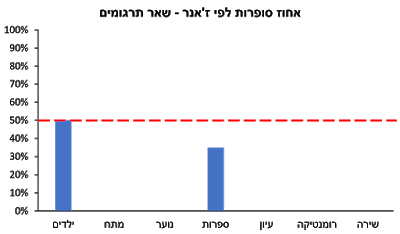
פערים קיימים גם בחתכים אחרים, כמו ז'אנר. הגדרתי כמה ז'אנרים כלליים כדי לנסות להבין אם יש פערים בין נושאים מסוימים... ואכן יש. ז'אנרים כמו ספרות ילדים, ספרות נוער, וסיפורת/ספרות יפה לרוב כללו אחוז גבוה יותר של סופרות (לדוגמא, נוער) או אחוזים מאוד דומים של סופרים וסופרות (ילדים וסיפורת), לפחות בעברית. כלומר מכיוון שרוב הספרים שיוצאים לאור בישראל שייכים לז'אנר ספרות יפה/סיפורת, לא מפתיע שתמיד חשתי שהמצב בעברית די שוויוני - 51% מסיפורת מקור נכתבה על ידי נשים.


אחוז סופרות מתוך פרסומים בעברית (מקור)


אבל כן חשוב לשים לב לז'אנרים החריגים מבחינת פערים מגדריים, ספציפית עיון ושירה. שני הז'אנרים האלה מהווים עולם ומלואו בספרות מקור וספרות מתורגמת. בשירה למשל, רק 17% מהפרסומים הם מאת נשים (פירושו של דבר - ספר בודד); איך ייתכן כי ב-2018 נתון כזה מייצג את כל ספרי השירה מאת נשים ממבחר מו"לים מובילים בישראל? בעיון - הז'אנר השני בגודלו בישראל - רק 27% מהספרים נכתבו על ידי נשים. האמנם נשים באמת לא כותבות בז'אנרים האלה? או שאולי סתם פספסתי משהו? אלו שאלות להמשך.


אותה מגמה נראית גם בתרגומים מאנגלית, שם שוב קיים פער עצום בעיון (רק 16% סופרות, מתוך 25 ספרים סה״כ). בהתחשב במעמד של ספרי עיון (ביוגרפיה, היסטוריה, מדע פופולרי, ועוד), יש חשיבות חברתית מקיפה לפער המגדרי. המשמעות של צמצום פרסום סופרות היא שקוראים ישראלים אינם נחשפים להשקפות עולם שונות (שלא נדבר על זה שכמעט כל הספרים נכתבו על ידי גברים לבנים ולא משקפים את העולם דובר האנגלית בשום פנים ואופן).  


מעודד לראות שלמרות המחסומים העומדים בפני סופרות דוברות אנגלית, הן דווקא מתורגמות לעברית במידה שוויונית. בהחלט דבר שצריך להתגאות בו. בנוסף, מעניין אך לא מפתיע לראות כי מעט ספרי הרומנטיקה שפורסמו נכתבו על ידי נשים. מצד שני, לא ברור למה כולם נכתבו במקור באנגלית.


אחוז סופרות מתוך תרגומים מאנגלית


המצב נהיה מעט הזוי כשמנתחים את הנתונים של שאר שפות העולם. למרות שקיימים ספרים מתורגמים בסוגי ז'אנרים שונים (כמו מתח, עיון, ושירה), ייצוג סופרות בז'אנרים אלה פשוט לא קיים. כפי שניתן לראות בטבלה בהמשך, יש מעט ספרים מתורגמים בסך הכל, אבל בכל זאת מדובר בפערים בולטים ובלתי נתפסים. והפער בז'אנר המוביל בתרגומים בינ"ל הוא לא פחות מרגיז - רק 35% מסיפורת מתורגמת מכלל שפות העולם שאינן אנגלית, נכתבו על ידי נשים. 


אחוז סופרות מתוך תרגומים (ללא אנגלית)


פירוט מגדרי של כלל התרגומים משפות שאינן אנגלית


הנתונים אולי שונים מעט בקרב מו"לים אחרים או בשנה האחרונה. אבל לאור העובדה שהנתונים שאספתי דומים מאוד לאלה משנת 2017 (שלא פרסמתי כאן), סביר להניח שהמגמות שציינתי לעיל מייצגות די טוב את עולם הספרות הישראלי ככלל.

אני מאוד מקווה שנוכל ללמוד מהממצאים הנ"ל לגבי הפערים - גם מבחינת תרגומים משפות שונות וגם מבחינת מגדר - במטרה להרחיב את מגוון הספרים שיוצאים לאור בישראל מדי שנה. בסופו של דבר, נרצה שהנוף הספרותי שלנו ישקף את העולם שבו אנו חיים. יש כל כך הרבה ספרים מכל העולם, ובוודאי שגם המון, המון סופרות מוכשרות, מעניינות ומרגשות. העולם עצום ומדהים - למה שלא נחשף לכולו גם בעברית?


Tuesday, August 11, 2020

WITMonth Day 11 | "Resilience in Immigration" by Shelly Engdau‐Vanda

Last year, I wrote about a book called "Lives of Three Generations of Bedouin Women" by a Bedouin-Israeli writer Nuzha Allassad-Alhuzail. That work of nonfiction grew out of the author's doctoral research and is a nonfiction, sociological book - very much not the sort that I typically read and review on the blog. But it sparked something in me, in terms of reading more nonfiction, and particularly reading more nonfiction by Israeli women of all sorts of different backgrounds. This quickly led me to Shelly Engdau-Vanda's "Resilience in Immigration: The Story of Ethiopian Jews in Israel", published under the same sociology series at the same publishing house. The two books are thus packaged similarly, and even something in their meta-storytelling matches - both works are by minority women in Israel, writing about communities to which they belong and experiences that broadly match their own (and sometimes very much don't).

And for me, the two books remain pillars in my understanding of different Israeli experiences and cultures. Written with the express purpose of "educating" (that is, conveying a certain sociological study), the two works are remarkably enlightening beyond just their author's demographic. Yet it is still worth mentioning that these are among the only works by Ethiopian- or Bedouin-Israeli women writers (if not the only). Not only do the books serve as a direct educational tool in their academic research, they also provide context for communities that are wholly underrepresented in Israeli literature specifically and world literature overall.

Resilience in Immigration is thus the first book by an Ethiopian-Israeli writer that I've ever read. In fact, very few works by Ethiopian-Israelis have been published in Hebrew, and few of those that have been published remain in print or are readily available. While this may seem like an offhand remark, it's actually fairly important in recognizing Resilience in Immigration's cultural context; while most Ethiopian-Israelis (and specifically those profiled in this book) have lived in Israel for over 25 years or indeed were born here, "integration" into the broader, homogeneous Israeli society has not come easy, and at times at all. Resilience in Immigration tracks the migration experience from Ethiopia through Israel, with several chapters dedicated to questions of "integration" or assimilation and associated struggles. The lack of Ethiopian-Israeli representation in broader Israeli media largely aligns with this, and the limited scope of Ethiopian-Israeli literature seems to echo this void.

The book's core is interviews with Ethiopian-Israeli adults who came to Israel as children, during Operation Moses during the 1980s. This saw thousands of Ethiopian Jewish refugees secretly airlifted to Israel through Sudan, due to persistent persecution and violence the Ethiopian Jewish community faced, as well the ongoing civil war there. Not all of Resilience in Immigration's interviewees remember this period in their life, but several could vividly recall the horrors of fleeing their homes, the Sudanese refugee camps, and the chaos surrounding the actual rescuing flights. Some had lost family. Some were separated from their families. Some experienced violence. It's not easy reading these accounts (particularly knowing that the latter part of the book goes into detail about the continuing struggles once in Israel), but it's also pivotal history that simply isn't taught in Israel. Like the best nonfiction, Resilience in Immigration made me want to read dozens more books on the subject. Unfortunately, there isn't much more out there.

In a sense, Engdau-Vanda's book is not merely the sociological study of a group of childhood survivors, but a short history of Operation Moses and its outcomes. She frequently centers the Ethiopian-Israeli community at large, alongside the individual experiences of those interviewed. This becomes important when detailing experiences with the arrival to Israel, the racial bias in how the new immigrants are treated or respected, the glaring inconsistencies in comparison with other immigration waves, and subsequent consequences. The book is organized by topic, but these naturally flow into each, starting from the harrowing journey to reach Israel through to arriving, integrating, facing racism, and the lasting effects of all of these.

My one struggle with Resilience in Immigration - like Lives of Three Generations of Bedouin Women" before it - was keeping track of those interviewed. It may seem a minor point (and it is!), but it felt necessary at times to understand who had experienced what, and in what form. This says more about my reading of the book than anything else, and is obviously not the fault of the author; one does not need to spoonfeed a reader. Otherwise, the book is sharp, tight, and eye-opening. That racism exists within Israeli society is not something that surprised me, but the pervasiveness is something that I don't think enough Israelis (even well-meaning Israelis!) fully comprehend. Nor do I think Israelis discuss enough the degree to which racist bureaucratic decision-making influences communities for decades afterward. These aren't even the express focus of Resilience in Immigration, but they're there, and impossible to ignore. (They are, I should note, also fully relevant to other experiences within the Israeli context. These too don't get enough attention.)

Which brings me back to the beginning. Resilience in Immigration felt to me like the natural companion to Lives of Three Generations of Bedouin women not because there's anything in common in the texts themselves (the experiences are very different), but because both books felt like absolutely pivotal experiences. As I wrote last year, I can't see someone translating Resilience in Immigration, but my goodness, they should. Readers from around the world deserve to encounter the individual experiences of minority (and majority!) communities within different countries and cultures. I would love to read similar accounts about migration within India, or Arabian-Peninsula Bedouin life as affected by Saudi political upheavals, or or or ...

And so, ultimately, I recommend this Hebrew-language book to my international, mostly-English-speaking audience. I also encourage my Hebrew-speaking audience to reflect on the dearth of Ethiopian-Israeli representation in our literature and seek out what we can. Resilience in Immigration has helped build that spark I felt last year into a solid flame, wanting to read more nonfiction by women from around the world. But specifically for now: I would love to see this gain a wider readership. That's all.

Thursday, August 15, 2019

WITMonth Day 15 | "Lives of Three Generations of Bedouin Women" by Nuzha Allassad-Alhuzail | Review

You know how I often say that I feel "unqualified" to write reviews of certain books? Sometimes that's because a book just isn't to my taste and I don't feel that I can adequately speak for readers to whom the book is geared. Sometimes it's because the book involves literary references that I'll never be able to place. Sometimes it's because the book is on a topic that is far beyond my scope of experiences/knowledge, and I just have to trust the writer.

This review falls into this latter category.

The book I'm reviewing is not actually called "Lives of Three Generations of Bedouin Women"; for starters, it was written in Hebrew and this is simply the translation of the subtitle, and also not quite. In Hebrew, the full title translates to When the Shadow is Big, It's a Sign that the Sun is Going Down: The Lives of Bedouin Women through the Lens of Change (כשהצל גדול סימן שהשמש שוקעת: חייהן של נשים בדואיות בראי השינויים). But what it really is, at its core, is the lives of three generations of Bedouin women, a sociological case study looking at grandmothers, mothers, and daughters, each of whom reflects a generation in flux and a changing culture. For convenience's sake, I'll be referring to the book from here on out as Lives.

I picked this up entirely randomly. I almost never read nonfiction in Hebrew, and even the nonfiction I read in English is rarely sociological or academic in nature. (At least... academic in fields beyond my own scientific ones.) But somehow I did spot this on the shelf, and somehow I did decide to read the back cover, and as I did, I realized that I have never read anything by any Bedouin writer. Given that my familiarity with Bedouin culture is fairly limited and mostly secondhand, I decided I needed to read this book. I began it that evening and finished reading it the following day.

Lives is very much an academic work. In it, Dr. Nuzha Allassad-Alhuzail tracks various pieces of Bedouin culture changes through interviews of 10 Bedouin women, per generation. She selected 10 sets of grandmothers, mothers, and granddaughters who were willing to sit for extensive interviews. Most issues, she notes, were unguided - Allassad-Alhuzail frequently points to topics that each generation of women raised themselves. The study is fascinating from a lot of perspectives, giving voice to a community that is practically invisible in Israeli culture. Allassad-Alhuzail covers issues from polygamy, women's education, women's freedom, domestic violence, and more. She further places Bedouin societal changes within the context of greater social changes in the Western, Israeli, and Arab worlds overall. One of the more fascinating observations she includes in the book is the degree to which the shift from nomadic tents to fixed buildings frequently stripped women of long-held freedom; women-only spaces often entirely disappeared from Bedouin settlements. Thus, her research seems to suggest that the "mothers" generation faced greater struggles in terms of gender dynamics than their more traditional mothers had.

There's a lot I find fascinating about Lives. The book is written in Hebrew and is thus geared primarily for an Israeli audience, which obviously frames a lot of how it's written and meant to be interpreted. But while Allassad-Alhuzail certainly gives her readers a basic primer on Bedouin culture, she still focuses on very specifically Bedouin matters. She discusses the cultural shock that Bedouin culture has gone through, since effectively being forced into government-approved settlements. She discusses changes to religious traditions, that have shifted and changed over time. She discusses sexism through a variety of lenses, and this in particular is fascinating as a feminist reader, being reminded yet again that feminism can mean very different things in different cultural contexts.

For example, Allassad-Alhuzail points to an increase in young Bedouin women wearing more religious/covered clothing, but that this does not appear to reflect a greater religious fervor among these women. Instead, Allassad-Alhuzail notes that this clothing (which is tellingly not traditional Bedouin dress, but Muslim Palestinian-Arab) reflects a sort of armor. A young woman who is deemed conservative, well-covered, and modest will be allowed to leave the house and continue her studies. This observation struck me for a lot of reasons, but it also put a lot of personal interactions into a specific context that I had never really thought of before.

In one field, however, Allassad-Alhuzail frequently frustrated me. She spends quite a bit of time discussing Bedouin's status as indigenous peoples and comparing the fight for Bedouin rights to those of other indigenous peoples around the world, which was obviously enlightening, interesting, and very important. Yet she then attempts to draw parallels to European colonialism that simply don't apply, while also pointing to that sort of Palestinian-ification of Bedouin culture... without addressing how much Palestinian culture itself has changed in the same time period. Or that Palestinian culture itself is no longer quite as homogenous as she presents. Or the way pan-Arabism imposes certain cultural norms in a distinctly colonial fashion as well. (At no point does she acknowledge the plethora of Christian Palestinians mostly found in the north of Israel; Palestinian refers to Muslim Palestinian and glosses over modern, significant cultural distinctions between Israel, the West Bank, and Gaza with a casual broadness that is simply not reflective of reality.) Nor does Allassad-Alhuzail much address Bedouin status in other countries. It comes up in the discussion of the Bedouin indigenous status with some references to Egypt, but goes entirely ignored when specifically addressing government policy as regards Bedouins. It seemed like an odd omission in a book that is... all about changes in Bedouin society.

Yet even this frustration only emphasized how interesting I found Lives and how important I think it is. This is a book that does exactly what I often seek from the women in translation project - it introduced me to a thoroughly unfamiliar cultural context, demanded I truly involve myself in it, and then challenged me. The fact that the book is nonfiction only made it more enjoyable, in this case; I can (and will!) argue about how Allassad-Alhuzail attempts to frame pieces of her work in a broader cultural climate (hey, neither of us are experts on that!), but I have no interest or right whatsoever to argue with her about the facts of Bedouin culture. And these, Allassad-Alhuzail conveys clearly, cleanly, and intelligently. The book is informative and interesting, explanatory and engaging.

This is the sort of book I genuinely can't imagine ever getting translated, but it should (even if, again, I think that Allassad-Alhuzail takes some liberty in expanding her thesis to other fields). It's a cultural study from within that culture. It's an honest examination of good and bad; Allassad-Alhuzail writes of her own struggles as being the oh-so-rare-almost-unheard-of woman Bedouin PhD candidate. She explores her own status within the community, both as an academic and a social worker, and also how this shaped her study. She notes places in which her own experience aligns with those described by the other women of her generation; she frequently reminds the reader that she is writing from within, though the presentation is pointedly for without. I would love to see this reach more readers, whether in Hebrew, Arabic (the original interview language, albeit not of the book itself), or any other language.

Wednesday, September 5, 2018

DNF | "House Arrest"

Noa Yedlin's novel בעלת הבית (House Arrest) won Israel's top literary prize in 2013. It's a novel that had been largely praised and admired, plus it seemed like Yedlin was an up-and-coming star I ought to actually read (I've had her earlier novel, Shelf Life unread for... years). It turned out that the same thing that kept me from ever actually getting around to reading Shelf Life (an odd pretentiousness that has kept me away, again, for literally 7ish years) kept me from getting into House Arrest.

The truth is, I abandoned House Arrest around a third of the way through not even because I thought I couldn't finish it. The style is clear enough that I probably could have managed to finish, plus there's a certain swiftness to the writing that makes it generally pretty "readable" (ah, that word). But here's the thing: I got stuck somewhere around a third, my attention drifting instead to other books. And when I came back to finish reading the book for my "partially read" challenge in the Great Book Buying Ban, I realized I didn't want to.

I didn't want to spend any more time with the insufferable characters that populate House Arrest, I didn't want to have to listen to the obnoxious main character (Asa), a man so pretentious I almost wished he really existed in real life just so I could smack him. I didn't want to spend any more time in a book that feels like it starts 70 pages too late, taking its time to "establish" the characters before getting to the drama that the back cover has already revealed.

One of the things I've been trying to work on in recent years is abandoning books more easily. And it's true, sometimes my motivations aren't entirely fair. Like here. House Arrest probably gets better not long after the point I abandoned it. I'm sure the internal character conflicts grow more interesting. Maybe even the characters themselves become less annoying (though I doubt it). I kept feeling like there was something I was missing; here is a novel that presents one of the more privileged portions of Israeli society, yet continuously casts them as hero-victims. There seemed to be such a huge dissonance between the world Yedlin expects me to recognize and the real world. This, I should note, is actually quite common in "well-received" Israeli literature, particularly of the sort that wins the Sapir prize (indeed, I rarely like the books they select, and even those I did like fit this description).

And so... I abandoned House Arrest. Maybe someday in the (far off) future I'll try to read it again. For now, I have removed the bookmark, placed the book on a high, far-off shelf, and dusted my hands.

Monday, August 13, 2018

WITMonth Day 13 | "The Option" | Translate This Book

I never seem to start with the right book. Author Yael Neeman became a bestselling, household name author in 2011, with the novel We Were the Future that details the lives of children coming of age in a Kibbutz (autobiographic, by all accounts). Yet when a collection of her short stories became available a few years later, that was, for some odd reason, the book that I ended up buying and reading. And liking.

It's hard to review short story collections, particularly when those collections were written in another language and I have little with which to describe them. How can I explain that despite my notoriously terrible memory, the first story (which translates to "Barrenness") has lingered with me for literal years? How can I explain that Neeman's writing has an edge to it that is simultaneously brilliantly sharp, but also delightfully light?

I'll say this, briefly: I didn't love all of the stories in The Option (כתובת אש). There were a few that I skimmed through, because they tired me. But even as some of the stories didn't jive well with my personal style, they were all interesting and Neeman managed to avoid that oh-so-frustrating pitfall that many single-author collections have by creating a series of truly distinct stories. Some of the stories are heartbreaking, some are melancholic, some are whimsically tragic, some are just weird, and some are, yes, forgettable. Overall, though, she creates a truly enjoyable, well-written collection. It makes me want to read We Were the Future as soon as I can get my hands on it, to experience what was supposed to have been my introduction to a talented writer's works. It makes me want to read her latest work, just recently released. I've got what to look forward to.

Saturday, March 3, 2018

Translate this book | Amilam by Hila Arazi-Hatav

I've got to say, this one surprised me. I bought it years ago at Hebrew Book Week, I think to complete a 1+1 sort of deal, something purchased in the early days of my WIT awakening. It languished on my shelves until now, and honestly I don't think I ever really processed what the book was supposed to be about. It existed, barely, at the corner of my awareness. But TGBBBOT means that I'm reading a lot more "forgotten" titles from my shelves, and so it came to be that I read Hila Arazi-Hatav's Amilam. And liked it a lot.

This is a novel split into two voices, but they're rather surprising ones at that. The narration begins with Leah, mother of two, whose life feels like it's beginning to fray at the edges. Leah's husband, Yoel, is on a prolonged business trip after months of difficult unemployment, hoping to find redemption at a foreign conference. Leah narrates her troubled thoughts to the husband that isn't there, increasingly exhausted by the strain of her mother's Alzheimer's and a sudden, unexpected pregnancy. Thrown into the mix is her older daughter Noa, the second narrator, who seems to also be slipping off the grid lately. Noa disappears for hours, is distracted at school, and seems disconnected from reality.

But as Noa's narration begins to match her mother's, it becomes clear that Noa is not simply a lazy, delinquent 12-year old, rather she is singularly concerned with keeping her grandmother healthy so that the "cousins" from Paris - twin brothers, one of whom molested Noa several times on their previous visit - have no reason to come. Noa's fear for her grandmother Elsa's health leads her to take on increasingly drastic measures, from having her best friend pretend to be Elsa's long-dead son (Noa's uncle) in order to convince Elsa to take her medication, to grinding up pills and mixing them in with the sugar, to coming up with plans for a "trap" for whichever of the brothers it is that might come into Noa's bedroom at night.

The tone, unsurprisingly, switches fairly drastically between Noa and Leah, though the stakes remain high in both cases. Noa, unlike her mother, is not unraveling quite as much as she is fighting a losing war. Her concerns jump from caring for her grandmother to whether her class will win the soccer game against the other class. She misses her father, vaguely, but seems to have no comprehension of communicating with her parents (and from Leah's end, it becomes clear that Leah and Yoel have little idea how to communicate with Noa). For Leah, as much as things are crumbling, she manages to keep a fairly firm grasp. Yet on the inside, she describes a sense of loss and confusion, abandonment and hopelessness.

The writing style for both narrators is simple, though in different ways. Noa thinks in simple terms, rarely getting too wrapped up in her own thoughts, but often looping back to the same concepts and thoughts. Leah is the opposite, imagining herself talking to her too-absent husband (and though this business trip is fairly short, it seems to represent a wider gap in her marriage that she simply doesn't know how to explain), wrapped up intensely in a widening range of contemplations. Both styles feel very conversational without being simplified. Later in the book, as Noa begins to narrate semi-fictional accounts of Elsa's past to her, Noa also switches to narrating to her grandmother. The shift leads to a slight change in style, accordingly, with the greater complexity suggesting that Noa has absorbed some of how these stories were told to her.

It's difficult for me to say what it is that works so well about Amilam. It's not that this is the most original story, yet it feels fresh. It's not the most original writing technique, yet it ends up working remarkably well. Amilam didn't win any awards and I imagine has largely been forgotten by Israeli readers. Yet I liked it, a lot. Part of it may have to do with the fact that I just recently lost my own grandmother to Alzheimer's and pieces of Leah/Noa's experiences rang too true. Part of it may have to do with the way the book made me feel very strongly for both Leah and Noa; by the end of the book, I just wanted to hug both of them and yell at them "TALK TO EACH OTHER".

This is a novel that takes place over an intense week, but it digs deep into its characters. It's the sort of book that has carved out a little corner in my mind, and I've been turning it over over the past day since I finished reading it. I think it could very well do the same for other readers.

Sunday, August 27, 2017

WITMonth Day 27 | "And the Bride Closed the Door" by Ronit Matalon

It's been a whole, long WITMonth... and I haven't spoken about an Israeli writer yet. Let's talk a bit about Ronit Matalon, shall we? Bit really... only a bit.

See, I first encountered Ronit Matalon with The Sound of Their Steps, which came strongly recommended by a bookseller. I... didn't love it, mostly for the style, but it was undoubtedly good literature. Fast forward a few years, and And the Bride Closed the Door comes out. It is short, crisp, and good. Subtly political. Wholly personal. Emotionally engagimg. Quietly revolutionary. This is a novella that has a little bit of everything to it, in mostly the right amounts (a few jokes about a clearly queer cousin fall very flat) - a bride who abruptly announces that she's not getting married (day of), family trauma, love, obligation, poetry and more.

My favorite part is the balance between personal and political. Unlike The Soumd of Their Steps, in which the politics felt very direct, here they sneak in gently, while tackling similar themes of class and ethnicity. The difference in length also makes a difference, with And the Bride Closed the Door raising more issues than it claims to solve.

I promised a brief review, so here it is: Here is a novella that well deserves a home in English (and other languages). Remember it.

Friday, October 21, 2016

The struggle of short story collections | Nasreen Jahan and Gail Hareven

This is an odd confession and one that makes me slightly uncomfortable, but... I struggle with a lot of single-author short story collections. As I've mentioned in past reviews, many collections start to feel dragged down for me because of their repetitive styles and themes. Kjell Askildsen, for example, lost me when every single story ran along the exact same threads and ideas. Even authors I love - like Tove Jansson - lose me relatively quickly once the stories start to feel like they follow the same mold. It's not that the individual stories are themselves bad, it's just that... they're basically the same story again and again, with a different wrapping.

This happened to me again recently, with two collections: Nasreen Jahan's slim A Temporary Sojourn and Other Stories, and the most recent short story collection from Gail Hareven (in Hebrew: אנשים טועים, or "People Fail"). Jahan's collection - kindly provided to me via the publisher and translated by multiple translators - struck me instantly as an interesting collection that I couldn't delve into in one go. Small as the book is (and brief as the stories are), I just couldn't sink into it. Reading three stories in a row, I felt like they had blended into each other. Even as the different translators produced a slightly different effect for the stories, it felt like Jahan was examining the same story from slightly different angles. Extremely interesting, but... not necessarily something I want to read in one go.

And that feeling continued, even as I revisited the stories in pieces. I loved how Jahan focused on women's stories and the slightly more fantastical pieces, but at times it was a bit difficult to disentangle the stories from each other. After finishing the collection, the stories seemed blended - I know that I read many different accounts of lives in Bangladesh, but I didn't feel like any single story stood out or distinguished itself from the bunch. Part of this, I suspect, has to do with the pretty stark differences between the translators' different styles - while Jahan's story structures felt similar, the writing didn't always feel like it came from the same author and the balance was perhaps thus skewed.

I had a slightly different experience with Gail Hareven's latest, which I'm currently reading. This new short story collection, so far, is entirely written in a conversational style. Every. Single. Story. The first story - though I didn't like the subject matter or narrator much - felt like a revelation. Such a cool style! So casual and comfortable. The next story improved on the style, chatting easily about a completely different topic. As did the next. And the next. And the next...

And so though the story plots themselves stand out surprisingly well, the style begins to feel tedious. Is this an exercise on Hareven's part? Is she simply exploring every possible character with this style? Part of me feels that I ought to commend the collection for playing so blatantly with an unconventional style, but I also find it exhausting. Though the narrators are different from each other, the conversational aspect makes everyone sound just a bit more alike than they would in any other storytelling format. I find myself itching to read through a story from another angle, not simply have a story told at me.

Jahan and Hareven's collections have their obvious merits and I would not for a moment want to take away from them. But I can't help that feeling of "can't I get something just a bit different?" On the one hand, a short story collection with too many changes in style or structure will feel cobbled together and poorly designed. On the other hand, these collections feel repetitive in a way that detracts from the strengths of the individual stories.

Some collections manage to avoid either pitfall, but these are often exceptions. Clarice Lispector's Complete Stories, for example, is a book I've both read through in large chunks and one I've visited sporadically (I'm about halfway through, and remain in awe of Lispector's ability to write completely different stories with a completely unique feeling and yet her distinct style throughout). But Lispector is a unique case of an author whose entire body of work rather feels like a masterclass in short story writing. Most writers fall somewhere in the range between Jahan and Hareven, and that's not necessarily a bad thing. It's just sometimes a bit harder to work through.

Wednesday, August 5, 2015

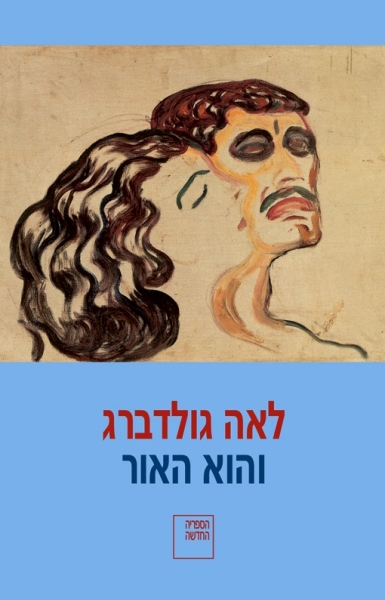
WITMonth Day 5 - Classics Challenge - Lea Goldberg's And This is the Light

It's rather stunning that I'm two years into a project regarding women writers in translation (and women writers in general), and this is the first time I've ever read Lea Goldberg, one of Israel's most prominent poets. What's more shocking is that I started not from her poems (though technically I suppose I must have read some as a child, since she is a popular children's book writer and many of her poems have been used as song lyrics...), rather her single novel. Indeed, it turns out to be a strange place to start...

And This is the Light is an odd novel. First and foremost, I find myself incredibly curious as to how it was translated into English - one of its most notable traits in Hebrew is the distinctly old-fashioned style. Written in 1942 in a still-new Hebrew (from a literary perspective, at least), And This is the Light is a strange mash-up of familiar modern terminology (not the aloof Hebrew of either ancient literature or historical fiction), yet it's also clearly not the literary Hebrew which would follow only fifteen years down the line (significantly more down-to-earth and conversational, though written Hebrew remains far more formal than spoken). And This is the Light reads archaic and nostalgic for a language which never quite existed, and sometimes the words felt so strange in my mouth. It was like reading a novel from the 17th century, not just from fifty years before I was born.

It's a strange novel from the plot perspective as well, mainly because... it doesn't have one. And This is the Light is a novel of feelings more than anything, a character study of the young Nora going through a specific (rough) transition period in her life. Yet it's not quite a coming-of-age story either - Nora doesn't change much throughout the story, rather she seems to accept certain facts about the world and herself.

These could all mean that And This is the Light would fail as a novel, but it surprisingly enough doesn't. Goldberg's style is unsurprisingly lyrical, and Nora's introspection is lovely. She's not a flawless character of pure perfection, but her struggles and emotional turmoil felt decidedly real. Her thoughts on her place on the world, on her perspectives, on her own health and happiness, and especially as regards her position relative to others resonated deeply with me. It helps that the novel has solid pacing and a wonderful flow.

Nora's feelings are not unique - she's a very ordinary young woman, guided by her emotions along familiar tracks. Her romantic inclinations are predictable, but also distinctly restrained: the novel makes room for Nora's fantasies, but also keeps them distinctly in check. There's a sense that Goldberg was writing to remind young readers (perhaps her past self?) that sometimes life isn't just that fairy tale you wish it would be.

I want to note two interesting points. The first is that despite being written in the midst of the Holocaust, And This is the Light hardly addresses matters of either anti-Semitism or Zionism. Nora briefly discusses her Zionist tendencies (she is studying archaeology with the express purpose of going to Israel/Palestine), but it's portrayed as a clearly far-off event in Nora's life. The second is that And This is the Light is much more about internal feelings than externally expressed ones. There's an expectation, and little fulfillment. I don't want to ruin aspects of the novel, but suffice to say that despite the familiarity of And This is the Light's story, Goldberg avoids common plot points neatly.

And I liked the book. I did. I liked the writing, and despite knowing that I'd probably dislike Nora if I ever met her in person, I found it interesting to see the world through her fairly naive eyes. It's not the foremost literary classic out there, but it's an interesting early Israeli novel (that is distinctly European) and a great example of what happens when poets write novels (spoiler alert: they write beautifully).

Friday, August 15, 2014

WITMonth Day 15 - Translate these books

It would be strange of me to go through a whole month discussing women writers in translation without also talking about those women writers I don't actually read in translation, but don't read in English either. To be honest, I haven't actually read very many books by Israeli women, a curiosity which I've been trying to understand and explore over the past few months.

I've started to fix that recently, and though this list won't be particularly long (because I have not had the opportunity to truly dig deep), I thought I'd highlight a couple interesting and or particularly translation-worthy books.

The first is the inaugural (and thus far only) title in the "translate this book" tag - Bella Shaier's Children's Mate. This collection of three stories is absolutely brilliantly written, and casts such a fascinating light on different aspects of Israeli and immigrant societies. Feel free to check out my full recommendation for more.

The second is a book I'm not sure I'd define as having liked, but it was very interesting, particularly in the portrait it painted of a younger, less traditional Israel - Kinneret Rosenbloom's Loves' Story (I've seen references to other possible English titles, so please take this with a grain of salt). It's a novel unlike most translated into English - it's not a post-modern musing, nor is it a political piece. This is the sort of book I could easily see translating well, not least because much of its approach and style is very Anglo, while its attitude is purely Israeli (and purely Tel Aviv Israeli at that). I had several issues with it as a novel (and with certain stylistic and thematic choices I could not for the life of me understand the need to include), but it was the sort of book that clung to me and kept me hooked throughout.

Next up is a recent release - Inverted Cry, by Celine Assayag. Inverted Cry is the latest in a long line of Israeli child-of-immigrant stories, always emerging just as that generation is coming into its own adulthood. In this case, we have Assayag's presentation of the poverty of Bat Yam (a city near Tel Aviv) in the 1970s (when she herself would have grown up). The story is loose and messy at times, with certain scenes and incidents happening in ways that don't always make sense, and small inconsistencies that I simply couldn't figure out. But its core is very, very good. There's a lot of sharp social commentary, and an important presentation of underrepresented portions of Israeli society. Assayag doesn't shy away from discussing the actual impact of immigration either, with constant references to the previous life in Egypt, and parallel family in France.

Finally, I'd like to address a few authors whose books I personally did not enjoy very much, but who have achieved great acclaim in Israel without getting translated into English. These include women like Lea Aini, whose novel Lebanon Rose was a little drawn-out for my taste, but was quickly lauded in Israel by almost all critics, or Ronit Matalon's The Sound of our Steps (which deals with themes very similar to those in Inverted Cry, yet predates it by several years) which was recognized as one of the best Israeli books of the decade. We also have authors I have enjoyed (like Gail Hareven), who had one book translated into English (to great acclaim, I should add) and none of her other brilliant works touched.

And then there are hundreds of other Israeli women writers I simply haven't gotten around to. Yes, Hebrew is generally overrepresented in translations relative to the population, but if we're already going to be translating so much out of it, I would love to see more of our brilliant women writers getting the stage as well.

Thursday, April 17, 2014

Translate This Book | Children's Mate by Bella Shaier

Background: Children's Mate by Bella Shaier is an Israeli book originally published in 2011 by the New Library. It's comprised of three stories: the eponymous opening novella "Children's Mate", a shorter novella "Galit and Gordon", and finally a short story "Double".

What it's about: The main story is the opening novella, itself a collection of five stories that follow a group of children in a Soviet apartment complex. The stories are fairly independent of each other (with recurring characters, and the shared complex of course), but together form a fascinating and touching portrait of childhood (and particularly Jewish childhood) in the Soviet Union. "Galit and Gordon" tells the story of an Israeli couple across decades, presenting a perspective on class, race, and love. "Double", meanwhile, tackles immigration and position, as well as aging and disability... all in the span of ten pages.

Why it deserves to be translated: Children's Mate is a curiously broad book. It has an interesting story continuity, from the early pages which deal with childhood (indeed, specifically early childhood, with none of our children passing age six), to the middle story which looks at an unlikely and passive couple from early adulthood through to middle age, and finally to an older woman whose struggles make her position almost as precarious as that of a child's. More interesting is the fact that each of these stories centers around a different status of character - children (particularly of Jewish origin) in the Soviet Union, ordinary Israeli adults in Tel Aviv, and Russian new immigrant to Israel who speaks neither the language nor sees particularly well, instead forced to rely on others to get by.

Truth be told, it's the two outside stories that deserve more attention. "Galit and Gordon" is a familiar sort of story about relationships and growth, but with an interesting background about Israeli culture clashes that still doesn't make the story quite enough to justify translation on its own. However, the truly brilliant "Children's Mate" does, and I think that's the sort of story that can belong anywhere.

"Children's Mate" is fascinating for a number of reasons. First and foremost, it does an excellent job of getting in the mind of its child characters, without making those either unnaturally precocious or simplistically unrealistic. The kids sound and think like children their age would, misunderstanding adults and struggling with new realizations just as I remember from my own childhood. Shaier finds a fantastic balance between telling the children's stories and showing us the grown-up world around them, revealing to us painful adult truths through the eyes of those who don't fully understand the consequences yet.

Shaier's particular emphasis on Jewish children is especially revealing - we see a series of small incidents with small Jewish children living in a coldly anti-Semitic Soviet Union, sometimes recognizing incidents as what they are, sometimes misconstruing them as children often do. One of the little girls at some point mulls over the differences between the different Jewish children in the building, noting her luck that unlike a different character, her parents don't speak Yiddish to each other and so her Jewishness isn't apparent to the other children.

Finally, "Double" tells a frank, painful story about a new immigrant in Israel, facing struggles at home with her son-in-law (whose decision to move to Israel essentially forced her out of her home), struggles with learning a new language, struggles with her deteriorating eyesight, and ultimately a fundamental struggle leading a normal life. In ten precise pages, Shaier presents an entire world rarely given much attention - that of the immigrant who has not successfully integrated into Israeli society. This story works best understanding Israeli demands of integration (and a generational expectation when it comes to language and culture), but I think it stands alone as an excellent assessment of immigration struggles, as well as aging.

Translate this book! Children's Mate is a wonderfully written book, spanning topics and generations and issues. It's interesting, intelligent and does not rely too much on a certain cultural understanding, while simultaneously introducing readers to different ideas and worlds. The writing is consistently clear, with a style that adjusts subtly according to the type of story - childlike in "Children's Mate", coolly mature in "Galit and Gordon", and quietly uncertain in "Double". This is an excellent example of Israeli literature, well-deserving of a wider audience and greater appreciation.

Thursday, September 19, 2013

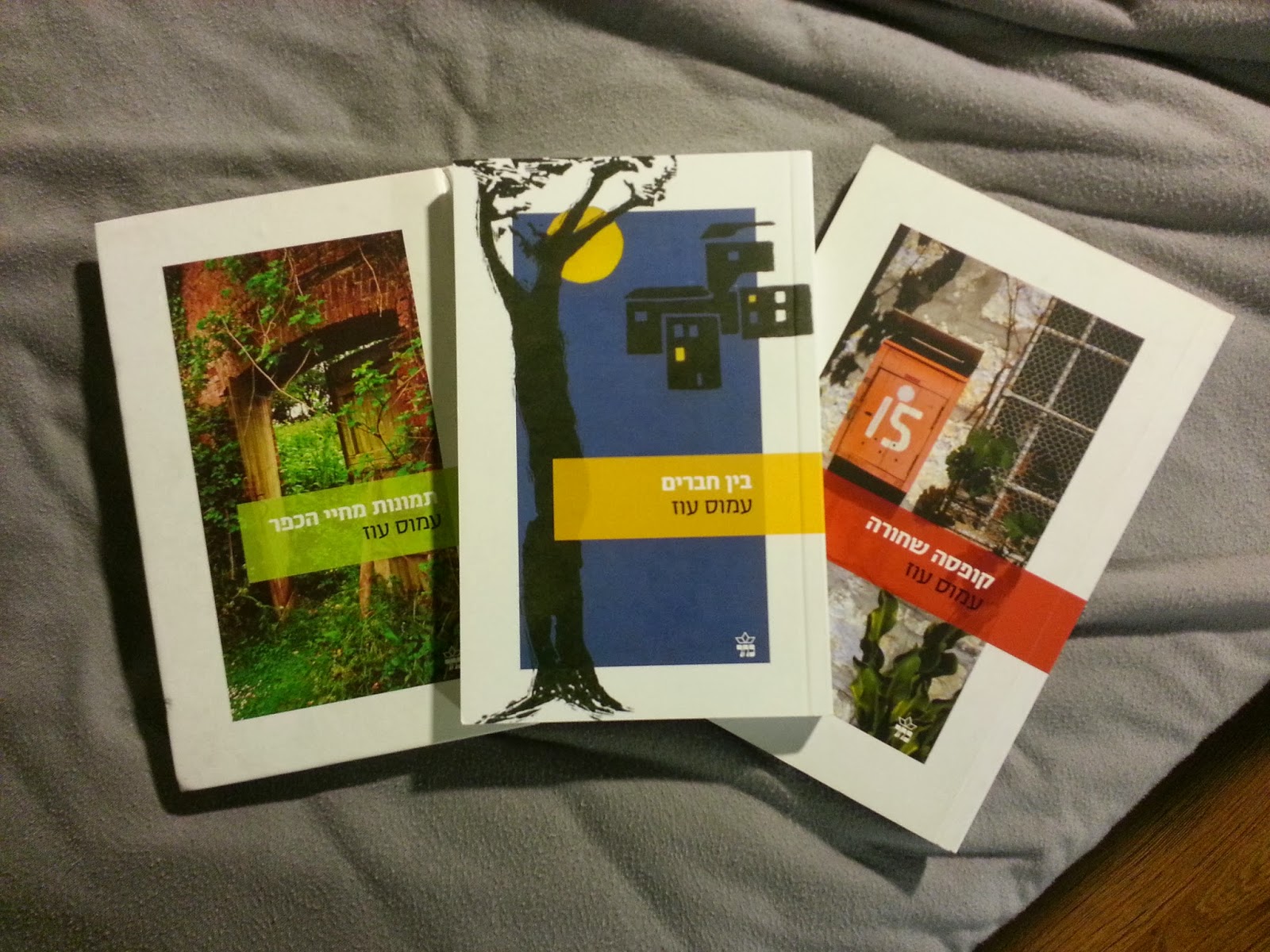
Review | Between Friends

Between Friends... between friends
Readers may recall a few months ago I read Amos Oz's The Black Box, saying that I was debating between reading that book and... this one - Between Friends (בין חברים). Reading The Black Box was a thoroughly interesting, but also somewhat uncomfortable feeling. I wanted to recommend the book, but I didn't like it. I was fascinated by it, but I hadn't enjoyed it at all. And I knew that it wasn't like Scenes from Village Life, which I had really enjoyed.

Between Friends is in some ways much more like Scenes from Village Life than The Black Box. This is mostly because of its format - like Oz's earlier book, Between Friends is a collection of short stories about a certain place, where characters appear and reappear throughout, and where the location is more of a main character than anyone else. Scenes from Village Life used a level of distance to tell a story about modern Israeli life; Between Friends goes back in time to the kibbutz of the fifties.

But here Between Friends finds a major similarity with The Black Box. Unlike Scenes from Village Life which had some perfectly crafted stories and characters I immediately felt connected with, Between Friends is filled with utterly unsympathetic characters in frustrating situations. The stories made me feel thoroughly uncomfortable; I honestly didn't want to spend much more time with this kibbutz and its inhabitants. But I did, because despite its rougher edges, Oz's writing is compelling and compulsively engaging. As always, his writing is distinctly "not-beautiful", but... it's worth reading.

The historical setting of this one sets it apart from either of Oz's previous novels that I've read. Between Friends takes advantage of the shadow of the Israeli War of Independence, in regards to the political situation in Israel as well as its socioeconomic situation. Oz uses his foresight as a modern author to play with the concept of the kibbutzim's socialism, through the prophecies of a dedicated founder of the kibbutz, or the hard-line beliefs of one of its prominent members, or the casual acknowledgement of its changing future from its young-generation secretary. Oz uses his distance to gently emphasize the future that is to come, but oddly enough he casts no judgement one way or the other. Oz's voice is usually a dry, almost dead tone behind his characters; this time he seemed even more unresponsive than usual.

I can't help but compare Between Friends to both The Black Box and Scenes from Village Life. In structure, it is similar to the latter; in my tepid but intrigued response to it, it is much more like The Black Box, except I think I got more from The Black Box than I did from Between Friends, which felt a bit like a weak imitation of Scenes from Village Life for me. It can work as an introduction to Oz, certainly, and it's not a bad book by any means. But it's not particularly likable either, as accomplished as it may be. In other words... it's a book by Amos Oz. Difficult to classify, but recommended reading.

-------

Finally, a minor quibble. When I first saw the translated title on the inside cover of the Hebrew edition*, my immediate instinct was to correct what I felt was a bad translation. I hoped it was a temporary title. Now that I realize that Between Friends is indeed the final title, I'll only mention as a side-note that I personally would have translated the title as Among Friends - like many Israeli titles, there's an air of ambiguity to the original Hebrew. But this is entirely irrelevant.

* Hebrew books almost always (always) have an English version of the title inside. This isn't always the actual title once (if) the book is translated into English, but it often is.

Tuesday, August 13, 2013

A disappointing underdog | Thoughts

So I've been reading this fairly slim Israeli, independently published poetry collection for just over a month now. I'm not done yet. In fact, I'm only two-thirds of the way through. The book - with its bright orange cover - mocks me from my bedside. I can't seem to finish it.

I know poetry collections aren't like novels. Novels usually need to be read straight through - stops along the way break up the flow and generally make it harder for me to appreciate the book. Poetry isn't like that. Poetry can be read in pieces, spread out across years and years. And yet there's something about reading a poetry collection straight through that thrills me. Reading Sylvia Plath's The Colossus a few weeks back was like that - exhilaration and excitement at the way the poems fit together but didn't overlap. The way they didn't repeat themselves. The way they each stood out.

There's something about rooting for the underdog. It's like the love for all things indie, or strange literature, or translated books, or all of the above. A small, Israeli published poetry collection? Underdog laws say I ought to praise it highly, recommend it to all my friends, spread the word. But I can't, and I feel guilty for it.

The reason I can't is because the collection is, for lack of a better term, boring. The language is lovely and the poems have a great sound when read aloud, but they are lacking heart, diversity and fire. Religious half-themes crop up frequently, but rather emptily, more for their vocabulary than for their actual soul. And personal references are rather detached and emotionless. These poems are bland - not dull and certainly not badly written, but nothing worth mentioning by name and certainly not worth reading in one sitting. They are repetitive. They do not move me.

Friday, July 12, 2013

Friday links


  • A great post about the impact of eReading on one's reading habits - for me, eReading will never be able to fully replace print (for practical reasons, among which is the fact that my eReader doesn't support Hebrew), but generally speaking, Greg is spot on. Not only has the eLibrary (in part because of its limited scope...) introduced me to books I might otherwise not have read, I've also started reading books concurrently, leading to, yes, more books read.

  • Israel is the guest of honor at this year's Guadalajara International Book Fair (FIL), with plans for several very popular Israeli writers to be stopping by - it sounds like a trip to Hebrew Book Week, except with all the good authors there at the same time, and with a lot, lot, lot more people attending.

  • The stats on U.S. children's books reveal that most main characters are white, despite clearly changing demographics. One theory seems to be "diversity doesn't sell", but... I'm not buying it. This is something that needs to change.

  • The short lists are out for the Science Fiction & Fantasy Translation Awards, and as always I'm just thrilled that this award exists, if only to remind people that sci-fi and fantasy are not, have never been, and should never be an exclusively Anglo affair.

Saturday, April 13, 2013

Why have I written to you? | Black Box

"New or old?" This was the question I asked myself as I stared at the two books on the shelf. The bookstore offered autographed copies of Amos Oz's newest collection of short stories (בין חברים - Between Friends) and a new edition of his older Black Box. After several minutes deliberation, I chose Black Box. Not because I hoped that a more established title of Oz's would necessarily be better. Rather, Between Friends is another short story collection and I wasn't sure I was over the wonderful Scenes from Village LifeBlack Box, being an epistolary novel, seemed to be about as far from the wonderful constraints of a short story collection as possible.

Yes and no.

I've known for years that my mother - the original voracious reader in the family - did not like Amos Oz or his writing style. When mentioned that I had liked - even loved - Scenes from Village Life, she was surprised. She dismissed his sharp, often coarse writing style as compared to the more elegant A. B. Yehoshua, or to the exceedingly readable Meir Shalev, or to David Grossman's emotional lyricism. Oz's style, by her measure, simply couldn't hold up. And for the most part, I agree with her assessment. Oz writes more bluntly than many of his Israeli counterparts. But it doesn't matter, because one thing is clear - Oz is an author in perfect command of his writing. Black Box is an excellent example of this.

Scenes from Village Life was special in large part because of the way Oz seemed to know exactly when to end his stories. There was a perfect level of suspense in each, wrapped up cleanly into small stories that drove me to keep reading. Though Black Box obviously has a larger narrative, this same care applies to each aspect of the novel-in-letters. Though the letters may sometimes drag on for longer than I would want/expect, it's obvious that Oz knows exactly what his characters need to say, and how.

Black Box revolves around the collapsed marriage of Alex and Ilana. At the start of the novel, Ilana is contacting Alex (a well-known professor living abroad) for the first time in seven years, asking for his assistance with their angry, often violent teenage son Boaz. Ilana's writing style is clean, one-sided and lyrical. We immediately get the impression that there's more to the story than what Ilana is sharing, and as the novel progresses, we learn about why Ilana and Alex got their divorce (with Alex completely cutting off ex-wife and son). Ilana is meanwhile remarried to Michael (Michel), whose influence on the story grows alongside Alex's re-involvement in his ex-family's life.

The story is mostly told through letters between these four major characters, with the occasional correspondence between Alex and his lawyer, clippings from Alex's notes on military history or literature, and occasionally letters from other family members. Oz does a brilliant job of switching between characters, on a level I don't think I've ever encountered in an epistolary novel. If normally the reader needs to be told who is narrating the letter before beginning to read it, in Black Box each letter-writer is so clearly distinct from one another that within the first few lines, it's obvious who is writing to whom.

For example, Ilana, as I mentioned, writes pretty. Hers is a literary style; she invokes long, beautifully written passages meditating over her impressions on what Alex is doing at any given moment. She quotes entire conversations comfortably, as though writing a novel. But her letters feel like novels in other regards as well. Ilana is an unreliable narrator, admitting to certain lies and omissions from one letter to the next, gradually letting down her guard as the story progresses. Boaz, meanwhile, writes with numerous spelling errors. His style is loose, colloquial, bad. He writes like you would expect a poorly educated teenager to write.

There is no external narration in Black Box. Most of what we know about the characters is either through their writing style or through secondhand accounts. The only character who really describes her own life is Ilana, but she herself casts doubt on most of what she says. We know she is intelligent, manipulative, and passionate from her writing style, just as we know her husband Michel is religious, single-minded and vaguely possessive from his own accounts. Alex, meanwhile, comes off as stiff and cold, whether in his sharp telegrams to his harassed lawyer or in his long, oddly pained letters to the other characters.

Though each character is thoroughly unappealing, together their letters create a clear sense of intimacy between reader and fiction. Each character frustrated me for other reasons: Boaz for his aggression and impulsive view of the world, Michel for his method of applying his political beliefs, his hypocrisy and his sexism (in general, there's an uncomfortable thread of sexism running through Black Box), Alex for his violence and coldness, Ilana for her manipulations, lies and generally victimized perspective... These are people I wouldn't want to deal with in real life, but I was nonetheless drawn into their world through Oz's clear-minded writing. I cared, even if I sort of wished I didn't have to.

I didn't love Black Box. I don't think I ever could. It's hard to love a book when its characters are so unappealing or when it brushes against politics so lightly without really revealing its true feelings. But it's also hard not to like a book that creates such a strong level of intimacy between these awful characters. Past the halfway mark of the book, I felt almost overwhelmed by one of the letters: Ilana is recounting the beginning of her relationship with Alex, her former army commander. Reading what felt like such a personal, intimate letter unnerved me, unsettled me entirely. Worse are the moments from the other end - Michel's impassioned, almost fanatical letters to Boaz felt a little too believable. By the end of the book, I had to remind myself that these were fictional characters. I had to remind myself this because an already grim story turned even more inwards. The effect was... powerful. This is not as easy a book to recommend as Scenes from Village Life, but yes - it is recommended.