I decided to have a sci-fi month because I felt that I didn't know enough about the genre. I like science fiction and always have, but it suddenly seemed humiliating that I'd never read anything by Arthur C. Clarke, or anything beyond Asimov's short stories, or... the list goes on. Even though I've never been the biggest fan of organized reading, I thought it might be nice to have a designated "month" that was devoted to the genre (or, more accurately, the general sci-fi-ish field).
The official month has definitely passed. I've enjoyed non-sci-fi books in the last couple of weeks and no longer feel the drive to necessarily seek out only genre books. Here's what's cool, though: I've got so much more reading material than I ever expected. At the library the other day, I found myself walking off with almost 100% science fiction books. To the casual observer, I'd appear to be much more devoted to the genre than I really am.
I know a lot of people don't like science fiction. I know there are all sorts of stereotypes when it comes to sci-fi and I know that sci-fi (like all other genres) has its good and its horrendous. But the last month - studying the evolution of the genre, looking at subjects like women in sci-fi, scrolling through dozens of "best of sci-fi" lists - has done more than give me an opportunity and an excuse to read science fiction. It's made me want to read more. It has, ultimately, educated me as I hoped it would. Sure, I didn't make it to everything I wanted to but I've read some pretty awesome books (the winner is probably the excellent "The Day of the Triffids"). And now I know where I'm going to head to next. In the same way that I've been digging myself deeper with classics over the last four years, now I make my way into the sci-fi realms. So sure, Sci-Fi Month is officially over, but who's to say it won't come back soon?

Showing posts with label Sci-Fi Month. Show all posts
Showing posts with label Sci-Fi Month. Show all posts
Monday, January 18, 2010
Monday, January 4, 2010
Through the ages
In the 1966 Encyclopedia Britannica, “science fiction” was defined as having two basic types. The first is science fiction proper, “an almost step-by-step development of possibilities from known scientific or social data.” 1984 was given as an example. The other type is science fantasy, which “can leap directly to whatever farfetched requirement of dramatic plausibility” and “permits the imagination not only to go beyond the known and proved but to contradict it when necessary”. Ray Bradbury’s The Martian Chronicles is mentioned as an example. The article goes on to mention that “the two [types] are often combined”.
In 1986, the Encyclopedia Britannica (macromedia) goes into less detail, mentioning the origin of science fiction and defining science fiction as a genre “in which the fiction writer treats how scientific discoveries, technological developments, and future events and societal changes affect human beings. The description of these influences may be a careful and informed extrapolation of scientific facts and principles, or it may range into farfetched areas flatly contradictory of such facts and principles.”
Wikipedia (~2006) is a different case entirely. It plainly starts out not by defining science fiction, but rather saying how sci-fi differs from fantasy, in that “its imaginary elements are largely possible within scientifically established or scientifically postulated laws of nature (though some elements in a story might still be pure imaginative speculation).”
There are, of course, points in common for all three. What's interesting is which of these are shared. For instance, all point to dystopian, apocalyptic and alternative histories as science fiction, three fields which are typically separated from sci-fi. All three list 1984 as science fiction. All three allow some fantastic (from fantasy) leeway. Obviously, each has its own differentials, not including the fact that science fiction developed mostly throughout the 20th century and so it’s quite logical that the articles would be quite different from each other. It's that the similarities are mostly things people assume to be outside the realm of science fiction that has my eyebrows raised.
It's that even Wikipedia sticks to this definition that is most surprising. Not because I think it's an inaccurate way to look at the genre (quite the contrary, actually), but rather that Wikipedia tends to reflect the views of the crowd. And while I may be wrong, it's always appeared to me like the crowd (readers and writers alike) wants to keep dystopian literature far from the phrase "sci-fi" (look at Margaret Atwood and "speculative" - link contains spoilers beyond the directed paragraph). There's something curiously great to the fact that this one key part to sci-fi's definition has remained the same throughout the years. Also interesting to note is the slow move to gender equality in the articles. 1966 has no mention of women sci-fi writers whatsoever. 1986 mentions Frankenstein as the "first" sci-fi book, and Ursula Le Guin among the listed authors. 2006 (Wikipedia) does better in that it provides the king of sci-fi author lists, but it actually disappoints a little too - I'd have expected a packed "Women in Science Fiction" article. No such luck.


Saturday, December 26, 2009
The beginning of a long way
Well, looks like Sci-Fi Month is going to last a little longer than the minimum 3 days. (Sci-fi month is, by the way, entirely unofficial and unrelated to any organization or group.) The direction this month may take me is starting to become a little clearer as I see what books are available to me (90%+ through my ever handy Sony Reader, all books free of charge).
The month started, as I mentioned, with seemingly safe, simple territory: "The Children of Men" by P. D. James. I had seen the movie several months before (I was unaware that it was based on a book until the end of the movie) but knew that the book and movie were very different. The book surprised me, in that it was at once very similar to the movie and at once completely different. It's hard to explain without spoiling both, but I enjoyed the book thoroughly, and not just as a gentle dystopian way to ease into Sci-Fi Month. It's a contemplative adventure story, mixed with politics and a dash of social commentary. Unsurprisingly, the book is really good.
I chose to head in a completely different direction with the next book and finally got around to reading "Good Omens". I'd heard both good and bad, but I honestly expected to like it more. I thought some of the characters were brilliant and eagerly followed one plot thread, but found myself slightly bored by the rest. It also didn't really agree with my mood. It was too... giddily fantastic. Not exactly science fiction. Pleasant stuff (not amazing), but this wasn't the time to read it.
Book 3 came courtesy of the nice folks at Random House, who were kind enough to upload a bucketload of free eBooks just when I bought my handy-dandy Reader: "Perdido Street Station" by China Mieville. I'll be honest, I was flying blind when I decided to read this. Only afterward did I learn that this book has received quite a few honors (none particularly breathtaking, but it hasn't been ignored). The book itself is interesting (a little long, but good overall), if only because it's bizarrely difficult to define. Is it science fiction (what with almost everything being described by science) or fantasy (what with random bizarre inexplicable things happening)? A great segue for some of next week's definition discussions.
These three books reside in very different realms of science fiction (or fantasy, or whatever the requirement is...). One book is humorously fantastic (from fantasy), another is bleakly human, and a third is weirdly scientific. None of these come close to the types of books I hope to read in the coming weeks. I hope to pay my respects to Asimov (on the left) and Clarke over the next few days, as well as Ursula Le Guin and H. G. Wells. Oh, this is going to be fun...
The month started, as I mentioned, with seemingly safe, simple territory: "The Children of Men" by P. D. James. I had seen the movie several months before (I was unaware that it was based on a book until the end of the movie) but knew that the book
 and movie were very different. The book surprised me, in that it was at once very similar to the movie and at once completely different. It's hard to explain without spoiling both, but I enjoyed the book thoroughly, and not just as a gentle dystopian way to ease into Sci-Fi Month. It's a contemplative adventure story, mixed with politics and a dash of social commentary. Unsurprisingly, the book is really good.
I chose to head in a completely different direction with the next book and finally got around to reading "Good Omens". I'd heard both good and bad, but I honestly expected to like it more. I thought some of the characters were brilliant and eagerly followed one plot thread, but found myself slightly bored by the rest. It also didn't really agree with my mood. It was too... giddily fantastic. Not exactly science fiction. Pleasant stuff (not amazing), but this wasn't the time to read it.
Book 3 came courtesy of the nice folks at Random House, who were kind enough to upload a bucketload of free eBooks just when I bought my handy-dandy Reader: "Perdido Street Station" by China Mieville. I'll be honest, I was flying blind when I decided to read this. Only afterward did I learn that this book has received quite a few honors (none particularly breathtaking, but it hasn't been ignored). The book itself is interesting (a little long, but good overall), if only because it's bizarrely difficult to define. Is it science fiction (what with almost everything being described by science) or fantasy (what with random bizarre inexplicable things happening)? A great segue for some of next week's definition discussions.
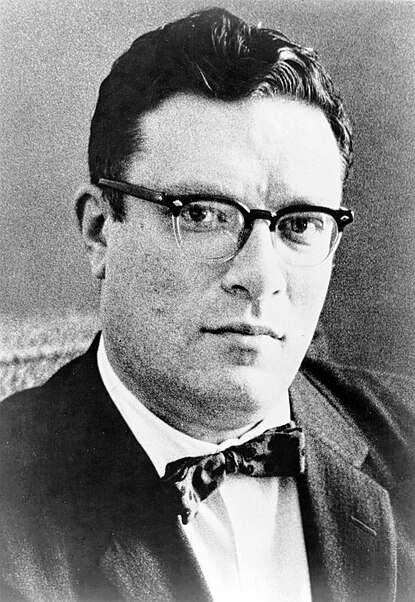
These three books reside in very different realms of science fiction (or fantasy, or whatever the requirement is...). One book is humorously fantastic (from fantasy), another is bleakly human, and a third is weirdly scientific. None of these come close to the types of books I hope to read in the coming weeks. I hope to pay my respects to Asimov (on the left) and Clarke over the next few days, as well as Ursula Le Guin and H. G. Wells. Oh, this is going to be fun...
Monday, December 21, 2009
Out of this world
Yesterday officially marked the start of Sci-Fi Month*. After finishing the quiet, way-too-grounded-in-reality book I was currently reading, I remembered how a few weeks ago I posted about silly TV to book comparisons. While painstakingly researching my words (yes, I actually spent time writing that post), I found myself reading quite a few Wikipedia articles on sci-fi writers. It started with Isaac Asimov, moved onto Arthur C. Clarke, and then somehow (thanks, Wikipedia) ended up with me reading all about steampunk, the definition of a dystopian novel and all sorts of other random articles that I've since forgotten.
I did, however, feel a slight twinge of guilt and shame when, scrolling down the list of sci-fi books (yes, Wikipedia actually has one of those...), I'd read a tiny tiny portion. I've only read a few Asimov stories, no Clarke, no H. G. Wells, and hardly any of the major, famous hits. I suddenly felt uneducated, much in the same way that three-four years ago I felt the need to educate myself in the "upper literature" realm (the "classics" - Tolstoy, Steinbeck, Hemingway, Austen, Eliot [George], the Brontës, this list goes on and on...), I felt the need to educate myself in science-fiction - and fast.
The problem is, I'm not very good at defining things. So science fiction grew to include fantasy and dystopian literature, which is definitely 100% not the same thing, but somehow I couldn't bring myself to care. The month started comfortably with "The Children of Men" by P.D. James and is now continuing onwards to Neil Gaiman and Terry Pratchett's "Good Omens", which is a long time coming (and probably on the opposite end of the "not real life" spectrum). I'll probably head off towards "Foundation" next or maybe something by Clarke (I have a book of his somewhere, but I can't remember which...). I've also snagged a couple of random sci-fi, fantasy and dystopian eBooks (free[dom!]) and can't wait to see just how amazing "A Honeymoon in Space" is (if it lives up to its title: yes!).
I've got a lot to get through. I unfortunately have a small list of titles I've picked out, though, and could use all the recommendations. While I'm always open to the more modern titles, I am trying to focus more on the holes (uh... giant pits...) in my "outta-this-world" knowledge. Even so, I've got an interesting month ahead of me. I better get cracking.
*The definitions of "sci-fi" and "month" are entirely subject to change. "Sci-fi" may mean anything that isn't true to the world as it currently is and "month" can mean anything between 3 days to a whole lunar cycle of 28 days.
I'd also like to wish all readers a happy solstice and happy [winter/summer-for-our-southern-hemisphere-friends holiday of choice].
I did, however, feel a slight twinge of guilt and shame when, scrolling down the list of sci-fi books (yes, Wikipedia actually has one of those...), I'd read a tiny tiny portion. I've only read a few Asimov stories, no Clarke, no H. G. Wells, and hardly any of the major, famous hits. I suddenly felt uneducated, much in the same way that three-four years ago I felt the need to educate myself in the "upper literature" realm (the "classics" - Tolstoy, Steinbeck, Hemingway, Austen, Eliot [George], the Brontës, this list goes on and on...), I felt the need to educate myself in science-fiction - and fast.
The problem is, I'm not very good at defining things. So science fiction grew to include fantasy and dystopian literature, which is definitely 100% not the same thing, but somehow I couldn't bring myself to care. The month started comfortably with "The Children of Men" by P.D. James and is now continuing onwards to Neil Gaiman and Terry Pratchett's "Good Omens", which is a long time coming (and probably on the opposite end of the "not real life" spectrum). I'll probably head off towards "Foundation" next or maybe something by Clarke (I have a book of his somewhere, but I can't remember which...). I've also snagged a couple of random sci-fi, fantasy and dystopian eBooks (free[dom!]) and can't wait to see just how amazing "A Honeymoon in Space" is (if it lives up to its title: yes!).
I've got a lot to get through. I unfortunately have a small list of titles I've picked out, though, and could use all the recommendations. While I'm always open to the more modern titles, I am trying to focus more on the holes (uh... giant pits...) in my "outta-this-world" knowledge. Even so, I've got an interesting month ahead of me. I better get cracking.
*The definitions of "sci-fi" and "month" are entirely subject to change. "Sci-fi" may mean anything that isn't true to the world as it currently is and "month" can mean anything between 3 days to a whole lunar cycle of 28 days.
I'd also like to wish all readers a happy solstice and happy [winter/summer-for-our-southern-hemisphere-friends holiday of choice].
Subscribe to:
Posts (Atom)