It's time to talk about what is probably the best book I've read in the past year:
Cockroaches.
I haven't gotten around to reviewing Scholastique Mukasonga's novel
Our Lady of the Nile yet, but in a sentence: I liked it enough that I bought
Cockroaches (translated by Jordan Stump) soon after it came out.
Our Lady of the Nile was the first book I'd ever read specifically about Rwanda, and I finished it feeling like I had learned a lot. It's a book that shrinks the Rwandan genocide down to a small scale, displaces it, and blurs it somewhat. It was an insightful, powerful novel. How wrong I was to think I understood anything.
 Cockroaches
.
I grimaced at the title. I loathe cockroaches. Silly as it sounds, I felt like the book was warning me somehow.
Bad content here. Stay away. A warning that had little to do, it turns out, with cockroaches, and significantly more to do with the strikingly clean descriptions of utterly horrific events. This isn't surprising, of course.
Cockroaches isn't about the bugs, it's about the humans that other humans deem lower than the lowest creature - simply cockroaches. It's about how humans strip other humans of their humanity and how they use this to justify genocide.
Prior to
Cockroaches, the only other story I had ever encountered about Rwanda and the Rwandan genocide was Mukasonga's previously published
Our Lady of the Nile. That's it. I had heard stories from family members who had been to Rwanda; one described the memorial museum as "a Holocaust museum, but with Tutsis instead of Jews". I kept thinking of that while reading
Cockroaches. Pieces of the memoir felt so
familiar, reminders of every Holocaust story I'd encountered in my childhood (and adulthood...), yet this is also very clearly the story of a completely different genocide.
Or rather, I should note, this isn't quite the story of the Rwandan genocide
itself as much as it's the story of how Rwanda became a country in which the 1994 genocide could even occur. Mukasonga makes clear from the very first page of the memoir that her survival is the exception: The book opens with a painful dedication to all those who lost their lives and their families, and to "
the few who have the sorrow of surviving". In my view, this is the line that captures the essence of
Cockroaches. This is a beautifully written book that uses simple, clear writing while conveying a terrible, painful, and gut-wrenching reality.
There's more to it, of course. Mukasonga gives voice to her lost family, but she also builds an entire world around them. Mukasonga never lets the reader forget that the genocide - which technically occurred in 1994 - begins much earlier, with a series of smaller events and horrors. Genocide never occurs in a day. What begins as forced relocation turns into total extermination. First certain individuals. Later, everyone. The elderly. Children. Babies.
Cockroaches is not an easy book. It's short, yes, and Mukasonga writes simply. It's the sort of book you can read through within a few hours, but this is far from a quick, breezy read. This is a book that enters your soul. It feels like a cockroach has crawled under your skin, itching and burning as it burrows into you. It's personal, but not manipulative in its emotions. Mukasonga's survival sorrow rings powerfully, such that I cannot imagine a reader leaving this book unmoved. For this granddaughter of Holocaust survivors (and great-granddaughter, -niece, -cousin, etc. of Holocaust victims), the book felt like a necessary awakening to learn more about those horrors that I haven't been exposed to as much. It felt like an education. And it felt like a painful reminder of how absolutely
easy it is for humanity to fail, and fail again.
To quote Mukasonga:
"I wish I could write this page with my tears."

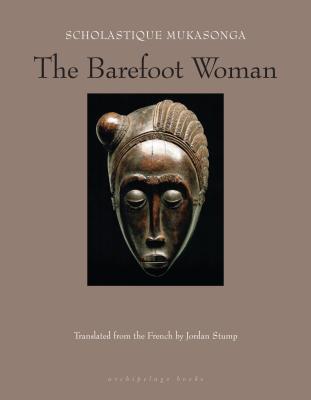 And, indeed, it didn't, in exactly the way I expected. The Barefoot Woman is far from a bad book or mediocre memoir; on the contrary, it's quite good. Slim, concise, and achingly real, The Barefoot Woman recounts Mukasonga's memories of her mother Stefania and her childhood home. Through her mother, Mukasonga describes details of Rwandan - Tutsi - life. There's a cultural reckoning here, alongside deeply personal and traumatic memories. It's hard not to recognize The Barefoot Woman as that combination of powerful and beautiful.

