Thursday, February 10, 2011

"Nobody who would have bought your book is not buying it because they can find it for free."


Neil Gaiman is not my favorite author. He's good, he's someone I like to read and though I know of many readers who like him a great deal, I don't follow him consistently. Still, when he goes out and says some wonderfully apt, eloquent words about books, free books and the internet, I really have nothing but respect for the guy (via A Momentary Taste of Being - thanks!).

Gaiman's message, other than being in tune with a lot of what I've claimed over the past few years, is ultimately that offering free material on the internet does not hurt publishing and book sales (as we're led to believe - "piracy is evil!"), but does so much for getting the author's name out there and getting his/her writing into the readers' hands.
"I started asking audiences to just raise their hands for one question. I say: okay, do you have a favorite author? And they say: yes. And I say: good. What I want is for everybody who discovered their favorite author by being lent a book, put up your hand. And then anybody who discovered your favorite author by walking into a bookstore and buying a book, raise your hand. And it's probably about 5-10%, if that. [...] They were lent [the book], the were given it, they did not pay for it. And that's how they found their favorite author."
It's more than just a calm realization of the nature of favorite authors (though it's certainly a lovely image). Gaiman nails the fact that profit - real literary profit, the clean and honest kind that we all would like to believe in - comes from returning readers. Readers want to support authors they like. When I read a book from the library (I obviously have not paid for it) and really like it, I very well may buy it. Why? 1. To have the book in my collection, and 2. To support the author. As a reader, the very best thing I can do to show an author that I like him/her is to buy his/her books. A new book comes out? I'll get it. I'll write reviews recommending their works. I'll lend the books out to my friends so that they might buy them too.

How can I be certain that this will work through the internet? Downloading a book isn't like borrowing a book. It's permanent, right? But I've done it. I've stumbled across promotions that offered free eBooks, read them, liked them and gone out to find more by the author. Gaiman is dead-on in this video. Offering your writing freely gets you readers and fans, increases your exposure and boosts sales. I hope more authors and publishers take note.

For an additional video Neil Gaiman made for the Open Rights Group, here's the link to his own journal post.

Tuesday, February 8, 2011

3. The Giver - Choices

"But I’ve never been a writer of fairy tales. And if I’ve learned anything through that river of memories, it is that we can’t live in a walled world, in an “only us, only now” world where we are all the same and feel safe. We would have to sacrifice too much. The richness of color and diversity would disappear feelings for other humans would no longer be necessary. Choices would be obsolete."
-From Lois Lowry's Newbery Acceptance Speech

The Giver is the kind of book that I actually read as a kid, as a slightly older kid and as an adult, where the level of admiration for the book did not once diminish. The thing is, The Giver is clearly a kid book. Simplistically written and plotted, it's meant for a child reader. This does not mean, however, that adult readers cannot appreciate and enjoy it.

The Giver is not the first in its genre. In a sense, the dystopia it presents is fairly tame (when compared to some of the more recent, overwrought examples...), but starkly important when one realizes that the matter of choice, of individualism and free thought are all ideas that we - and the generations after us - will need to maintain. It's a story about growing up, about a world that at first seems almost identical to our own and gradually shifts as the reader realizes the differences.

This is dystopian literature in the true sense of the word - to almost every member of Jonas' society it is a utopia. To Jonas and The Giver it isn't. It's a book that inspires thought, continues to speak to readers across the generations, and one that deserves its status as one of the greatest works of children's fiction (or science fiction, or dystopian fiction...) to have been published.
"The man that I named The Giver passed along to the boy knowledge, history, memories, color, pain, laughter, love, and truth. Every time you place a book in the hands of a child, you do the same thing.

It is very risky.

But each time a child opens a book, he pushes open the gate that separates him from Elsewhere. It gives him choices. It gives him freedom.
Those are magnificent, wonderfully unsafe things."
-From Lois Lowry's Newbery Acceptance Speech

Sunday, February 6, 2011

Worst. Book title. Ever.

Okay. I haven't read this book, I don't know what it's about, and I really, really, really don't care to read it based on the title:
The Truth-Teller's Lie
Ahh. I swear, no book title has ever been more insipidly bland and completely formulaic-without-revealing-anything-about-the-book! Seriously? Say this one out loud a few times. Does it mean anything? Is it referencing anything? It doesn't even sound right, it sounds completely idiotic.

To make matters worse... it was once published under a different title. "Hurting Distance" isn't the greatest book title ever, but it's 10x10^100 times better than, well... "The Truth-Teller's Lie".

I think I need to go dunk my head in a bucket of ice-cold water...

Wednesday, February 2, 2011

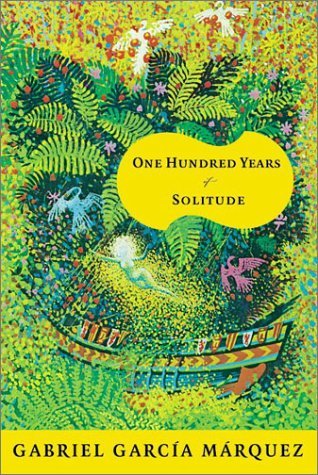
2. One Hundred Years of Solitude - Seven years of rain

This counts as fantasy
My father is a slow reader. Reading Gabriel García Márquez's masterpiece was a project for him - several years of careful, deep reading that never became difficult. Ask him for his favorite book, he answers comfortably: Cien años de soledad.

Why, you may ask, is such a book in a list of fantasy literature? Readers unused to García's writing style may think this is simply due to the idea "magical realism", often tossed around when García's name is mentioned. It's not a wrong phrasing, but truth be told: One Hundred Years of Solitude is fantasy. And wonderful fantasy at that. Things happen in a strange and mysterious way, all without a single logical explanation from the author.

A few weekends ago, the subject came up. My father mentioned that one aspect he loved so much about the book was that:
It could appear to be completely normal and everything would be entirely realistic and all of a sudden something happens that doesn't make any sense.
"Like seven years of rain," I mentioned. Yes, now he remembered. Seven straight, completely acceptable years of rain. Or a character living forever. Or the wonderful ending.

This is not a man who likes fantasy. Not fantasy as it's typically perceived, at least. Almost every reader I've encountered who has read One Hundred Years of Solitude would probably balk at the idea of putting it on a list of fantasy greats, but I call it as it is.

If I mentioned in my definition of fantasy that Lord of the Rings is fantastic without being magical, here is a book that is entirely magical and entirely fantastic, perhaps without being pure fantasy. Much as my father said: things just happen. And as they happen, it makes sense. Except for how it absolutely doesn't. It's this fantastic quality to the storytelling. Pure magic.

Friday, January 28, 2011

1. Time Quartet - Good vs. Evil

The Time Quartet
I originally didn't want to include too many young adult books in this list of powerhouse science and fantasy literature books (SAFL) but I inevitably find myself turning to young adult classics, and specifically Madeleine L'Engle when times are tough. Or when I need to name excellent science fiction. To make sure you get your bang for your buck (these books are short), I'll refer to the whole Time Quartet (ignoring the fifth wheel An Acceptable Time, which fits neither mood nor quality of the other books...).

I have a long and close relationship with these books, one that no matter how many years go by, I'll always be able to rely on. This is a series that I was absolutely obsessed with in 4th grade (and a bit of 5th). One of my best friends and I would sit for hours and hours, pretending we were the characters and could bend time and space as they could. I recall during one history unit, we needed to create characters and write a background story for them. We decided to be Murry twins Dennys (him) and Sandy (me), getting so into our characters that on a class field-trip (several days away from home), my family sent me a letter signed with all the character names in place of themselves.

The first lesson
This introduction doesn't do much justice to these books. The fact is that they're strange and confusing at times, and to pretend that these books didn't deeply impact the way I viewed the world would be completely wrong of me. Like the picture included here (and discussed at length here), every page of A Wrinkle in Time held some fantastic truth for me to hold close. The Time Quartet isn't like the Wikipedia description. It doesn't ever feel like there's religious subtext (I honestly have no idea where they pull this stuff out of...), nor are they books that necessarily promote, well, evil. In fact, the three books that make up the original Time Trilogy (A Wrinkle in Time, A Wind in the Door and A Swiftly Tilting Planet) all come down to one very simple premise: good vs. evil. Guess who wins.

There's an odd book out here, and it's Many Waters. Though taking place chronologically before A Swiftly Tilting Planet, it focuses on two characters who until that point got very little screen time - Murry twins Sandy and Dennys. It's a book that focuses more on fate and love as a grand, dramatic statement rather than a simple battle of "good vs. evil". Hints appear (good angels versus bad), but it's a very different story and wonderfully fresh in that sense. Reading it third in the quartet worked well for me... it showed me something completely different.

Any reader who seeks quality science fiction or fantasy needs to look no further than L'Engle's wonderful series. Though adults may not be as heavily influenced by these books as I was as a child, the Time Quartet is a cornerstone in science fiction for younger and older readers alike.

Wednesday, January 26, 2011

The Svieeperrr

After reading Meir Shalev's wonderful A Pigeon and a Boy several months ago, I decided that I liked Meir Shalev. I began to read The Blue Mountains a few months ago, but set it aside due to certain circumstances that kept me from reading it through. Then, a few days ago, I decided to have a go at Shalev's most recent publication My Russian Grandmother and Her American Vacuum Cleaner (to be published in English at the end of 2011).

I suppose it's because I take reviews and opinions with a grain of salt, but I really didn't expect this book to be quite as awesome as it was. Shalev admits that this memoir (or "family memoir", as it seems it will be called in English) isn't a grand, huge book. He writes (somewhat edited in length; rough translation is my own):
"It went like this..."
The grand story of my great big family is one I might someday write in another book. I'll write about my parents, and their parents, about river crossings and the trials they overcame. I'll describe their physical hardships and the eternal heartaches. [...]


If I write this book - it won't be written today, nor tomorrow nor in the coming years. I'll write it when I'm an older man, calmer and more apologetic - and I'm not certain I'll fulfill this promise either. In the meantime, in this small book, I seek to tell only one story: the story of my grandmother Tonya and the vacuum cleaner my uncle sent her from the United States.
This one small story is, in truth, built around many other small entertaining stories, sometimes educational, sometimes sad and sometimes incredibly funny. There are moments of pure awkwardness (made more uncomfortable when one realizes that the stories are true), moments of utter insanity and a lot of touching scenes that make this book wonderfully real. It tells snippets of Shalev as an author (pointing out scenes and characters that Shalev reworked for his fiction, which incidentally enough leads me straight back to The Blue Mountains), includes an abridged family saga and showcases the importance of stories. I'm really looking forward to seeing how the English-speaking world will accept this most Israeli of tales.

Sunday, January 23, 2011

Displacement, the real world and fantasy: a definition

When Teresa of Shelf Love mentioned "high fantasy" several weeks ago, I found myself reading through a rather enlightening Wikipedia article and list of books. I wondered at the definition of high fantasy and realized that I didn't quite agree with the Wiki definition... nor several titles included in the list.

According to Wikipedia, fantasy is comprised of two main sub-genres: high fantasy, and the so-called "sword and sorcery" fantasy (whatever that is...). These two, while fairly encompassing, seem to leave many loopholes and bad combinations. Here's how I see it:

Highest of fantasy
Fantasy can be divided into two: modern and high. High fantasy contains books with a complete displacement, often including an extreme use of imagination in creating a world utterly different from our own. Magic may appear to be completely normal and integral to the created world, though the books need not necessarily be magical fantasy. I wouldn't exactly define Lord of the Rings as "magical", but fantastic (from fantasy) it certainly is. This is the more classic, romanticized sub-genre.

What, then, is modern fantasy? Here are any books that create a fantastic world alongside the real world. These are books that use our world and add to it magical or fantastic elements. Harry Potter, then, for all its adventurous and romantic roots, would fall squarely into the modern category. The brunt of creature based fantasy, or urban fantasy (Twilight, etc.) would also be called modern.

Modern magic
A final group (though not entirely deserving of its own sub-genre) would be those books that successfully combine the two. Here might fall in portal worlds (like His Dark Materials) or books that have both real and magic worlds (Inkheart, The Neverending Story and The Dark is Rising sequence are all very different examples of this).

So is fantasy only defined by these two? Obviously not. No genre is ever fully encompassed by two generalizations. But these two subjects cover a lot of ground, enough to satisfy me. You'll have to tell me if you agree or disagree.

Friday, January 21, 2011

Is one out of three the same as one third?

First in a trilogy - cliffhanger ending, but still its own book
Once again, a thought provoking post from Greg Zimmerman of The New Dork Review of Books on trilogies, but one where I find myself vehemently disagreeing.
As one final note, I've always thought it interesting that many readers are afraid of long, thousand-page novels, but don't seem to have that same terror of trilogies, that when taken collectively, add up to much longer pieces of fiction. I can see how a reader with this idea would argue, "Well, if I don't like the trilogy after the first book, I can just quit, and I'm not committed to reading another two-thirds of a novel I'm not enjoying." But the kind of reader who would quit after one novel in a trilogy is also the kind of reader who would quit after one-third of a very long novel s/he isn't enjoying, right? So I'm not sure I buy that logic. Anyway, no real point here — just an observation on others' reading quirks.
On the one hand, Greg is right that a trilogy is often longer than a single chunkster book. Collectively, trilogies (or any series, for that matter) can be looked at as one entity. Someday, they very well may be combined into one volume. My favorite examples of this come from our beloved classics. What is War and Peace if not something like twelve serialized books, each one ending with its own dramatic cliffhanger, each beginning with its own brand of Tolstoy philosophy? Psychologically speaking, yes. It's easier to take in individually wrapped books.

But one volume, one entity... this does not make it one book.

Whether in a series or not, books have (hopefully) a beginning, a middle and an end. Some books, it's true, don't really have endings (The Subtle Knife, I'm looking at you) and some books clearly leave a lot of plot holes in anticipation of sequels, but I would say that most books that belong to series still maintain some semblance of independence and self-sufficiency. Compare that to most fat books (not even counting fat books that are allegedly part of trilogies... whew!), which, like their shorter counterparts, have a beginning, middle and end. When someone gives up on a book midway, it's because that book - that section of beginning middle and end - is not satisfying.

Each book still viewed individually
The interesting issue at the end of the day is why it matters. Is giving up on a book midway such a shameful thing? Should we discourage abandoning a disappointing series after the first book simply to be able to say, "I read the whole thing"? This kind of thinking is seriously flawed in my eyes, especially when discussing series. Not every book that belongs to a trilogy is necessarily completed by the later books.

My favorite example of this is Pullman's The Golden Compass. While The Subtle Knife and The Amber Spyglass clearly continue the story, it's a book that can still stand alone and complete without the other two propping it up. It's a trilogy of three books - albeit where one directly leads into the next book. Each book comes with its own themes, its own struggles and its own style. The story that binds them together is not enough to justify looking at it as one book.

So in answer to Greg's theoretical question, no. No, I don't believe that the reader who gives up on a trilogy partway is the same kind of reader who would give up a fat book partway (as for whether or not that's even a bad thing... another time). Trilogies may seem like very long books split up for convenience's sake, but most at their core are comprised of individual, independent books. It's an important point to remember.

Wednesday, January 19, 2011

Absorbing does not mean good

Three strange things happened today.
  1. I started and completed a book in one day. It's been several months since this has happened and several years since the book was not a short novel (or a children's book), and the day not a vacation. Thanks to a quiet, incredibly boring day, I had the opportunity to read plenty today.
  2. I managed to get so absorbed in my reading that I did not notice the passing of time as I might have otherwise. Bus rides became minutes long. A whole evening disappeared. A long, boring day was made shorter.
  3. I got on the wrong bus home. Lesson learned: if a bus that's supposed to be packed with people is entirely empty, you're probably on the wrong bus.
Weird
And here's the strangest thing of all. The book in question (Daphne du Maurier's The House on the Strand) isn't even that good. Absorbing - yes. I started reading the book and just didn't want to stop. Not because I liked the characters (I didn't), not because the story was so remarkably fresh (it wasn't) and certainly not because the writing was uniquely brilliant (okay, but nothing spectacular).

No, The House on the Strand isn't a particularly brilliant book. It's a weird book. In addition to all its plot issues and character problems, it's hard to classify because it's kind of a bit of everything: stiff boring novel with obnoxious narrator, science fiction, historical fiction, drama, murder... the whole shebang. Intense, remotely entertaining reading but not exactly rewarding.

I'm really curious what I'll think of this one after it sinks in a little. Still... what a strange book.

Monday, January 17, 2011

It should be called "Science Literature"

In a post about 2011 reading goals, Space Station Mir mentioned something worth noting:
...I would like to dedicate most of it to fantasy and science fiction. I feel that I haven't been reading enough of the two genres that have often brought me the most pleasure and I am also on a mission to discover more high quality writing in the genres. [...] I hope to be able to pinpoint 10-20 science fiction/fantasy books that I would also consider literature. 
When I think about it, this sentiment ties into everything that's sad about these two (albeit different, but inexplicably tied) genres. For many readers, these are genres that bring us pleasure. At some point, though, there seems to be this feeling that sci-fi and fantasy are genres that aren't serious and are not "literature". I don't want to get into the definition of literature, though. It's a subject that crops up often in my posts and book thoughts, but every time I try to define it, I find myself failing to do it justice. Still, I can try, perhaps, to explain why I get so frustrated when I encounter things like this. Ultimately, literature is made up of good books and who's to say you don't have books of this kind that happen to take place in outer space, or have magic in them?

Like every genre, sci-fi and fantasy have a lot of crappy pulp and some awesome literature. That's how it works. Not everything is amazing, the vast majority sucks and we need to do the dirty work of finding what we like, what we can call good, and we ought to give to others. So I'd like to be able to give Space Station Mir (and all other readers out there) a hand.

The goal is simple: to name (and justify) 20 powerhouse science fiction or fantasy or bizarre or non-standard-"literature" books that I feel definitely fall into the literature category ("Science and Fantasy Literature" - or SAFL). Maybe I'll even discover some good books along the way.

Friday, January 14, 2011

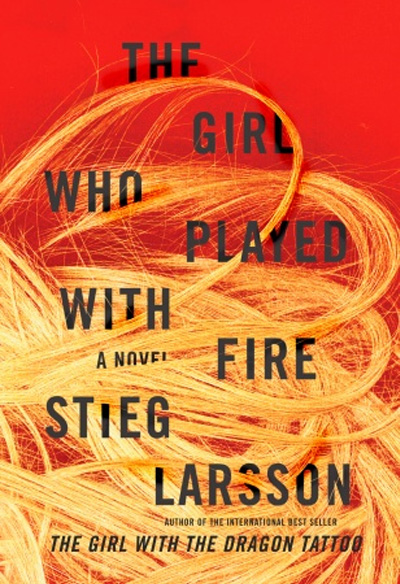
Stieg Larsson and the Ape

I just finished reading The Reading Ape's wonderful response/analysis of Joan Acocella's recent New Yorker piece on the popularity of Stieg Larsson's Millennium trilogy*, and I really can't recommend the Ape's post enough. The Ape does a great job of pinpointing specific answers to Acocella's question of why Larsson's books are popular, ranging from characters (the oft-cited Lisbeth) to packaging (reasonably attractive in almost every edition I've encountered) to the genre (popular around the world). I wanted to touch on a few other points.

Firstly, I have to wonder at Acocella's approach. Props are given for Larsson's storytelling abilities, but not much more. Acocella is right to say that storytelling is not enough in carrying a book and making it "quality", but I wouldn't dismiss Larsson's writing so quickly. It's not splendidly beautiful, true, but the sometimes awkward bluntness has its charm, as though the grittiness is part of the story itself.

Acocella should not dismiss storytelling quite so quickly, either. Larsson's books, whether because of marketing or actually because of superior talent, don't comfortably fit in the crime/thriller category. Perhaps I say this because these are genres I typically don't read, but the Millennium books do a good job of telling a story and not making the reader feel dumber for it. Part of it, as the Ape points out, is the setting. Distance a book from your own existence and that can make it seem all the more interesting.

Then the most basic matter of all: the popularity issue. Acocella seems at times to dismiss the popularity because of a perceived sense of, for lack of a better term, crappiness. It's as though Acocella commits one of the greatest book-commenting crimes in existence: assuming something to be unequivocally bad just because you didn't like it. Therefore, the popularity is a mystery, when it's incredibly, incredibly obvious: people enjoy reading these books. I enjoy, on a very basic level, reading these books. Acocella seems so surprised that people like a book that fits into a popular genre, that's got a character most find to be pretty kick-[...] awesome, and that is definitely easy to read. "But it's a bad book!" Maybe, but other readers found it to be a lot of fun. And so: popular.

The article has a lot more to it than these points that the Ape focuses on. Acocella writes a lot about Larsson himself, mostly raising strange conspiracy theories about whether or not he could have written the books and commenting rather casually on his personal and political lives (but in a very limited, carefully selected manner). It's an interesting article, but rather unsatisfying. Read the Ape's take on it instead.

* It should be noted that I have read only the first two books in the series, and neither was read in the English translation. In the interest of keeping this blog spoiler free, please refrain from mentioning anything from the second two books. Thank you.

Saturday, January 8, 2011

Still important

Still powerful, three years later
It seems like a very long time ago, but almost two years ago I wrote up a short post about Thirteen Reasons Why, following a NYT article on the book. It's a book that significantly affected me when I first read it in 2007 (oh so long ago), one that I have tried to give to many young (and not-so-young) readers I know. As pretentious as it may be to quote myself, this still stands:
"It's a book for boys and girls alike, teens and adults, readers and non-readers. Even as some don't appreciate it as I do, I think what's special about Asher's novel is that you leave it with a new understanding for a lot of things that you may never have thought of before."
Since writing these words, I've read many many many reviews and write-ups about Thirteen Reasons Why. A lot of readers felt much as I did. Many, though, did not. There were readers who disliked the "blame game" angle of the book (also mentioned in my original post), readers who felt that the writing was sensationalist and unrealistic, readers who did not connect with the characters... and so on and so on.

A few weeks ago, I reclaimed Thirteen Reasons Why after having lent it out for about a year and a half (it sadly returned unread, though). My first move was to crack open the book from the beginning and read it straight through. Even though I knew the story from start to finish, remembered most of the individual stories and was more critical of the writing style than I had been the first time around (when I was of an age better suited to read the book), I found that I was still very affected by Thirteen Reasons Why.

I don't know why I expected to be disappointed by Thirteen Reasons Why, but I did. And so I'm glad I was disappointed by my lack of disappointment, that is pleased with how the book is still excellent and important in all the ways I remember.

Monday, January 3, 2011

Wolf Hall

Extraordinary
My teaser post last week did not accurately encompass my feelings towards Wolf Hall. This isn't a book that just draws a reader in through its story, it's a book that dragged me into its depths because of its intense wit. Every page of Wolf Hall has some clever line, either spoken by the book's many sharp characters (Cromwell, you bastard) or even its less witty characters. Lines that fall into the context of history made me laugh out loud numerous times throughout the book.

One advantage Wolf Hall has over many other historical fiction texts (other than the excellent writing of Hilary Mantel, which is certainly going to lead me to read more of her books, though I need to remember to keep my expectations reasonably low...) is that Mantel takes a character previously shown in negative light (think A Man for All Seasons) and makes the reader absolutely, completely and totally fall into step (or love - whatever) with him. By the end of the book, I wanted nothing more than for Cromwell to manage my own affairs and then clap him on the back and say, "Well, if you're pretty much best friend/truster advisor to the king... I'm sure you can be best friends with me!"

It's not just Cromwell, though. It's the human way Mantel portrays everyone - the positive and negative sides of Henry VIII, Wolsey, Catherine, Anne and many other historical figures I've only ever encountered very vaguely. This isn't a historical text, to be certain, but it's not the typical historical fiction novel either (romance filled and, with no offence to good historical fiction, lame). It's refreshing.

The main criticism I'd encountered of Wolf Hall before reading it (and the one that made me hesitant to approach it) was the label "dense". While reading Wolf Hall, I understood where readers might get that impression, even if I did not. The book is long, certainly, and packed, but "dense" in my mind means heavily packed to the point that it does not flow well. Wolf Hall flowed. It positively bounced. Whether in the intensely entertaining scenes of historical relevance, or the simply brilliant dialogue, I wanted nothing more than to continue reading the book. And also finish it.

It's true that it's been a long, long time since I've read a good historical fiction book. Or a good classic. Wolf Hall appealed to me on both those fronts, in the weirdest of ways. It's a book that feels modernly old-fashioned, historically contemporary, and all-over well-crafted. It's a book that's truly "extraordinary" - not quite like anything I've ever read and most highly recommended.

Saturday, January 1, 2011

When an era is not a year

Last year I mentioned my increasing boredom with end-of-the-year lists. I mentioned my main dislike of them. I did not mention an additional unease I have with them: what exactly is a reading year?

Despite my online presence, reading for me is something entirely personal. It's marked by personal events, is dependent on personal emotions, and happens when I personally have the time for it. Our lives aren't dictated as much by years as we'd like to think, they're dictated by personal occasions and eras: when I had that job, when I went on that vacation, when I took that course, when this major change in my life happened...These time periods can be as short as a few days, or as long as several years.

I was reminded of this last year, when I was surprised to discover that my first book of 2009 had been The Master and Margarita. Until that point, when I'd tried to summarize my year, I'd been naming completely other favorites - and yet The Master and Margarita quickly turned into one of my all-time favorites. It was just read in a different time period so I kept missing it. The same applies to this year as well. The books I read during Sci-Fi Month (and in the weeks after) don't belong to this year - they belong to the era before February (and started in December 2009). Just like there is one book that belongs to the February era. And then dozens belong to the March through October era. And then the post-November era.

I couldn't give a top-ten list of the year. Or top five. Or even just top 1. Every small era that officially existed in 2010 (some rolled over from 2009, some will continue to 2011) is its own "year". The reader I was at that time was completely different, goals were set, reached and reset, and my reactions to some of these books were entirely altered by the personal settings I may have been in.

So I'm not looking forward to my 2011 "reading year". That does not exist. I'm eager to continue with my "Post-November" reading era, because so far it's had one spectacular book, two wonderful books and a few pleasant ones. I am not certain when this particular reading mood will shift, but I'm confident that 2011 (for all its worth) will contain some interesting reading eras.

*Happy 2011!

Friday, December 31, 2010

5 quotes that serve as examples for why this book is incredible

The book in question: Wolf Hall.
Further information: This book will be finished by today. If I need to stay awake until tomorrow morning - I will finish this wonderful book to-day.

In no particular order:
1. [Cromwell to his son] "I once heard him say I looked like a murderer." Gregory says,"Did you not know?" p. 527

2. [following a Seymour family scandal, Cromwell to Anne Boleyn] "And the daughter? Jane, is it?" Anne sniggers. "Pasty-face? Gone down to Wiltshire. Her best move would be to follow the sister-in-law into a nunnery. Her sister Lizzie married well, but no one wants Milksop, and now no one will." p. 297

3. [to a newly married fifteen year-old who is not permitted to be with his equally young wife] "Be reasonable, my lord. Once you've done it, you'll want to do it all the time. For about three years. That's the way it goes." p. 518

4. So day by day, at his request and to amuse him, he would put a value on his master. Now the king has sent an army of clerks to do it. But he would like to take away their pens by force and write across their inventories: Thomas Wolsey is a man beyond price. p. 50

5. "Do you know what Chapuys is saying about you? That you keep two women in your household, dressed up as boys." "Do I?" [Cromwell] frowns. "Better, I suppose, than two boys dressed up as women. Now that would be opprobrious." p. 388
It should be noted that only two of these quotes were pre-picked for this post. The remaining three were found just by opening the book to random pages. I suspect I could find an excellent quote from just about every page of this book. But that will be discussed a little later...

Wednesday, December 29, 2010

Book of the Month - really recommended?

It's not often that someone around me raises a bookish topic of discussion, but yesterday a question arose, one that got me thinking quite a bit. I was asked regarding an article that explained that when a bookstore has a list of "recommended reads", the books are not necessarily really recommended by the staff, that often these are simply books that publishers want to push. The well-read questioner was surprised by this and wanted to know if this was something well known.

My answer was, somewhat sadly, yes.

Publishers have their own reasoning behind what books they decide to massively publicize. I'm never going to be able to comment on what decisions are behind this but I can point out what I have noticed myself in this wide world. Look at Amazon's monthly recommended reads. Vine Members will easily be able to identify a large number of the books they were offered last month suddenly pumped and marketed as that month's "recommended reads". Really? Does staff at Amazon.com really think that these books are worth reading, or is it simply worth it for them to sell them?

One also notices rather quickly how sometimes rather well-established titles (by a few months) can make the lists. Why? Because the book has suddenly become popular (or has won an award) and is now worthy of being massively publicized. Recommended? Very possibly. Necessarily really the staff's recommended pick as best book of the month? No.

The original question posed to me was one born of innocence. When one is unaware of such publisher techniques, it's easy to believe that these are truly the "best" books. Imagine - most of us don't know a lot of things about the products we buy. The same can be said of the book industry. It's somewhat disturbing to learn for the first time that the books you buy based on bookstore (online or real, indie or giant) recommendations are mostly fueled by book exposure and publisher pushes.

Does this mean we stop paying attention to recommended reads? I don't think so. Good books make it to these lists. That's a fact. Not always, but sometimes. The lesson to be learned, though, is to take so-called "recommendations" with a grain of salt. Perhaps even several.

Thursday, December 23, 2010

Bilinguals have it tough

Being bilingual has its downsides. I'll read a great book, look to share it with a world of readers and find that the book is, unsurprisingly, not offered in English. Unfortunately, one of the better books I've read in the last six months falls into this category. Though the author has actually been translated into English, I have only read his most recent novel from 2008 (and am currently reading a collection of short stories from several years ago). The author in question is Israeli author Amir Gutfreund, the not-yet-translated-into-English books in question are When Heroes Fly and The Shoreline Mansions.

Though When Heroes Fly is not a perfect book (way too long, random ending takes the book in a completely different direction, though I ultimately didn't mind too much), it's a winner. The book does what many modern Israeli novels try to do - show the development of the relatively young country alongside that of its characters. The children are conveniently born at such an age that they are meaningful ages for each of Israel's (many) wars - children for the victorious Six Days War, teens during the pain of the Yom Kippur War, and serving as soldiers in the 1982 Lebanon War. This puts them in the right place at the right time for many of Israel's major events, finally having them disenchanted or struggling adults in the more modern era.

Though I can easily find fault with the book (others have liked it a lot less than I), it's the kind of book that should be translated into English. Some good books can survive in their own languages just fine, but ones that do a good job of painting a portrait of their culture and nation deserve (to an extent...) the opportunity to spread that word. It's true that Israel is surprisingly well represented in the Anglo reading world, but it's disappointing that I have to wonder how long it will take Gutfreund's wonderful book to reach the Anglo-centric world. Our Holocaust is still in print (also - surprisingly) and seems to have been well received in the U.S. This makes me hope that the 667-paged heft of When Heroes Fly will reach readers soon.

In the meantime, I've started The Shoreline Mansions - and also stopped (for those wondering, this is the short story collection I mentioned a few days ago). Why would I set aside one of the best short story collections I've read in a long time? For the simple reason that I don't want it to end. I have stopped just about halfway, at the start of a story that has already caught my attention (and keeps nagging me back to the book). I was convinced that I needed to read more Gutfreund after loving When Heroes Fly - now five stories into this collection, I want to ensure that I have further Gutfreund before I continue. Our Holocaust seems like a good next destination.

And, thankfully, one I can discuss with you all.

A treat from me to you: a translation of the opening of "Clocks", one of the short stories from The Shoreline Mansions. Gutfreund writes most of these stories from the side, having first person narrations telling the reader about the main characters. I admire his writing style and am impressed by how engaging it is. And the fact that the following story is not about the grandfather's death. So, for your reading pleasure, a small taste of this author's writing.
Grandpa died. A man turns into memories.

In one moment, everything that would have been possible in a normal coming week will no longer be. From now until forever, the threads of our memories will escort us, one end at the moment of Grandpa's death and the other going with us, wherever we go. Grandpa will belong to us. With the years (they will come), the threads of our memories will get tangled, will tear, will rip. The memories we'll compare with each other in twenty years won't even resemble Grandpa.

Our mother doesn't cry. She sits on her chair in solemn clothes, gazing at the row of mourners.

The well-worn phrases - 

"We liked him."
"Who would have believed?"
"He will be missed."

Sunday, December 19, 2010

Some days are for books

This weekend was the first in a long time that felt good for reading. True, I still haven't finished the collection of short stories I'd been reading fairly steadily the last week, but only because I don't yet have another book by the same author. I'm rather taken with the author - I'll finish only when I know I have where else to go to. Meanwhile, I read two fairly easy, enjoyable books over the weekend.

It's easy to dismiss easy reading. We often confuse "good" literature with "difficult" literature. It's not something so easily defined. It's not as if we say that any difficult book is excellent, but so many of the books we deem to be "classics" and "worth reading" are... difficult. Is it a backwards case? Do we comfort ourselves after reading difficult books, by saying that, "Well, it's a classic. It's an important read," or is simply that the more complex a book is, the better it is? Or none of the above? (probably the latter answer...)

I have nothing against hard books. True, it's easier to burn out when reading them, but there's a wonderful sense of reward when one finishes a long, complex book. I can't pretend I don't relish that feeling. And yet... sometimes a reader needs to relax. After months of struggling with reading (I've had little time or desire in the last two months to read very much, and as such I've read maybe 3 books), it's nice to get into a flow of reading.

Last weekend I began reading the lovely short story collection (I'll be writing more about it later, and will explain its anonymity) and reread a favorite book (that is still amazing - more on this later). I spent the week continuing to crawl through North and South, reading a few pages every evening. Finally, Friday and Saturday I sped through those two easy reads. Great works of art? Questionable. But they both helped clear my head and today I picked up the heft of Wolf Hall at the library. The librarian smiled as she handed it over and said, "This one needs to be back within the month. No renewals." Staring at the fat paperback as compared to my other (slim) choices I replied, "I guess I better start with it then..." We'll see how that plays out.

Tuesday, December 14, 2010

Homemade eCovers

Long story short: my operating system can no longer use Sony's eReader library program (and good riddance, too...), leading me inevitably to Calibre. By resetting my entire Reader to Calibre's way more convenient standards, I've been finding myself having a jolly good time with the new order. One aspect of this is finding covers for all my eBooks.

The problem is that almost all of the freely available fiction on the web (my only source for eBooks) is extremely old (thus the copyright has expired). A lot of these books don't have normal covers. Same for various free short stories and self-published stuff. This is where it gets fun. Books need covers. So what if there are no good options? Let me have a crack at it!

I don't have much (any) artistic talent. I don't have particularly complex picture editing programs. But here's a glimpse of some of the covers I've made the last couple of weeks, for your entertainment:
Sci-fi/fantasy/other collection

Favorite to make - short stories
Mythology/folklore collection
My favorite homemade cover (original photo here):


And these two, that actually look a little like textbooks I've had in the past. It begs the question though, why I ever downloaded these books from Gutenberg... Picking out these pictures was cool, though (physics and chemistry), and it was plenty nice trying to decide exactly which color shade and font (sadly limited with the new operating system...) fit the book best.

This is fun.