Saturday, August 22, 2015

WITMonth Day 22 - Spotlight on Argentina

After a few days of illness... I'm back(ish)! This time with some of Argentina's excellent women writers. Of whom, I should note, there are many!
  • Alicia Steimberg
  • Angélica Gorodischer
  • Cecilia Pavón 
  • Silvina Ocampo
  • Alejandra Pizarnik
  • Liliana Bodoc
  • Alicia Borinsky
  • Silvina Bullrich
  • Manuela Fingueret
  • Juana Manuela Gorriti
  • Liliana Heker
  • Sylvia Iparraguirre
  • Alicia Kozameh
  • Tununa Mercado
  • Claudia Piñeiro
  • Ana Gloria Moya
  • María Negroni
  • Olga Orozco
  • Lucía Puenzo
  • Beatriz Sarlo
  • Luisa Valenzuela
  • Alfonsina Storni
  • Ana María Shua
Furthermore, there are dozens of writers I've encountered in my research who despite clearly playing an important role in Argentine literature have not been translated. Though I have not done this for other languages, the gap appears significantly more wide with South American literature and so below is a distinctly abridged list of untranslated Argentinean women writers, many of whom are award-winners and critically acclaimed.
  • Agustina Andrade
  • Ariana Harwycz
  • Margarita Abella Caprile
  • César Duáyen/Emma de la Barra
  • Emma Barrandeguy
  • Elsa Bornemann
  • Susana Calandrelli
  • Sara Gallardo
  • Betina Gonzalez
  • Norah Lange
  • Marta Lynch
  • Eduarda Mansilla
  • Martha Mercader
  • Liliana Díaz Mindurry
  • Elvira Orphée
  • Luisa Peluffo
  • Samanta Schweblin
  • María Dhialma Tiberti
  • Aurora Venturini
  • María Elena Walsh

Monday, August 17, 2015

WITMonth Day 17 - Elsewhere online...

That's right, another lazy blog post, this time directing you to other blogs and sites that have been churning out excellent WITMonth posts right, left and center, or roundups, or lists, or... honestly whatever is currently on my radar. This doesn't begin to cover everything, though! Check out the Twitter tag for a more complete picture of the fun we're having.

First, BookRiot have a great post up with a bunch of WITMonth recommendations. Happy Women in Translation Month, indeed! Very excited to see such a major blog getting involved. There's also For Books' Sake, which have a whole page dedicated to their women in translation posts... well worth checking out.

Like last year, Tony Malone and Tony Messenger have both been knocking it out of the ballpark with a jaw-dropping and frankly inspiring number of reviews and books read. Another scale entirely. Hats off does not even begin to cover it. If you're looking for a place to start with diverse WITMonth recommendations, the Tonys have you covered.

Publishers have also been getting involved! Shoutout to Europa Editions for their series to introduce readers to their women writers in translation, as well as to Two Lines Press who are encouraging readers to share photos of their WITMonth reads. Love seeing more publisher involvement this year, but there's of course room for more! Publishers who haven't caught on yet... you've still got just a little under two weeks to go, that's plenty of time to surprise us all.

And of course... a lot of excellent people on Twitter are engaging in discussions and posting reviews, but alas I cannot link to everything. So check out the tag, find the reviews and recommendations and stories that interest you and... get reading!

Sunday, August 16, 2015

WITMonth Day 16 - Spotlight on Northern Africa

Jumping around continents a bit, but it's definitely time to broaden our horizons a bit. Let's see what Northern Africa's women have to offer, shall we? Note: This list contains books translated from several different languages, as befits such a broad and diverse geographic region.

  • Leila Abouzeid (Morocco)
  • Rita El Khayat (Morocco)
  • Mririda n’Ait Attik (Morocco)
  • Malika Oufkir (Morocco)
  • Amina Said (Tunisia)
  • Nawal El Saadawi (Egypt)
  • Radwa Ashour (Egypt)
  • Hala El Badry (Egypt)
  • Mansoura Ez-Eldin (Egypt)
  • Alifa Rifaat (Egypt)
  • Maïssa Bey (Algeria)
  • Assia Djebar (Algeria)
  • Malika Mokeddem (Algeria)
  • Ahlam Mosteghanemi (Algeria)
  • Leïla Sebbar (Algeria)
As always, this list is woefully incomplete and narrow. As always, compiling this list made me realize how many writers are not translated (and I'll talk about this a bit more in depth later in the month). But once again I find myself thinking, "Well, at least it's a place to start." So... onward we march.

Saturday, August 15, 2015

WITMonth Day 15 - Books I want to read (part 2)

If my last list contained the books on my bedside and more highbrow books, I want to talk a bit about some SFF and YA books by women writers in translation I'm curious about and want to read.

  • The Island of Eternal Love - Daína Chaviano (tr. Andrea G. Labinger). Fantasy! Always.
  • Prodigies - Angélica Gorodischer (tr. Sue Burke). Um. New sort-of-fantasy from one of my favorite writers (and favorite women in translation)? I need this in my hands right now.
  • A Time of Miracles - Anne-Laure Bondoux (tr. Y. Maudet). Some translated young adult literature, definitely an area I have not yet explored enough.
  • Full Metal Alchemist - Hiromu Arakawi. My friend has been bugging me to read this for years, and frankly I think it's about time. Bit different from my usual fare, but... isn't that the whole point?
  • The Wall - Marlen Haushofer (tr. Amanda Prantera). I wanted to read this last year, plus it's been recommended to me a few times.
And of course... there are many, many, many others. Don't worry... more posts to come!

Friday, August 14, 2015

WITMonth Day 14 - Spotlight on the Caribbean

Truthfully, I haven't read enough Caribbean literature in any language. But WITMonth is a great opportunity to broaden our horizons, and so here's a starter-kit for Caribbean women writers in translation!

  • Marie Vieux Chauvet (Haiti)
  • Full Haitian resource: http://writersofhaiti.com/list-of-women-writers-of-haitian-descent/
  • Gertrudis Gómez de Avellaneda (Cuba-Spain)
  • Cubana (anthology of Cuban women writers)
  • Daína Chaviano (Cuba)
  • Julieta Campos (Cuba-Mexico)
  • Wendy Guerra (Cuba)
  • Dulce María Loynaz (Cuba)
  • Mayra Montero (Cuba-Puerto Rico)
  • Yolanda Arroyo Pizarro (Puerto Rico)
  • Giannina Braschi (Puerto Rico)
  • Julia de Burgos (Puerto Rico)
  • Rosario Ferré (Puerto Rico)
  • Ana Lydia Vega (Puerto Rico)
  • Maryse Condé (Guadeloupe)
  • Simone Schwarz-Bart (Guadeloupe)
  • Three Women Poets from the Dominican Republic
  • Hilma Contreras (Dominican Republic)
Once again, many older titles (indeed classic feminist works, by the looks of it) have not been translated. There's always more to explore!

Thursday, August 13, 2015

WITMonth Day 13 - Video mini-review: Self-Portrait in Green


WITMonth mini-review! Marie Ndiaye's "Self-Portrait in Green" (tr. Jordan Stump) is a strange book, but worth checking out.

Wednesday, August 12, 2015

WITMonth Day 12 - Brief thoughts on genre diversity

First off: here's the link to my post from last year about "genre" writers. I don't have many more titles to add for this year, but I wanted to note a few things specifically I've learned over the past year.

For example, at some point this year it occurred to me that I was doing a pretty poor job of even defining "genre". Last year I lumped mysteries and thrillers in with SFF, ad tat was probably unfair to both genres. Furthermore, I completely neglected to look at things like graphic novels or comics, where you can actually find a fairly diverse range of women writers in translation (Moomins, Persepolis, Full Metal Alchemist to name but three).

I also didn't try to build a very comprehensive list. While that's not quite ready for this post, I do hope to have an encompassing "spotlight" post for diverse genres later in the month. There's a lot genres like SFF or historical fiction or whatever can offer the literary community at large, and this is certainly true within the fairly elitist "literature in translation subcommunity". While obviously genre diversity is often about personal taste, I do think it's important that we recognize the entire range of literature written by women in translation, and not just select titles. I didn't do a very good job of championing different genres last year, so hopefully I'll be able to improve on that this year.

Tuesday, August 11, 2015

WITMonth Day 11 - Books I want to read (part 1)

Today is going to be a bit of a lazy day. Rather than telling you about a book I've already read, or compiling a list of specific books from a certain country or author or category... I'm just going to swipe a few books off my shelves and off my lists and tell you why I want to read them. This will likely become a recurring thing... my lists just keep getting longer and longer, and unfortunately my reading pace isn't quite up to speed!

For part 1, I'm going to be especially lazy and just tell you about one of the stacks of books by my bed:

  • The Vegetarian - Han Kang (tr. Deborah Smith). I don't think I've seen a single unimpressed review of this one, and honestly I'm just itching to get to it. It looks weird and interesting and I want.
  • Women Poets of Japan - ed. Kenneth Rexroth and Ikuko Atsumi. A really recent acquisition, looking forward to getting back into Japanese poetry after so many years!
  • The City of Ladies - Christine de Pizan (tr. Rosalind Brown-Grant). Medieval feminism for the win. 'nuff said.
  • The House of the Spirits - Isabel Allende (tr. Magda Bogin). A classic I've never quite gotten around to, seems about time.
  • The Three Fates - Linda Lê (tr. Mark Polizzotti). I have not yet figured out what this book is about, but it's been on my radar since the start of the women in translation project and I just... feel like reading it.
But these are only a taste... somehow, my WITMonth to-be-read list seems to grow exponentially by the day, as more and more readers share their personal plans and books. Which is frankly excellent, so keep at it!

Monday, August 10, 2015

WITMonth Day 10 - Classics Challenge - Sor Juana Inés de la Cruz

Sor Juana Inés de la Cruz was one of the first authors I was introduced to when I started to search for classic women writers in translation, and one of the easiest to track down in terms of actual printed works (thank you, Penguin Classics and translator Margaret Sayers Peden). It sat on my shelf quietly for most of the past year. WITMonth seemed like the most appropriate time to read her works: Poems, Protest, and a Dream.

I haven't read the entire collection yet (frankly the poetry gets a bit... rambly), but I've read and reread the "Protest" (encouragement to let women be educated and study), and find myself continuously in awe of its contradictory and revolutionary nature. Sor Juana is at times nothing less than a radical feminist, but she also repeatedly calls for the status quo and frankly supports many patriarchal misconceptions about both women and men. It makes for a wondrously complex and fascinating feminist text, if only through that lens. Unsurprisingly, the piece also incorporates many religious concepts (only a specific some of which I feel qualified to comment on...).

Sor Juana is blunt in her belief that women can - and should - be educated. Her effective rant in which she lists biblical women, classical figures and important women of history is a relevant reminder for our world today, since it is sadly not yet a universal fact that women are expected to learn in the same way as men and since many women are sadly still prohibited from any form of education. Sor Juana's list of women - some mythological, others distinctly real - is an inspiring reminder that women have always existed. Have always written, have always contributed to culture, have always inspired and have always sought to learn.

However in discussing women's right to learn, Sor Juana reveals herself to be quite classist: "[N]ot only women, who are held to be so inept, but also men, who merely for being men believe they are wise, should be prohibited from interpreting the Sacred Word if they are not learned and virtuous and of gentle and well-inclined natures." While her message is a positive one (citing sectarian violence and indeed violence in general as the result of improper reading of religious texts... goodness, does this sound familiar?) and while I adore her for pointing out what women have always known about men consistently thinking they're automatically wiser by virtue of being men (see: mansplaining), her cold approach to broad education is something I cannot believe she would believe in today. This separation is so anathema to modern feminism it almost hurts to read, but it's also an important reminder of how feminism - and the fight for equality of all kinds - has been waged through time: slowly, and largely for a privileged class within the oppressed group.

This is a book I'm glad to own. Glad to be reading. Glad that it exists and holds a fairly prominent place in the canon (that is, it has been moderately recognized as belonging there). While I don't think this is necessarily the best book for every reader (specifically, it's probably not so good for mostly fiction readers), I can certainly recommend it to readers interested in unraveling the notion of feminism. I personally found it enlightening.

Sunday, August 9, 2015

WITMonth Day 9 - Spotlight on Mexico

It's interesting to me how little Mexican literature is translated. Considering its proximity to the US (and its cultural impact...), you'd expect there to be a little more than minimal translations. And yet largely the Anglo world is less interested in Central American literature. However, whereas the literary community has largely ignored South American women writers (while touting male ones, of course...), the reverse seems to be happening for Mexico. Let's look at a few, shall we? Incomplete list time!

  • Valeria Luiselli
  • Sabina Berman
  • Carmen Boullosa
  • Sor Juana Inés de la Cruz
  • Laura Esquivel
  • Elena Garro
  • Margo Glantz
  • Natalia Toledo (Zapotec as well as Spanish)
  • Cristina Rivera Garza
  • ...and as always many, many others who have not been translated
Reminder: These lists are not only grossly incomplete, they represent my own research flaws almost as much as they do my capabilities. Lists of this kind must continue to be fluid and growing, as both more titles are translated and as more are revealed from the backlog.

Saturday, August 8, 2015

WITMonth Day 8 - Classics Challenge - Yu Xuanji's poetry

Yu Xuanji's The Clouds Float North - a collection of the poet's entire poetic repertoire, circa the 9th century, translated by David Young and Jiann I. Lin - is a slim volume, and I'm not quite through it yet. But as inexperienced as I am in reviewing poetry (that is, as bad as I am...), I found myself lingering over a few specific lines and wanting just to share the clarity in these very old poems.

The first thing I noticed is the strange diversity of them: The Clouds Float North is an odd mishmash of flowery language, personal and shared poetry. Some poems here are clearly metaphorical, gently referencing all manner of social interactions. Others are introspective, detailing those small feelings that aren't always easy to put to words. And then there are the universal (ubiquitous) poems about nature and the flow of water or whatever. Beautiful and all, but not necessarily particularly noteworthy. I wouldn't have expected them to be noteworthy, at least.

I'm finding myself drawn much more towards the introspective poems sent to friends - tiny fragments of thoughts which have come down through the years and still fully represent humanity:
I alone feel yearning
without any limit
reciting my own poems
staring up through the pines.
 It's often the punchlines which make me pause and smile, some gentle reminder that humans haven't really changed all that much and our desires - to share our thoughts and words with loved ones - are effectively universal. Yu Xuanji's writing has that slightly transcendent quality of something otherworldly, but totally human as well. And reading her poems makes me feel warm inside, moved by more than just the flowery language or the fact that these poems have been around for far, far longer than I have. This is classic literature I probably never would have known of if not for the Women in Translation project, and I'm glad I'm getting this chance to experience it.

Friday, August 7, 2015

Thursday, August 6, 2015

WITMonth Day 6 - Queer Literature Challenge

Here's the thing about the queer literature challenge - it's hard. It's hard no matter what genre you choose to look at, no matter what subfield of literature you're investigating and focusing on. There simply isn't much queer literature in the world today, and unsurprisingly there isn't that much in translation either. And of course... for women in translation this component is all but invisible. That said, there is a respectable amount of queer women writers in translation, as well as books about queer topics written by women, which do qualify for the challenge and provide us with an additional (necessary) dimension.

I am certain this list is not only incomplete, but unfair in many regards; I am listing authors alongside novels and stories with queer characters. I am also using the broader definitions, such that this list includes LGBTQA+ to the best of my knowledge as well as less defined terms such as Boston Marriages*, alongside novels which specifically focus on queer characters or romances. This list is obviously largely hindered by my own research inabilities, and I strongly encourage readers to continue the effort!
  • Sphinx - Anna Garréta (French; tr. Emma Ramadan)
  • Aimée & Jaguar - Erica Fischer (German; tr. Edna McCown)
  • Yona Wallach (Hebrew)
  • Tove Jansson (Swedish)
  • Nicole Brossard (French [Montreal])
  • Nancy Cárdenas (Spanish [Mexico])
  • Qiu Miaojin (Chinese [Taiwan])
  • Selma Lagerlöf (Swedish)
  • Violette Leduc (French)
  • Sappho (Greek)
  • Marina Tsvetaeva (Russian)
  • Sophia Parnok (Russian)
  • Sirena Selena - Mayra Santos-Febres (Spanish [Puerto Rico])
  • Marguerite Yourcenar (French)
  • Sworn Virgin - Elvira Dones (Italian [Albania]; tr. Clarissa Botsford)
  • ...and many others!
While this isn't a particularly long list, it's certainly an improvement from last year (when I was aware of only one or two books) and it's a pretty good place to start (despite being incredibly and disappointingly Euro-centric). Hopefully these lists will continue to grow as I both broaden my own horizons, and as more and more women writers from around the world are translated into English.

* Definition; also the name of my sister's other band (the one that doesn't include me)

Wednesday, August 5, 2015

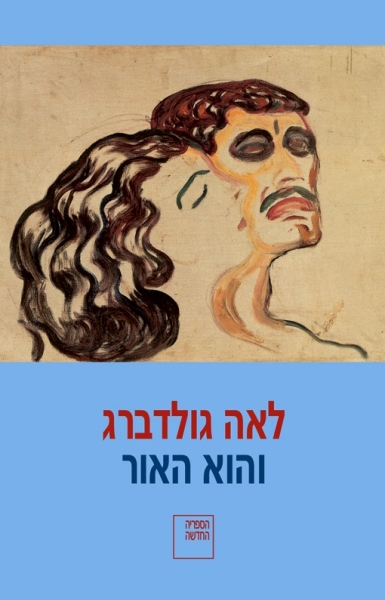
WITMonth Day 5 - Classics Challenge - Lea Goldberg's And This is the Light

It's rather stunning that I'm two years into a project regarding women writers in translation (and women writers in general), and this is the first time I've ever read Lea Goldberg, one of Israel's most prominent poets. What's more shocking is that I started not from her poems (though technically I suppose I must have read some as a child, since she is a popular children's book writer and many of her poems have been used as song lyrics...), rather her single novel. Indeed, it turns out to be a strange place to start...

And This is the Light is an odd novel. First and foremost, I find myself incredibly curious as to how it was translated into English - one of its most notable traits in Hebrew is the distinctly old-fashioned style. Written in 1942 in a still-new Hebrew (from a literary perspective, at least), And This is the Light is a strange mash-up of familiar modern terminology (not the aloof Hebrew of either ancient literature or historical fiction), yet it's also clearly not the literary Hebrew which would follow only fifteen years down the line (significantly more down-to-earth and conversational, though written Hebrew remains far more formal than spoken). And This is the Light reads archaic and nostalgic for a language which never quite existed, and sometimes the words felt so strange in my mouth. It was like reading a novel from the 17th century, not just from fifty years before I was born.

It's a strange novel from the plot perspective as well, mainly because... it doesn't have one. And This is the Light is a novel of feelings more than anything, a character study of the young Nora going through a specific (rough) transition period in her life. Yet it's not quite a coming-of-age story either - Nora doesn't change much throughout the story, rather she seems to accept certain facts about the world and herself.

These could all mean that And This is the Light would fail as a novel, but it surprisingly enough doesn't. Goldberg's style is unsurprisingly lyrical, and Nora's introspection is lovely. She's not a flawless character of pure perfection, but her struggles and emotional turmoil felt decidedly real. Her thoughts on her place on the world, on her perspectives, on her own health and happiness, and especially as regards her position relative to others resonated deeply with me. It helps that the novel has solid pacing and a wonderful flow.

Nora's feelings are not unique - she's a very ordinary young woman, guided by her emotions along familiar tracks. Her romantic inclinations are predictable, but also distinctly restrained: the novel makes room for Nora's fantasies, but also keeps them distinctly in check. There's a sense that Goldberg was writing to remind young readers (perhaps her past self?) that sometimes life isn't just that fairy tale you wish it would be.

I want to note two interesting points. The first is that despite being written in the midst of the Holocaust, And This is the Light hardly addresses matters of either anti-Semitism or Zionism. Nora briefly discusses her Zionist tendencies (she is studying archaeology with the express purpose of going to Israel/Palestine), but it's portrayed as a clearly far-off event in Nora's life. The second is that And This is the Light is much more about internal feelings than externally expressed ones. There's an expectation, and little fulfillment. I don't want to ruin aspects of the novel, but suffice to say that despite the familiarity of And This is the Light's story, Goldberg avoids common plot points neatly.

And I liked the book. I did. I liked the writing, and despite knowing that I'd probably dislike Nora if I ever met her in person, I found it interesting to see the world through her fairly naive eyes. It's not the foremost literary classic out there, but it's an interesting early Israeli novel (that is distinctly European) and a great example of what happens when poets write novels (spoiler alert: they write beautifully).

Tuesday, August 4, 2015

WITMonth Day 4 - Sphinx - Anne Garréta

Start with the obvious: Sphinx is a weird book. If you're picking it up, you likely know that. Whether you know its underlying concept or not, you can probably figure out just from the Oulipo tag it carries that this is going to be a strange and... unique novel.

I didn't buy Sphinx for the Oulipo aspect, to be honest. I purchased the book for another tag: "A modern classic of experimental, feminist, and LGBT/queer literature". One of my goals this year was to read more literature by queer women, or about queer topics. Sphinx isn't exactly what I was expecting, but its Oulipo-style experimentation makes it an interesting statement on gender and identity regardless.

Warning: the remainder of this post describes in part the Oulipean quality of the novel. If you'd rather come in blind, I would advise against continuing this post (as well as avoiding the introduction and the back-cover blurb or really any other review of the book...).

This isn't a real review of Sphinx. You can find far more nuanced and intelligent reviews elsewhere. My experience reading Sphinx was very much colored by my expectation of the queer aspect - the gender-bending, gender nonconforming aspects that were supposed to make the book stand out (specifically the fact that neither the narrator nor their lover are ever given a specific gender). I read the book constantly trying to figure out what my gender default would have been, trying to figure out what my sexuality default was becoming, constantly trying to better understand my biases as regards identity and sexuality. This made the rest of the reading experience feel... tame.

Because crisp as the writing may be, there's not that much  here that I haven't read elsewhere. Certainly not the musings on love or the disaffected youth aspect or the glitzy night-life angle. The narrator felt dully familiar, with that false cleverness that often trips me up on books. It was tedious at times, and beyond the constant game of gender expectations, I'm not sure how much Sphinx really challenges anything at all. Because the strength of Sphinx is in its concept (the vagueness, the nondescript, effectively); it doesn't actually tackle very many queer issues. They're there - tangent to the story, hovering around the edges in implications and suggestions - but not part of the story's core. There's not much in the story's core, for that matter.

Maybe I'm just a crank. Maybe I'm not sophisticated enough for "experimental" literature (and I suspect this plays some role). But I found Sphinx to be... alright. Not much more. Aspects were good - I liked the ending and I did appreciate what Garréta was attempting with gender - but on the whole I read the book with a hint of disinterest. Then again, most other readers have agreed that Sphinx is a unique and important book so maybe I'm alone in this. So I suppose what's left is... read it yourself?

Monday, August 3, 2015

WITMonth Day 3 - Spotlight on Japan

It would be practically absurd to imply that a country that not only boasts the first recognized female novelist - and first novelist at all - lacks women writers on the whole. Indeed, cursory research shows that there are plenty of women writers working out of Japanese, and in a wide variety of genres. That not all are translated or recognized for their works... well, that's what we're here to work on. There's no denying however that Japan's situation is significantly better than most countries around the world (at least in terms of recognition of its women in translation to English), and disturbingly better than many of its East Asian neighbors (to be discussed further later in the month).

And yet all this positivity translates into:
  • 4 books translated by women writers in translation out of 14 translations from Japanese in 2014
  • 5 out of 17 translations in 2013
Hmm. Let's focus on the good, shall we? Let's pull up a short list:
  • Murasaki Shikibu
  • Sei Shōnagon
  • Fumiko Enchi
  • Lady Ise
  • Akazome Emon
  • Yoko Ogawa
  • Sawako Ariyoshi
  • Hiromi Kawakami
  • Banana Yoshimoto
  • Minae Mizumura
  • ...and many many many others...
Some more helpful resources:
Conclusion: There are a lot of Japanese women writers translated into English. But you know what? There are also a lot of Japanese women writers who are not translated into English. It could be so much better. And for now... let's get reading!

Sunday, August 2, 2015

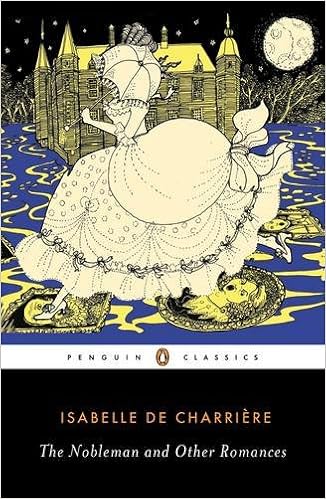
WITMonth Day 2 - Classics Challenge - Isabelle de Charrière's sharp romanticism

I most likely would not have been introduced to Isabelle de Charrière if not for the women in translation project. And this specific collection - a rare title by a woman in translation for Penguin Classics - is a fascinating portrait of Europe at the time, and an even more interesting comparison to significantly more famous writers.

Of course de Charrière is immediately compared to Austen (despite predating her). Penguin Classics resorts to the cheapest of comparative recommendations by noting de Charrière's writing "not unlike Jane Austen" in "[tackling] the intricacies of high society, particularly in matters of love". Really? So any woman writer - since Jane Austen and indeed also before her time - is like Jane Austen for writing about... life? Oh goodness.

This is further made absurd by the fact that de Charrière's writing is nothing like Austen's. Not only does her style itself lean very heavily towards epistolary and conversational (far more than Austen's detached, droll style), de Charrière writes far more bluntly about the problems of the world. The stories rarely end happily, and the nuances of complex existence are not tossed out for the sake of a simple romance. In fact, de Charrière seems to dance around her endings altogether, usually leaving the reader hanging.

And thus does de Charrière's The Nobleman and Other Stories manage to keep the reader intrigued. Not necessarily because each story is flawless - some are distinctly unfinished and fairly dull - but because there's a clear passion in each perspective. The stories follow similar structural patterns (generally epistolary), but often differ in tone or temperament. And de Charrière does a brilliant job of actually making the letters feel realistic. Unlike most epistolary novels (and certainly modern ones...) which lose realism points for talking only of plot, de Charrière goes on tangents and side-stories and rambles about clothing or whatnot. This could be interpreted as sloppy writing (and perhaps it is...), but as a huge fan of the realism side of literature (and realistic fictional webseries, for example), these storytelling quirks actually endeared me quite a bit.

There's a lot more I can discuss as regards de Charrière - her writing, her exciting life, her intelligence, her total lack of naivety and sugar-coating, her approach to storytelling - but I'll focus for a moment on her legacy, and its general lack thereof. de Charrière is not a low-tier writer - she was prominent enough in the day, and her writing largely stands the test of time better than many of her contemporaries (men and women alike). But her placement in the canon is... nonexistent.

I suspect that most readers (like me) have not heard of Isabelle de Charrière. And so consider this your introduction. Penguin Classics has thankfully produced this interesting (if at times unbalanced and repetitive) collection of de Charrière's shorter works, and it's absolutely worth reading through. If the purpose of the Classics Challenge is to showcase classic women writers who have sadly been sidelined, I can think of no better starting point than Isabelle de Charrière's sharp romanticism.

Saturday, August 1, 2015

WITMonth Day 1 - My Personal Plan

Here we are. August 1st 2015 - day one of the second annual Women in Translation Month! Whew. How exciting.

Last year I proposed a general (optional) schedule for readers participating in WITMonth. This year I've decided to go much more casual: I'm posting my personal general plan below, but by no means expect anyone else to stick to something so strict. The point is to raise awareness, find new books, and read excellent literature!

This year I will be focusing on three major challenges:

  1. The Classics Challenge
  2. Queer literature by women in translation
  3. Obscure or otherwise marginalized groups
The last point is perhaps the most vague - it encompasses both out-of-print or otherwise little-discussed books I'll read/find, as well as books by especially underrepresented groups in literature in translation (for example Latin American women writers, African women writers, etc.).

One of the things I realized last year was that I had trouble keeping up with the outright reading demands. And so this year I'm also relaxing my strict daily posting policy. Rather than daily reviews or outright discussions, I will fill August with spotlight posts as well, discussing books I myself have not yet read but would like to. I'll also try to include "Translate This Book" posts about various interesting titles I've come across in my research, in the hopes that some publishers may yet get the hint.

Stay tuned for reviews, discussions and random rants! And may we all have a very happy August!

Friday, July 24, 2015

WITMonth Prep | The Classics Challenge | Part 3

Parts 1 and 2 here. Note: Titles in bold are readily available and are in print (in English). Translator names were not included in order to prevent any confusion as regards specific editions.
  • "The First Day" and Other Stories (c. 20th century) - Dvora Baron - Hebrew
  • Memoirs of an Arabian Princess from Zanzibar (1886) - Emily Ruete - German
  • The Complete Poems of Anna Akhmatova (c. 20th century) - Anna Akhmatova - Russian
  • The Sun Shines Over the Sanggan River (1948) - Ding Ling - Chinese
  • The Chinese Book of Etiquette and Conduct for Women and Girls / Lessons for Women (c. 1st century) - Ban Zhao - Chinese
  • The Field of Life and Death & Tales of Hulan River (1938, 1942) - Xiao Hong - Chinese
  • From Wonso Pond (1934) - Kang Kyŏng-ae - Korean
  • Black Butterflies: Selected Poetry (c. 20th century) - Ingrid Jonker - Afrikaans
  • Selected Poems of Gabriela Mistral (c. 20th century) - Gabriela Mistral - Spanish
  • Gabriela Mistral: A Reader (c. 20th century) - Gabriela Mistral - Spanish
  • My Heart Flooded with Water: Selected Poems (c. 20th century) - Alfonsina Storni - Spanish
  • Jerusalem (1902) - Selma Lagerlöf - Swedish
  • After the Divorce (1902) - Grazia Deledda - Italian
  • Kristin Lavransdatter (1922) - Sigrid Undset - Norwegian
  • Collected Poems I: 1944-1949 (c. 20th century) - Nelly Sachs - German
And a couple collections or authors with collections of stories ranging from before 1960 and after:
  • Women's Poetry of Late Imperial China: Transforming the Inner Chambers - Chinese
  • Silvina Ocampo
  • Tove Jansson
As always, this list cannot remotely be considered complete. While I'm uncertain that I'll have the time to publish another Classics Challenge list before WITMonth itself, it is important to note that the main reason these lists are so short is not because there are too few books by women writers in languages other than English, rather that the plethora of poetry collections, novels, essay collections and more is simply untranslated. I'll be writing about that some more in the coming days.

Thursday, July 2, 2015

WITMonth Prep | The Classics Challenge | Part 2

Part 1 here. Note: Titles in bold are readily available and are in print (in English). Translator names were not included in order to prevent any confusion as regards specific editions.
  • The Heptameron (1558) - Marguerite de Navarre - French
  • Suite Française (1942) - Irène Némirovsky - French
  • Poems, Protest and a Dream (c. 17th century) - Sor Juana Inés de la Cruz - Spanish
  • And He is the Light (1946) - Leah Goldberg - Hebrew
  • The Life of Saint Teresa of Ávila by Herself (c. 16th century) - Spanish
  • The Moomins and the Great Flood (1945) - Tove Jansson - Swedish
  • Autobiography of a Geisha (1957) - Sayo Masuda - Japanese
  • Industrial Park (1933) - Pagu - Brazilian Portuguese
  • Child of the Dark (1960) - Carolina Maria de Jesus - Brazilian Portuguese
  • Torn from the Nest (1889) - Clorinda Matto de Turner - Spanish
  • Dreams and Realities: Selected Fiction (c. 19th century) - Juana Manuela Gorriti - Spanish
And many, many, many, many other classic women writers from around the world who have not yet been translated. And also others who have been translated! More to come, and not just for the classics challenge. August is coming...