Friday, April 26, 2013

Magic on other worlds | Trafalgar

There's a hint of "finally" in my discovery of Trafalgar by Angélica Gorodischer (translated by Amalia Gladhart). Not just because it's one of the better books I've read this year. Not even because I had to wait a few weeks between reading the first chapter in this book and the rest. Mostly, it's a feeling of finally finding what I'm looking for - high quality, well-written, unique fantastic sci-fi from an interestingly non-Anglo perspective. It's almost as though Gorodischer has tailor-made this novel-in-stories for me. Decades before my birth. And continents away. Well played, Angélica Gorodischer, well played.

If you're looking for information on Trafalgar, you'll be hard pressed to find any on its back cover. Rather than giving hints about the stories found within its pages, the blurb instead aims to set a mood. Relax, it says. Open your mind. Take in something new and different and maybe just a bit unexpected. This might be frustrating for some readers (indeed, I personally found it to be an annoying gimmick-like choice), but it does set the mood fairly well. Because these aren't whip-fast, neck-breaking stories. These aren't swashbuckling sci-fi tales to set your hair on fire. These are coffee-shop stories that happen to take place on other worlds, with other cultures, and other frames of reference.

The first thing of note in Trafalgar is its wonderful clarity. A lot of books (particularly sci-fi) stumble over how to build their world without resorting to bloated, heavy-handed descriptions, but Gorodischer leaps over this hurdle lightly, opting instead for a casually limited scope. Because each story takes place on a different world, and because the stories are being told directly to another character, they remain small and relatively undeveloped. But we don't expect there to be a lot of descriptions of the places, the buildings, the people. That wouldn't be very conversational, would it? By making these actual stories, Gorodischer is able to get away with a crisper, cleaner storytelling style. I loved it.

The stories themselves touch on such a wide array of topics that it's hard to even classify them. Our titular main character, Trafalgar, doesn't seem to find anything wrong with this either. His stories aren't quite adventures, really - he's a businessman, after all. These are just the odd things that sometimes happen on his business trips. We get glimpses of wonders through this very particular filter.

There were two things I kept finding myself comparing Trafalgar to: one with a bemused excitement and one with a fair share of annoyance. The first was related to the way certain phrases and philosophies of the book resembled Star Trek (with a particular resemblance to TNG, which would not exist for another decade as of this book's original publication). In more than one story, Gorodischer touches on themes that often crop up in Star Trek, such as various cultural distinctions and even ideas resembling the Prime Directive. The stories were just light enough to keep me from getting too bogged down in them, but also thoughtful enough to keep me thinking throughout them. Also afterwards.

The third comparison is both the strongest, and the most frustrating. Because, though a much better book, Trafalgar very strongly reminds me of Stanislaw Lem's The Cyberiad, a book I've been struggling with for many, many months. Both are novels in stories, surrounding the somewhat bizarre travels of seemingly ordinary people in outer space (engineers in The Cyberiad, a businessman in Trafalgar), to odd, yet often very human, societies. Superficially, this makes these books extremely similar. Except whereas The Cyberiad is utterly absurd - and seems perfectly aware of this - Trafalgar is subtly whimsical. The Cyberiad drags on and on, while Trafalgar ends quickly and as lightly as it opened. The Cyberiad piles on more and more details; Trafalgar focuses purely on its storytelling.

This, of course, is Trafalgar's major flaw. A book that is so slim and so heavily tilted towards a storytelling form cannot dig quite so deep in other areas. World building is obviously low on Gorodischer's list of priorities in this book, but so is character development. The characters are just that - characters - but they move through their stories comfortably. They didn't feel out-of-place or particularly stiff. They don't necessarily leap from the page, but... it works. Within the context of Trafalgar's storytelling style, it makes sense.

I enjoyed Trafalgar. If it had just a bit more of a firmer impact on me, I might have even said that it was brilliant. But it falls just shy of that claim. Instead it will stand as a wonderful book with a lot of interesting ideas and vividly imagined stories. Easily recommendable.

Friday, April 19, 2013

How to be social (media)

So I've been thinking about this Youtube video for the last couple of days and I've reached the following non-conclusions: generations matter. Mediums matter. Content matters. And we, as content consumers, are pretty integral to this whole thing*. Sanne (the vlogger in this video) makes the strong point that social media is not only important, it's critical. The way she stresses the fact that many publishers are trying to use social media but failing... it's an interesting argument.


There's a lot in the video that I find striking. Maybe it's because I've been writing about books for so long (writing versus any other form of media) and maybe it's because I was just thinking about social media and the reviewer-publisher relationship the other day, but it seems to me like Sanne is viewing things differently from me, even though we should be coming from the same place.

And so I'm wondering. Do social media sites really influence the way people read (or the way we consume any content, for the matter)? My instinct would be to say "no". Book blogs, I could argue, are much more in the way of traditional print media. Except that's obviously not true. Some book blogs, yes, mostly eschew the notion of social media, but many (I'd even say by now most) book blogs have integrated their blogging with Twitter, Facebook, Goodreads, Tumblr, Pintrest, etc. Bloggers tweet publishers to let them know that they just reviewed one of their books. Bloggers host giveaways and contests through Facebook. They display every one of their books-read on Goodreads. And, of course, the blogging itself. Is blogging really akin to a print, critical review? Or is it something, as Sanne notes, more personal? And more believable as a result?

Obviously there are generalizations at hand here. While I would agree with Sanne that I personally would be more inclined to take advice from a reviewer I know (even if only superficially, anonymously, through the internet), it's not always true. Simply put, there are bloggers I've followed for years that I don't trust (different tastes, rating inflation, etc.). The personal, social aspect isn't what convinces me; I'm certain of most reviewers' sincerity. What convinces me is a good track record. You can tweet as much as you like, but it won't change the quality of your reviews.

Generations matter. I belong to a generation that was raised on the internet. We have been encouraged from an early age to share - share content, share our opinions, share our statuses... share everything. This is a concept my parents find foreign (and somewhat appalling). This is a concept even I find somewhat jarring at times (hence my anonymity and lack of serious social media interaction**). But the fact that a generation of readers has been raised expecting information to flow freely influences how that generation will behave as consumers. John Green's popularity is a perfect example of this. He is a rock-star writer for many, many, many readers, in large part because of his prolific and open online persona. He has made his personality and his life part of his author profile. At the end of the day, it's so much easier to enjoy and appreciate a novel when you like and understand its author. I understand John Green after having watched hundreds of his videos - it colors how I read his books and how I view his characters. How can it not?

Mediums matter. Reading a long post about my thoughts on social media and book reviewing might be boring to some people, but if I used my (crappy) webcam and did cool jump-cuts, it could be more accessible to them. Reading a book review on a blog could be more engaging than a review in the NYT Book Review. Getting a recommendation from a Facebook friend could mean more than Goodread's recommendation algorithm. It's entirely subjective, but mediums do matter. Otherwise we wouldn't distinguish.

Which leaves me with one last thought: publishers.

I'll probably be discussing this more in depth over the next few weeks***, but Sanne tosses out a small reference to the reviewer-publisher relationship near the midpoint of the video. She reminds reviewers that they can just ask for review copies - they don't necessarily need to be offered by the publishers. This is something I've known about and seen over the years, but I'll be honest that I never really made the connection between asking the publishers for review copies and social media. Except it's sort of the same thing, isn't it? It's all about sharing - sharing with the publisher that you want to read a book and sharing with your blog followers (or Youtube subscribers) that you liked (or disliked) a book. Publishers give out books for review because reviews benefit them. Why shouldn't they want reviewers approaching them, essentially guaranteeing them publicity and attention? Why shouldn't they use social media to determine who best to review their books?

I'm curious to hear from those who use social media about how it influences their book buying and/or their book reviewing. I'm curious to hear from people who avoid social media to understand why they don't use it. I'm curious about how publishers view the social media aspect and I'm curious about how an older generation - one that didn't grow up with the instant gratification and constant sharing we know today - views this growing reliance on social media. Thoughts?

* My subconscious is clearly trying to remind me to finish my math homework, yes thank you I noticed the word integral, now go away.
** Also my early aversion to use of the words "I" and "me". I've gotten over it since I first started this blog.
*** Or months. Or years, since my track record is not very good in this area...

Saturday, April 13, 2013

Why have I written to you? | Black Box

"New or old?" This was the question I asked myself as I stared at the two books on the shelf. The bookstore offered autographed copies of Amos Oz's newest collection of short stories (בין חברים - Between Friends) and a new edition of his older Black Box. After several minutes deliberation, I chose Black Box. Not because I hoped that a more established title of Oz's would necessarily be better. Rather, Between Friends is another short story collection and I wasn't sure I was over the wonderful Scenes from Village LifeBlack Box, being an epistolary novel, seemed to be about as far from the wonderful constraints of a short story collection as possible.

Yes and no.

I've known for years that my mother - the original voracious reader in the family - did not like Amos Oz or his writing style. When mentioned that I had liked - even loved - Scenes from Village Life, she was surprised. She dismissed his sharp, often coarse writing style as compared to the more elegant A. B. Yehoshua, or to the exceedingly readable Meir Shalev, or to David Grossman's emotional lyricism. Oz's style, by her measure, simply couldn't hold up. And for the most part, I agree with her assessment. Oz writes more bluntly than many of his Israeli counterparts. But it doesn't matter, because one thing is clear - Oz is an author in perfect command of his writing. Black Box is an excellent example of this.

Scenes from Village Life was special in large part because of the way Oz seemed to know exactly when to end his stories. There was a perfect level of suspense in each, wrapped up cleanly into small stories that drove me to keep reading. Though Black Box obviously has a larger narrative, this same care applies to each aspect of the novel-in-letters. Though the letters may sometimes drag on for longer than I would want/expect, it's obvious that Oz knows exactly what his characters need to say, and how.

Black Box revolves around the collapsed marriage of Alex and Ilana. At the start of the novel, Ilana is contacting Alex (a well-known professor living abroad) for the first time in seven years, asking for his assistance with their angry, often violent teenage son Boaz. Ilana's writing style is clean, one-sided and lyrical. We immediately get the impression that there's more to the story than what Ilana is sharing, and as the novel progresses, we learn about why Ilana and Alex got their divorce (with Alex completely cutting off ex-wife and son). Ilana is meanwhile remarried to Michael (Michel), whose influence on the story grows alongside Alex's re-involvement in his ex-family's life.

The story is mostly told through letters between these four major characters, with the occasional correspondence between Alex and his lawyer, clippings from Alex's notes on military history or literature, and occasionally letters from other family members. Oz does a brilliant job of switching between characters, on a level I don't think I've ever encountered in an epistolary novel. If normally the reader needs to be told who is narrating the letter before beginning to read it, in Black Box each letter-writer is so clearly distinct from one another that within the first few lines, it's obvious who is writing to whom.

For example, Ilana, as I mentioned, writes pretty. Hers is a literary style; she invokes long, beautifully written passages meditating over her impressions on what Alex is doing at any given moment. She quotes entire conversations comfortably, as though writing a novel. But her letters feel like novels in other regards as well. Ilana is an unreliable narrator, admitting to certain lies and omissions from one letter to the next, gradually letting down her guard as the story progresses. Boaz, meanwhile, writes with numerous spelling errors. His style is loose, colloquial, bad. He writes like you would expect a poorly educated teenager to write.

There is no external narration in Black Box. Most of what we know about the characters is either through their writing style or through secondhand accounts. The only character who really describes her own life is Ilana, but she herself casts doubt on most of what she says. We know she is intelligent, manipulative, and passionate from her writing style, just as we know her husband Michel is religious, single-minded and vaguely possessive from his own accounts. Alex, meanwhile, comes off as stiff and cold, whether in his sharp telegrams to his harassed lawyer or in his long, oddly pained letters to the other characters.

Though each character is thoroughly unappealing, together their letters create a clear sense of intimacy between reader and fiction. Each character frustrated me for other reasons: Boaz for his aggression and impulsive view of the world, Michel for his method of applying his political beliefs, his hypocrisy and his sexism (in general, there's an uncomfortable thread of sexism running through Black Box), Alex for his violence and coldness, Ilana for her manipulations, lies and generally victimized perspective... These are people I wouldn't want to deal with in real life, but I was nonetheless drawn into their world through Oz's clear-minded writing. I cared, even if I sort of wished I didn't have to.

I didn't love Black Box. I don't think I ever could. It's hard to love a book when its characters are so unappealing or when it brushes against politics so lightly without really revealing its true feelings. But it's also hard not to like a book that creates such a strong level of intimacy between these awful characters. Past the halfway mark of the book, I felt almost overwhelmed by one of the letters: Ilana is recounting the beginning of her relationship with Alex, her former army commander. Reading what felt like such a personal, intimate letter unnerved me, unsettled me entirely. Worse are the moments from the other end - Michel's impassioned, almost fanatical letters to Boaz felt a little too believable. By the end of the book, I had to remind myself that these were fictional characters. I had to remind myself this because an already grim story turned even more inwards. The effect was... powerful. This is not as easy a book to recommend as Scenes from Village Life, but yes - it is recommended.

Friday, April 5, 2013

Fantasy of a different flavor | The Killing Moon

It is perhaps the mark of a relatively weak reading year thus far, but there's no doubt that the book I tore through the fastest (and with the most interest) is N. K. Jemisin's The Killing Moon. Jemisin is an author I've grown to respect, even as I can't pinpoint any particular trait to her writing that I especially like (I've had specific issues with each of her books thus far, though different issues every time). What's important is that Jemisin is trying something new in fantasy, and I respect it. I also happen to like it. In the case of the The Killing Moon, I happened to like it very much.

From the back cover blurb, it's easy to understand why people regard Jemisin as a "different" sort of fantasy writer. The Killing Moon, as other reviews will already tell you, takes place in a quasi-ancient-Egyptian culture. Jemisin treats her setting carefully, making her references to the real Egypt both obvious and non-intrusive. The Killing Moon doesn't get bogged down in descriptions and bloated world building, but on the other end of the scale, I never felt like I was living in a half-developed world. This in itself is rare in fantasy, where world-building is often equated with page count. Jemisin mostly opts just to show the world - it isn't until relatively late in the novel that we begin to fully understand the events of the first chapters. This may make the opening a bit shaky for some, but I was confident enough that the story would come together... and it did.

The Killing Moon is a fantasy, but it's definitely a different type. Not only does Jemisin eschew the comfortable cliches of a European Medieval fantasy, she also opts for a very different type of magic. Indeed, rather like The Inheritance Cycle (of which I've only read the first two books), The Killing Moon feels a lot more like mythology than it does fantasy. By latching the use of magic onto the in-story religion (and its in-story mythological origins), Jemisin creates a very realistic magical approach. Magic is ubiquitous, but uncommon. It's limited to a very narrow group of people, but it applies to everyone. More than anything, the magic in The Killing Moon is an acquired ability than an inherent born talent (though there's a bit of that as well). This makes it less like the dramatic high fantasies many of us associate with the genre, and more like a strange piece of historical fiction. With magic.

All of this magic, interestingly, takes left stage to the core of the novel - diplomatic intrigue. This was where I found the true strength of the book to be - the way Jemisin makes readers believe in the politics and diplomacy within this fantasy world. Toss in a good helping of mythology, magic, manipulation and murder, and you've got something special. Jemisin raises questions about life and death, never really answering them but leaving them lingering throughout the story. Ethics and morals are important; Jemisin never fully lets her readers forget that.

But much as I enjoyed the story, I have to admit that there are some important technical flaws in this one. Characterization, for example. I liked the characters and they felt fully-formed (ish), but they didn't feel particularly real. Ehiru is intriguing, but he is not particularly engaging. Nijiri, meanwhile, is engaging, but also flatter and less developed. And Sunandi is a strange blend, where I mostly liked her, but didn't really care about her. I felt little to no emotional connection with the characters. That's fine when you're breezing through a book, but it's not exactly the mark of quality literature.

The writing is also a bit strange, but here it might have been a matter of expectations. Jemisin's style felt a bit more jaded than it did in The Hundred Thousand Kingdoms or The Broken Kingdoms. It mostly fit the story, but sometimes I was struck by how standard it was. Though I liked The Killing Moon significantly more than Jemisin's previous efforts, I found myself preferring the writing style in those novels over this one. Now I'm wondering if the writing style even really changed, or if it's just my memory playing tricks on me. Either way, The Killing Moon is written in a super standard "easy-to-read" style that suits its pace and its story admirably. It's good enough, but I wouldn't call it good.

Yes, I enjoyed The Killing Moon a lot. It does what fantasy is supposed to do: displace the reader, tell a good story, make the reader think. Jemisin may have stumbled a bit with two-dimensional characterizations and a distinct, somewhat blunt writing style, but overall her novel works. Not necessarily an example of true fantasy literature, but a fine book nonetheless.

Tuesday, April 2, 2013

A predictable Goodreads/Amazon post

You've all probably heard by now that Amazon has bought out Goodreads. This is turning out to be a pretty big deal in both the book blogging world and the external business-y world, which seems to find the acquisition either amusing or bemusing. Goodreads users are, for the most part, not in either of those camps. Most seem thoroughly unhappy about the move - some on a level that they have publicly and loudly deleted their Goodreads accounts - while the rest seem cautiously optimistic. With the exception of a few Goodreads members who commented that Amazon's acquisition will hopefully mean a better integration between Kindle devices and Goodreads, nobody was really excited or happy about this move.

"Cautious optimism" is the key here. The best case scenario, as many members have pointed out, is that Amazon only takes advantage of Goodreads' vast data store and doesn't interfere with the actual community behind this information. There might be an increase in certain types of advertisements, and more syncing with Amazon owned products or Amazon affiliates (for example, in giveaways, in compatibility with Kindles, in ads, etc.), but this best case scenario assumes that the basic functionality of Goodreads won't change.

The worst case scenario is that Amazon's policy of "your reviews belong to us" (which I didn't really realize until now, and am suddenly thoroughly uncomfortable by just how much I've given them over the years) will extend to Goodreads. That the functionality will go from a bookish social networking site that aims to build a community to another extension of Amazon's dominance in the book industry. That Goodreads' recommendation algorithm will be replaced by Amazon's significantly more commercial one. That the ease of finding old, indie or little-known books will evaporate. That the option of buying a book through an independent provider will disappear. The worst case scenario? Goodreads loses everything that made it the site that it is.

Personally, I believe in the middle ground. Obviously Amazon will be mining our personal collections now in order to better understand its customers, but is that necessarily a bad thing? I've complained for years about Amazon's stupidity when it comes to book recommendations, and the clumsy way it tries to throw the bestseller-of-the-moment at readers. With this new (and significantly improved) pile of data behind it, maybe Amazon will actually improve. Maybe it'll adopt Goodreads' book recommendation algorithm, and not the other way around. Maybe it will learn

Goodreads is probably going to change. It's going to feel different, if only because everyone will expect it to change, and be on alert for any suspicious behavior on Amazon's part. Like most Goodreads users, I'm uncomfortable and nervous and a little upset by how brazenly Amazon has been going about creating a true monopoly in the book world. But I'm not about to delete my Goodreads account. Unlike most readers, I don't really need Goodreads to catalog my books (I have a significantly better Excel document that has much more information than I'll ever give the site...). I don't even use it for the social/community aspect very well, though recently I've made a bit more of an effort. I don't really like reviewing on Goodreads, and I don't necessarily love their recommendations algorithm. But all together, it's a convenient site. The ability to access simpler, more sincere reviews than Amazon is pleasant. Seeing the different methods by which people tag and label their books is fascinating. It's less severe than LibraryThing (which I also don't like because of its price tag), and it's less commercial than Amazon. Goodreads filled a certain niche in the literary world. Hopefully this will not change, even if other details do.

Wednesday, March 27, 2013

Library eBook lending - revisited

A couple months ago, I posted about what I saw as the strange phenomenon of readers avoiding a convenient and free method of acquiring eBooks - library eBook lending programs. In the post, I raised some of the issues with the current eLibrary models, and comments backed up these negative claims, rightly pointing out how cumbersome and often clumsy the current library systems are. Unlike me, for whom the prospect of acquiring new books in English from halfway across the world is a huge advantage, most readers saw the messiness and limited quality of these eLibraries as making it rather worthless.

So today, I'm pleased to announce (somewhat belatedly) that at least one of the three eLibraries I patron (don't judge me...) has made a tremendous step in the right direction. And surprisingly, it's the one that until now was the messiest, the most cumbersome, and the least cooperative. Northern California Digital Library, I commend you.

Up until just a couple months ago, NCDL's site was cramped, uncomfortable and extremely difficult to maneuver. This is the eLibrary I frequented least often, in large part because I could never seem to find the books I was looking for. Their search bar was practically unusable, their collection seemed mostly comprised of travel books, and all in all, it was a nightmare to use the site. So, like many readers pointed out in the comments, I just didn't.

Now as you can see (if you clicked the link...), the site is much more modern, much more clean. It's a little hard to compare without the previous look and feel (I found only two small, blurry screenshots that don't accurately portray how annoying the site used to look), but regardless: the NCDL's new site is nice. But more than just the general aesthetics, the site now has a much smoother functionality. Most importantly, it also has an excellent browsing method because for the first time, one of these three eLibraries I patron has figured out how to use filters.

This seems like the most obvious thing on the planet, right? I mean, search engines have had filters for so long now, it seems somewhat absurd that a site like an eLibrary wouldn't. And yet they don't seem to see the direct correlation between how easily patrons can find books and how much they'll, you know, check them out. The relatively limited collection is still a problem, but with these simple, easy filters, I can find those few, good books I want quickly, easily and without any unnecessary headaches. I've already seen hints on another library's site that they're going to upgrade to a similar style; here's to hoping the others follow in the NCDL's footsteps soon.

Monday, March 25, 2013

Women and men (one last time)


Two things.

First of all: Ryan left a very interesting comment on my previous post about women and men, rightly referencing something that, in retrospect, is a huge oversight from my post. Namely, he had a problem with how the differences between men and women reviewers could be so far from the proportions of men and women book bloggers (and in general, men and women readers), where women do not merely triumph but dominate.

Though my book blogger statistics are several years out of date by now (and I will now publicly, and subtly mention that I would love the chance to do them again, but perhaps with some help this time so that the statistics actually get published), there is one finding in them that I have no doubt in my mind remains fairly constant - women book bloggers outnumber men by a wide margin. Essentially, among non-professional (or, more accurately, non-print-publication) book reviewers, there is a more predictable, reasonable spread of women/men when compared to the actual reading statistics - because surveys of who reads more (men or women) consistently show that women read more, and they read significantly more fiction. How is this not better represented in the publishing and reviewing industries?

I wish I had an answer for this. My gut tells me that women do fairly well in online publications, which will probably never factor in VIDA's stats. My gut also tells me that regardless, this clear slant against women is a serious problem that needs to be dealt with seriously (and not in a reactionary fashion).

The second thing I wanted to point out is this set of numbers crunched from specifically sci-fi/fantasy book blogs. Lady Business looked at a small sampling of blogs (written by both men and women), and analyzed how many books they reviewed by women, and how many they reviewed by men. The results are quite interesting, but I would describe them as somewhat skewed - surprisingly, in favor of women. For example, the general stat says that reviews of books by women make up 42%. Looking a bit deeper, however, I realized that one book blog specifically reviewed women writers almost exclusively. No surprise, then, that the numbers came out so high.

I really recommend reading the whole post, as well as many of the comments. It's really interesting to see the way readers view their own imbalances and preferences, as well as how they plan to change (or not change) their habits. Some food for thought.

Sunday, March 10, 2013

Women (and men), revisited


There's something about charts. You can list statistics, you can have gut feelings, you can suspect... but nothing hits harder and proves a point more strongly than a good series of graphs and charts. And so I urge readers to look over VIDA's yearly summary of book reviews from major publications. It's illuminating, and not in a good way.

Now that you're back (and possibly as angry as I am), let's have a little chat about this. Because seriously - what. We often talk about "imbalances" and "subtle sexism" and all sorts of other neutral concepts, but VIDA's statistics make it really hard to shy away from the truth. And the truth is that something is seriously skewed with the literary world. Look at those numbers - for the most part they don't even approach 50% in the authors reviewed sections and the reviewer gender polls don't show much better results. What's truly shocking is how consistent this is. There is no example of a review outlet that employs more women reviewers than men, and scant examples of publications that has reviewed an equal number of books by men and by women.

I've said it before, I'll say it again: I don't like to rely too much on statistics. I love numbers, but it's too easy to get caught up in one-sided beliefs when relying entirely on percentages. So though most of these reviewed books may be written by men, that does not necessarily mean that the publications are automatically sexist. That these books are mostly written by men doesn't mean that there aren't strong women within their pages, it doesn't mean that these books are also all about men.

The statistics do, however, mean that books by women are not getting the same attention as books by men. That review publications do not employ many women. And that the problem, despite being one I first heard about three years ago, is still thriving.

We can lay the blame anywhere. We can say it's the fault of publishers for marketing books by and about women as exclusively for women. We can say it's the fault of literary publications, who clearly prefer men in the position of reviewer, despite the fact that women tend to read more than men. We can say it's the fault of reviewers for believing that men writing about family life is timeless while women writing about family life is fluff. We can say readers are at fault for buying into all this nonsense. We can lay the blame anywhere and everywhere, and we should. This is a joint effort. Two years ago I commented that these stats and the general dismissal of women writers for literary awards was not outright sexism. At the time, this was the right thing to say: one outlying year of skewed reading is unfortunate but doesn't say much. Two is a reason for taking note. Three is already a trend. We have a trend of male-preference in literature. Something needs to change, and we have a role to play in that. It's time we take it more seriously.

Monday, February 25, 2013

Thoughts | Books for boys, books for girls

I don't remember where I first read about The Monstrumologist, but I clearly remember the major critique the reviewer had against the book: its complete and total lack of female characters. The general details of the book faded from my memory, but that one notion that a book could have absolutely no relevant female characters intrigued me somewhat. And so I kept that idea in mind as I finally delved down to read the book as a sort of mind-wiping distraction.

It's a relatively good assessment of the book, and an accurate indicator of its target audience. The Monstrumologist is a boy's book through and through, whether because of its clear tendency towards all things gory, or because of its masculine approach to hunting monsters, or even simply because of that one factoid someone mentioned years ago: there is not a single female character throughout The Monstrumologist. No romantic interest, no token female... nothing. And it's not even that the cast of characters is necessarily so small. It's just that every single character happens to be male, and happens to behave in what we traditionally label as a masculine behavior.

Then I got to wondering: how much should this actually influence the book itself? Is the book necessarily weaker for the fact that it has no female characters? I think it isn't. The characters are all of a certain cut. There's the insane monster hunter, the out-of-touch doctor, the revenge-thirsty teenager, the skeptic policeman... The characters themselves are fairly routine, and truthfully, adjusting the gender of one of them would have been significantly worse than the fact that there were no women overall. True, this indicates some kind of weakness in Yancey's ability to write well-rounded characters as a whole, but there's nothing inherently sexist about it. I didn't get the vibe that Yancey didn't want to write about girls for some defined reason, rather that he had a specific "boy's tale" in mind. Is that so terribly wrong?

I'm split. On the one hand, I know that young men read significantly less than young women, and that books are very rarely marketed exclusively for guys. On the other hand... how can a book so completely lack characters of the opposite gender? But now I'm realizing that this isn't just in "boys books". Often, the only male characters in books for young women is the romantic interest. How is that better? When you start looking at it, young adult books are often split along gender lines. It's... strange. And extremely problematic.

I've had months to think about this, and really... I've reached no conclusions. It bothers me that a book could be so utterly limited in its characterizations, but if those are the characterizations that make the book better, I really can't fault the author. The Monstrumologist overall isn't much more than mediocre (for reasons well beyond gender imbalances), but its clear boy-focus is inherently tied to its story. Something else probably would have rang false. So... thoughts?

Saturday, February 16, 2013

And in conclusion... Three Strong Women

So I finally finished Three Strong Women by Marie Ndiaye and I've even had some time to absorb it and think about it a bit. It's an interesting book, but I find myself struggling to actually recommend it to readers. As seen through the rear-view mirror, Three Strong Women works much better than it did while I was actually reading it. Fit together, the three stories that make up this book suddenly seem clearer and more sharply tuned. But this does not detract from the book's flaws.

I mentioned in my last post that I was developing a theory about the title: Three Strong Women. Now, after having read all three stories I want to discuss it a bit more in depth because I think this is the strongest argument both in favor of reading the book, and possibly against it as well. This post will contain spoilers.

Okay. We have three women: Norah, Fanta and Khady. Norah and Khady give us their stories firsthand; Fanta's story is seen through the eyes of her husband. The three women face various struggles throughout their stories, mostly revolving around men in their lives. These are not romantic issues, though the dynamics of romantic love do come into play in each of the stories. These three women are supposed to be our "strong women". But truthfully, not one of the three is a strong woman by my definition, and this is in fact what makes the novel an interesting one.

Norah is technically the closest - she is independent, supports her daughter, her boyfriend, and her boyfriend's daughter, and is a successful lawyer despite whatever issues she may have had as a child. Yet she lives under her father's shadow, jumps when he says jump and in essence succumbs to his strength throughout her story.

Fanta is similarly submissive, but what are her character traits? We know she has had an affair (which her husband Rudy discovered), but stayed with her husband, despite all observations indicating her unhappiness with him and their general living situation. Is her strength found in the fact that she stays with a troubled husband, or is it found in the fact that she even followed him to France in the first place? Fanta is supposed to be a strong woman, but no textual evidence supports it. Seen through her husband's eyes, she is almost deliberately flattened.

And then Khady. Khady starts her story out completely submissive - indeed, admitting to having closed herself off. She then makes one pivotal decision, which she proudly views as her first shot at independence. But this strength and her independence lead her into a complex mess of issues that culminate in a rather heartbreaking ending. So what's the lesson here?

I've seen a lot of readers and reviewers call Three Strong Women conservative, and there's something about that word. When our "strong women" are not truly strong at all, it can seem as though Three Strong Women is actually conservative, restrained and old-fashioned. But I don't think that's the case. Ndiaye treats her characters with care, but there's a sense of irony behind everything she writes. Once I finished the book, the suspicion I'd had that Ndiaye was ironically referring to these women as "strong" intensified. I'm not one-hundred percent convinced, but... that's what it feels like.

Here's the thing: I will recommend Three Strong Women to certain readers. It's an interesting, thought-provoking book and even though Ndiaye's writing will probably not appeal to all readers, it didn't bother me too much. The very fact that I am still uncertain as to Ndiaye's true intentions leave me intrigued; I suspect these certain readers will be equally curious.

Saturday, February 2, 2013

Three Strong Women, part two

It only seems fair that after posting about Three Strong Women's opening story, I should also post about the following novella. Attentive readers of this blog will notice the wide time-lapse between my last post mentioning the book and this one - indeed, it took me significantly longer to read the second story in the collection than the first.

The obvious reason - that the second story is fifty pages longer - is really not the main factor in why this took quite so long to read (and no, a busy life is not an excuse). The truth is that this second story is simply not as good. At least, it didn't get good until past the halfway mark, when suddenly my reading pace shot up from ten pages a week to fifty pages in one afternoon.

I saw a reader mention in some review (I unfortunately can't remember where) that the second story is not even about a "strong woman", but rather about a weak man. This is a pretty apt description. If Marie Ndiaye's collection was intended to showcase strong women, the central novella does a pretty bad job of it. The strong woman in question would be Fanta, but unlike the previous story's Norah, Fanta is nowhere near being the protagonist of the story. That honor goes, instead, to her husband, Rudy, who is perhaps one of the most miserable and down-in-the-dumps characters I've ever encountered. Fanta is instead viewed through Rudy's eyes, giving us what should be a one-sided impression (though, to credit Ndiaye's writing, Fanta feels surprisingly real).

Rudy is the heart of the second story, and truthfully, he is also what drags it down. His passive anger and general meh-ness throughout the first half of the story is powerful and relevant to the impressive culmination, but it goes on for too long. Here, Ndiaye's tendency towards questioning, one-sentence paragraphs grows a bit tedious. Rudy's thoughts repeat and loop in what is a very sharp description of a troubled mind, but this is not exactly enjoyable or smooth reading. The story doesn't really hit its stride until Rudy's outlook begins to change (and the tone of the story changes accordingly).

I've only just started the third story, but already its flow is significantly better than Rudy's story ever was. It'll be interesting to see how it fits into the collection thematically. I have some thoughts on this idea of the "strong women" so far, but I think I'll wait until after the final novella to see how it all plays out.

Friday, January 25, 2013

Read your age

Three links: reading books too early, an agreement, and thoughts on rereading those classics later in life. Three links on essentially the same big-picture topic - reading at certain ages, what's preferred, what's "right", what do you gain from reading certain books at certain ages, with Claire's original question making the strongest point, stronger than anything I can possibly say:
The age at which we read a book is of vital importance to the way we experience it but that does not mean that each book comes with a correct age at which to read it. You are not only going to appreciate Vanity Fair if you wait to read it until you are forty-five but you will perhaps appreciate it differently than you did at fifteen and twenty-five and thirty-five. You will understand more and miss fewer allusions but that does not mean you will enjoy it more.
I read this post at about the same time I read the NPR piece about rereading the classics and it resonated pretty strongly with my recent realization that many of the classics I was so quick to read just a few years ago maybe didn't go all the way through. That I had missed some things while reading.

This is a common feeling we readers get - we feel like we're missing something when a book that's universally acclaimed or a classic or just gives off that "I'm-high-quality-deal-with-it" vibe turns out to be woefully disappointing. This is what happened when I read The Book of Words a few weeks ago, and when I read Fahrenheit 451 seven years ago, or Death in Venice or countless other books I've read over the years. The (bad) instinct is to assume that something is wrong with me [the reader], that I'm the one who isn't grasping something. That's something is missing. This is usually wrong among adult readers.

But among children... okay, I'll admit it. I may have loved War and Peace when I read it just before my fifteenth birthday, but I probably didn't understand all of it. And I have no doubt in my mind that while I read Middlemarch attentively - just a couple months ago - I will gain a great deal more from it when I read it in a few years, with less of that young passion and flighty impatience that comes with being a young reader. Rereading some my childhood favorites over the past year - Harry Potter, The Golden Compass, A Wrinkle in Time, The Giver and many more - made me realize how much I missed even just a few years ago. Now I've started rereading Pride and Prejudice and it's just a completely different book from what I remember. I'm sure if I go back to all those old classics, I'll see this change again and again.

I started reading a lot of classics around age thirteen. I wanted to read the "right" books, wanted to read the proper books. By age sixteen, I had mostly burned out - these were long, dense books that I read at face value. I didn't realize that then, though I don't feel like it's necessarily ruined things for me. I'm not, as Jo Walton discusses in her Tor post, a person who does not reread. My opinion of a book can change over time and with every reading experience. For me at least, this is a wonderful thing.

Here's the thing, though: even if I will miss the point of all these classics, I'm not going to wait another five or ten years before I read them. An understanding of reading and literature stems not from literature classes or how long you've lived, rather from the hands-on experience of reading and your own unique life experience (which obviously cannot be predicted). I may not have picked up on the underlying messages in The Stranger because I read it myself at age thirteen (and not in a classroom environment), but I managed to grasp the strength of the writing and something about the story nonetheless managed to thoroughly disturb me. I'm certain if I read it today I would see things that were previously hidden, but how could I know to recognize them if I hadn't gone through the experience of figuring things out for myself? If I hadn't spent my formative younger years reading the classics and gaining an appreciation for fine literature, reading Thackeray at forty would mean even less to me than it actually did at seventeen.

This isn't true for everyone, I know. This is just how I see it now, still through my relatively young, experience-deficient glasses. Thoughts?

Monday, January 14, 2013

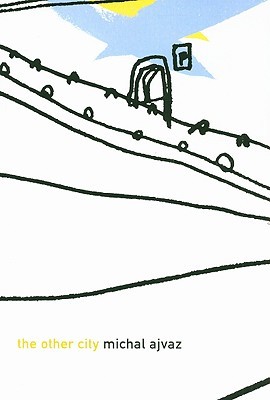
The otherness of The Other City

Michal Ajvaz is... something else. I was blown away by The Golden Age last year; I expected something strange and unexpected from The Other City as well. That is exactly what I got. Unfortunately, where The Golden Age was a magical and wonderful reading experience, The Other City was often disjointed, confusing and somewhat lost.

The Other City begins strongly - the idea and the tone struck me as similar to The Golden Age and the strangeness of Ajvaz's Prague was quite intriguing at first. The first half of the book flew by as I, like the unnamed narrator, got sucked into the Other Prague. Except then the themes began to repeat themselves clumsily. And then the stories became completely unhinged and impossible to follow. And then they again became magical, just for a few seconds. And so despite limping awkwardly to the final chapters, The Other City ended as it began - with intrigue and magic and strength.

Ajvaz's writing is strange. I constantly see readers saying it's like Italo Calvino, or Borges, but truthfully I haven't read Borges yet (on my shelf, I swear) and I only read Calvino after Ajvaz, so I have some trouble making the comparison. What I can say is that Ajvaz's writing - particularly in this translation to English - is a little old-fashioned, a little fancy-stiff at times, but generally smoothly appealing. It's not the most accessible or easy-to-read, but there's something special about it, something backwards and twisted that I find particularly appealing.

And what of plot? The Other City is about mood and ideas, not so much actual coherent story. There are a few recurring characters and concepts and sub-plots, but... it's not a plot book. It's not really a character book either, which makes it pretty hard to classify. Which essentially makes it easier to classify as well - The Other City is a bit of a mess. This is a book that had such good ideas and got lost with them. That might have been the point but if it was, it played out poorly.

So I liked The Other City at times, but I also didn't really like it. I got bored by it, I was enchanted by it, I was confused by it. It is nowhere near as powerful a novel as The Golden Age, nor is it as successful at actually playing on its own themes and clever storytelling ideas. But it's interesting. And someone looking for something utterly bizarre and different could certainly do worse than to pick this one off the shelf.

Sunday, January 6, 2013

On getting excited about reading (again)

There must be something in the air. Over the past forty-eight hours I started reading two new books, both which have sparked my interest in a way that no recent read has, both of which have made me want to read more, and more, and more. After two months of many dead ends and rather lackluster reads (with the exception of If on a Winter's Night a Traveler, which sadly lasted only one simple, near-perfect evening), being excited about reading again is... wonderful.

Dry spells come and go. Every voracious reader will easily be able to point to a period of time when they read less, whether because of increased "real-world" activity, or because no book seemed to fit the mood, or because of any one of a million other factors. This happens. I've made sure not to be bothered by it, made sure not to pressure myself into reading more, made sure to keep reading something magical and enjoyable and enlightening. Once I realized I was struggling with new books, I also decided to let myself relax a little and went back to some old favorites: I've been rereading a lot recently. But now, like a small lightbulb turning on, I can feel the excitement starting up again.

The first book is Three Strong Women, by Marie NDiaye. I read the first of the three novellas that make up this book yesterday... and it impressed me. The plot (specifically, the large, seemingly deliberate plot holes) may be a bit lacking, but on the whole, Three Strong Women is off to a good start. It's thought-provoking, curiously written (a bit of a sharp style, but far from jerky or awkward), and NDiaye plays to the strengths of novellas in her characterization and storytelling style. Here's to hoping the rest is as good.

The second book is There Are No Shortcuts by Rafe Esquith. I'm reading this one as part of a small goal to read education-focused books this year. I only just started it this morning, but regardless of whether or not I'll actually enjoy the read, or agree with Esquith's teaching methods, there is no doubt that the book is making me think. A lot. This is a subject I care deeply about, and I feel the book. I feel the fascination as I read.

I don't have much time for reading these days, let alone reviewing them and discussing them at length. I know this. If last year I read a record number of books, I expect to read significantly less this year. But that doesn't mean that I need to have a bad experience reading. Maybe it'll even be better for it. For now, I'm excited about reading again. May it last.

Monday, December 31, 2012

Library eBook lending

This article over at NPR about eBooks and libraries echoes a lot of issues with the current eLibrary models being used: the limited scope of offered books, publishers' instance on bizarre "26 circulations" limitations, and the surprisingly low percentage of readers even using this digital option. This is a fairly good introduction to the problems surrounding eBook lending, but I think it missed part of its own point. The article opens with a sly reference to how few people check books out through these digital catalogs, yet the readers themselves are mostly absent from the article. So, to fill in the blanks, my own take.

I've been checking eBooks out from my local libraries since the day I bought my first eReader. Literally; the evening I bought Artemis, I tested out downloads from three sources: Gutenberg, Overdrive, and Scribd. The Overdrive book was the second eBook I ever read, and I have not stopped using their services since. But I know that I'm in the minority. Not only do digital databases hold an incredible advantage for me over physical ones (after all, I don't have much access to books in English here in the non-Anglo world...), but I also have a fierce resistance to paying for eBooks, and as such prefer any method of getting them for free. The ability to check eBooks out of the library was what drove me to buy a Sony Reader back in the day (over the Kindle, then the only serious competition); it's the same consideration that keeps me using my newer Seshat to this day.

But why is this so rare? I know of countless bloggers who have eReaders, as well as many other friends and family who read digital books in some form or other. These are voracious readers, many of whom hardly read physical books anymore... why aren't they taking advantage of this wonderful system?

Some of the answers are what I mentioned earlier. When you have so few options of books to check out, is it even worth it? Not to mention the fact that finding a book in these databases can be nearly impossible (not what I would call the best search engines). But I don't think all the blame should fall on Overdrive and the other eBook providers. I think some of it has to do with the fact that many readers maybe just prefer getting books in other ways - the convenience of buying a digital edition instantaneously, or even receiving a free eARC. Then there's probably the fact that these sites were at first closed to Kindle books, and have only recently started providing Kindle files for check-out.

I don't know why other readers haven't opted for checking out more library eBooks. I really don't. While it's far from a perfect system (again, NPR's article is quite good at explaining why), it's still something... and something quite incredible. Thoughts?

Monday, December 24, 2012

Bad translation of the week

Bad translations can ruin a book. It's a sad fact of life. As someone who has dealt with translations myself, I know how hard it must be to do a book justice - managing to maintain both tone and style, while making sure the writing fits the new language and its many nuances. Translating is tough stuff, but it still stings a little when a good book is poorly translated, and suffers at the hands of its new audience as a result.

Case study no. 5062: The Buddha in the Attic. A lovely, wonderfully written short novel that I really, really looked forward to seeing in Hebrew. Here was an easily accessible, interesting, and well-written book that I could recommend to readers. Today, I finally got the chance to flip through the translation and... well. It stumbles. Seriously stumbles.

Because part of what makes The Buddha in the Attic such an original book is its use of first-person plural. This is not easy to replicate, particularly not in a different language. So it turns out that the clean and powerful style that Julie Otsuka crafted in English turns into a bit of a mess in Hebrew. The "we"s become a little too casual, a little too obvious, a little too abrasive. The long sentences no longer breathe, but shudder. The tone is completely different, and it won't surprise me if readers will outright hate the book as a result. Which is just a shame. It reminds me that no matter how much I'd like to think that I'm aware of how the translation changes the text, there are cases I'll never be able to recognize, and sometimes these translations really do make all the difference in the world...

Monday, December 17, 2012

Wonders of the Invisible World

Wonders of the Invisible World is the fifth book by Patricia McKillip I've read. Truthfully, she's not such a favorite author of mine that it goes without saying that I'd read her new short story collection, but there is nonetheless something about her writing that draws me in again and again, even as some of her books fail to impress me. Wonders of the Invisible World may have been significantly better than some of the other book's I've read by her, but I was not left gushing as many other reviewers have been. The fault lies in a somewhat unexpected realm.

For starters, the eponymous opening story is fairly weak. Openers need to be strong hooks, and all "Wonders of the Invisible World" managed to do was lull me to sleep. The idea behind the story is nice, but overall... meh. The second story, while better, was also decidedly far from the top of the scale, though it did feel a little more like McKillip's standard, smooth-and-eloquent writing style. It really wasn't until the third story, "The Kelpie", that I began to be remotely interested. And "The Kelpie" is really an interesting story, both in the way it portrays art and artists, and the way it steals little bits of a more old-fashioned writing style, to suit the story's own time period.

But once I began to read the collection with more interest, I also began to read more attentively (and as such, more critically). It soon became hard to ignore the imbalances in this collection, not simply in terms of quality or style (more the latter), rather the recurring themes, ideas and even name fragments that McKillip returned to. Water is perhaps the strongest of these themes, featuring rather prominently in no less than four stories. The thing is, I liked the majority of these stories, but clumped together in the same collection... they lost some of their magic. Similarly the fairy-tale like stories. Individually, there are some fine stories in here. But they overshadow each other, leaving each a bit dimmer than what it might have been. Then there's the downside of any short story collection: quite a few of these stories are utterly forgettable. Stories like "Oak Hill", "The Fortune Teller" and "A Gift to Be Simple" simply didn't stick.

Then there's McKillip's writing style itself. In the previous four books I've read, McKillip maintained a very clean, very subtle writing style. She is a master of the contained fantasy, never overwriting what can be said in a few words. Yet I've found that her short fiction seems to lack that perfect balance. I wasn't particularly fond of her novella The Changeling Sea (though I do intend to reread it, to see how much of my opinion was colored by the circumstances under which I read the book...), and now Wonders of the Invisible World has also struck me as containing slightly... messier writing. The writing rarely feels like McKillip's traditional style. When it worked, the result was truly wonderful ("Naming Day", "Jack O'Lantern" and "The Kelpie"), but sometimes it just... didn't.

Ultimately, Wonders of the Invisible World is a pretty good short story collection. If read properly. If read in pieces, not in one sitting. I like the range of stories, I like the range of styles. The repetitive themes weigh down the collection a bit, as do some of the less memorable stories, but on the whole, this is a good choice for a reader looking for fantasy shorts. Though I would recommend some of McKillip's other books well before this one (namely The Alphabet of Thorn, which remains one of the best fantasy novels I've read), Wonders of the Invisible World is a reasonable starting point for readers new to McKillip, and certainly worth reading for long-time fans.

Monday, December 10, 2012

Middlemarch, part 4 - Ending with emotions

I want to end this extremely disorganized (and delayed) assessment of Middlemarch with the thing that hit me hardest - emotions. George Eliot is not necessarily the first writer I would describe as reaching out to readers on an emotional level - there is something distinctly intelligent in her writing that always makes it feel a bit too precise for the kind of passionate emotional connection many readers seem to have with other authors. She isn't exactly the type of writer who aims to tap readers' basest emotions. I always feel like she's above that.

Yet Middlemarch, more so than any of Eliot's other novels, touched me deeply. There were scenes that moved me nearly to tears, not because they were necessarily sad or manipulatively emotional, but because Eliot was describing some kind of feeling I myself had had hundreds of times beforehand. This may sound trivial, but think about it for a moment - how often does an author truly get it right? How often does a book describe exactly what you've felt in your own day-to-day life, with the right words, and the right inflections, and all the right passion? In my case, this has happened... next to never.

Something about Middlemarch moved me. At first I didn't like the characters... and then I didn't want their story to end. I wanted to breathe in their lives and continue to feel everything they felt forever. I felt every piece of this incredible novel moving through me, filling me up, as though until then I'd been empty and George Eliot had just given me a vital piece of my existence. Middlemarch actually blew me away. This is no ordinary book.

I've said this a few times already, but I cannot pretend that this is a remotely critical or logical reaction to Middlemarch. I don't know if I read it "properly", or took from it the "right" things. All I know is that this has to be one of the greatest books I've ever read. And to any other readers who are maybe skeptical... don't be. Middlemarch is truly something amazing, and two months later, I'm already itching to reread it. Maybe next time I'll be able to organize my thoughts into something coherent. Until then...

Saturday, December 8, 2012

Middlemarch, part 3 - Life all around

I will admit - as I reached the end of the first section of Middlemarch, I was still somewhat skeptical. The writing was brilliant, of course, but the characterization hadn't sunk in enough yet, and when on page 84 of my edition the narrative suddenly shifted towards other characters (not the titular Miss Brooke of book one), I was a little shaken. It took several chapters until I felt comfortable enough with this new cast of characters, and only then could I fully appreciate the overall marvel of Middlemarch.

Because really, looking back on it now objectively, the shift is unexpected. After having immersed ourselves in Dorothea's life until that point, it isn't exactly the easiest thing in the world to suddenly start caring about Fred, or Rosamond, etc. But once I understood that this wasn't just a temporary move, I began to pay closer attention to these new characters as well. Like with Dorothea, I wasn't exactly drawn to them, but as time went by, I became deeply attached. I don't know how, or why, but by the end of Middlemarch I cared very much for the characters and I had a clear understanding of their lives.

One of those phrases I've always heard about Middlemarch - and what is attached to it by name - is that it's about the lives of all manner of people living in that fictitious province. I didn't really feel that. Dorothea is obviously privileged, but more important is the fact that she's educated. So, it seems, is nearly every other character in the novel. Even the members of the relatively lower classes are extremely well educated. People are in debt, but they are not destitute. Middlemarch is about the lives of the middle-class and up. That lack of the lower social rung was particularly jarring for me, maybe because I was expecting something... different. And yet even so, Middlemarch does a splendid job of showing exactly these classes, showing us their lives and their struggles.

Like I said, it took me a while to get into the other stories. But as I delved deeper into Middlemarch, I stopped feeling like Ladislaw and Lydgate and Mary were foreign, and started feeling as though they were real people. I not only started caring, I started caring. Even Dorothea, who I didn't particularly like at first, became critical. I wanted desperately to know what was going to happen with these people's lives. I felt for them, and it was glorious.

Please do not for a moment mistake these as critical assessments. These are scattered, messy thoughts of someone who, even months later, cannot quite understand how or why this book was so utterly incredible. Next up: finally, an emotional response.

Wednesday, December 5, 2012

Middlemarch, part 2 - Dorothea and modernity

I knew George Eliot was a good writer after reading The Mill on the Floss. Then I read Silas Marner and knew that she was capable of projecting a whole lot on a relatively small canvass. And then I read Daniel Deronda and recognized her ability to create characters I wanted to keep reading about. How could Middlemarch possibly surprise me?

The book opens with Dorothea Brooks, a character who is immediately both annoying and entirely believable. Her aloofness when dealing with her sister Celia in one of the earliest scenes is striking in its ability to be relevant today. The sisters are dividing their deceased mother's jewelry, yet Dorothea rejects the jewels on account of them being something of a worldly good. Her religiosity is a curious form of Puritanism, yet I can hardly argue with its convincing naturalness. When Celia presses Dorothea to take a certain necklace, Dorothea instead switches the situation on its head and tells Celia that she should take the necklace. The scene sets up much of Dorothea's personality in a surprisingly subtle fashion, but is also entirely in tune with how people behave, and speak, and act.
Celia felt a little hurt. There was a strong assumption of superiority in this Puritanic toleration, hardly less trying to the blond flesh of an unenthusiastic sister than a Puritanic persecution.
Later, when Dorothea does indeed find jewelry she likes, she struggles to reconcile her religious inclinations with her simple desires. It's a tug of war between her drive to do what she believes is the right thing, to behave properly, and to be happy. It at times felt a bit like hypocrisy. This early in the book, Dorothea's hypocrisy and religious superiority mostly outweigh her other character traits. But the balance between the two sides of her personality are there. Her passion and beliefs are evident. Her inner strength is apparent.

We need, of course, to remember what era Middlemarch is from. Here is, perhaps, the most surprising side of the book. This is a novel that includes several very different women in it, as written by a highly intelligent woman. Sexism is, of course, rampant (Mr. Brook, Dorothea's uncle, is particularly sexist, frequently dismissing his niece and remarking on women's lack of intelligence and general inability to understand basic ideas), but it felt as though Eliot was actually mocking the sexist characters, rather than encouraging them. Even this hilarious quote: "And, of course men know best about everything, except what women know better." Maybe this is my own wishful thinking, but I couldn't help feeling like Eliot was on our side, here in the future. It was quite comforting.

Indeed, most of Middlemarch feels well ahead of its time. And I don't just mean in terms of Eliot including strong female characters, or a certain pacing to the writing that makes it feel astonishingly fresh. Rather, nothing about the book feels specifically outdated. There are the obvious technicalities, but on the whole Middlemarch didn't seem like it was very distant from my own reality. People are still people. Life is still life.